Why Cats Need Vertical Space (and How It Improves Behavior)
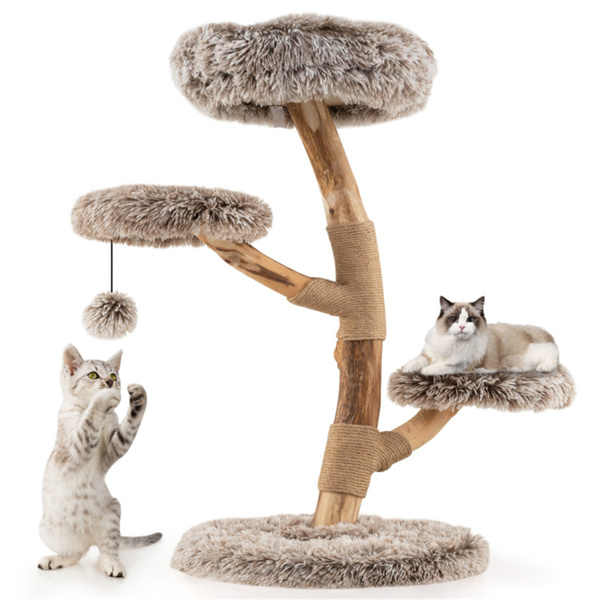
Many owners wonder why cats need vertical space inside a home environment. Indoor cats live in a very different world than their wild ancestors. While they may appear relaxed, many indoor cats quietly experience boredom, frustration, and stress because their environment lacks one critical feature — vertical territory. Cats are natural climbers and observers. Providing elevated spaces such as cat trees, wall perches, and window platforms allows cats to express instinctive behaviors that directly affect their confidence, mood, and daily activity levels. When cats have access to vertical space, many common behavior problems begin to disappear naturally, which is why cat trees and elevated perches are essential furniture for indoor cats.
Our Experience With Indoor Cats
In This Guide
• What Vertical Space Means for a Cat
• The Behavioral Reason Cats Climb
• Signs Your Cat Lacks Vertical Territory
• Why Cats Choose the Highest Spot
• Why Cat Trees Solve Multiple Problems
• Vertical Space in Multi-Cat Homes
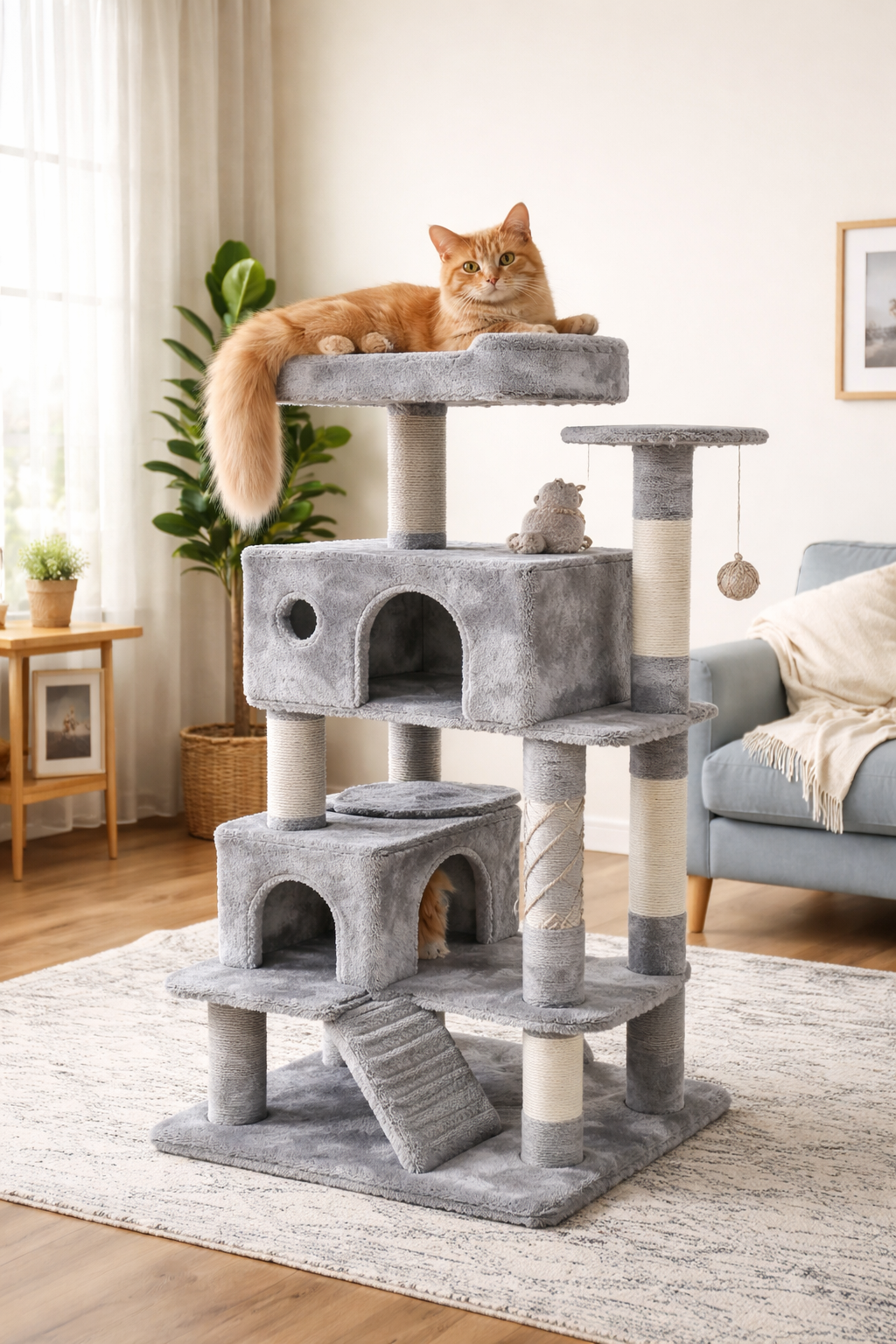
What “Vertical Space” Means for a Cat
Vertical space for cats refers to elevated resting, climbing, and observation areas such as cat trees, towers, shelves, and perches that allow indoor cats to use height as part of their territory.
Cats don’t experience territory the way humans do.
Humans use floor space.
Cats use air space.
Vertical space refers to any elevated area a cat can climb onto, rest on, or observe from. In the wild, cats instinctively seek height for safety and awareness. Elevated positions allow them to monitor surroundings, avoid threats, and feel in control of their environment. Even inside a home, these instincts remain unchanged.
Examples of vertical territory include:
• cat trees and towers
• window perches
• wall shelves designed for cats
• the tops of furniture
• elevated resting platforms
Without these areas, a cat’s living space becomes only the square footage of the floor — which is extremely limiting from a feline perspective.
The Behavioral Reason Cats Climb
Safety and Security
Height gives cats psychological security. From an elevated spot, a cat can watch activity without being approached unexpectedly. This reduces anxiety, especially in multi-pet homes.
Observation Instinct
Cats are ambush predators. Watching is part of their mental stimulation. A high perch acts like a television channel for a cat — people walking, birds outside, and daily movement all become enrichment.
Personal Territory
Cats do not share territory the same way dogs do. Vertical areas allow multiple cats to live peacefully in the same home because each cat can claim its own level.
Signs Your Cat Lacks Vertical Territory
Many owners think their cat is lazy when it is actually under-stimulated.
Common indicators include:
• scratching furniture
• zoomies at night
• attacking feet or hands
• knocking objects off tables
• hiding frequently
• sleeping excessively during the day
• tension between household cats
These behaviors often improve once a cat has a consistent elevated resting location.
Why Cats Often Choose the Highest Spot in the Room
Many owners notice their cat immediately claims the tallest perch available. This is not random preference. In feline behavior, the highest available position represents environmental control. From height, a cat can see movement before it approaches and avoid being startled. Cats that lack an elevated resting place often attempt to create one by climbing counters, bookshelves, or door frames. Providing an appropriate vertical location gives the cat a safe place to monitor activity without resorting to unwanted climbing.
Why Cat Trees Solve Multiple Problems
A properly placed cat tree does more than provide a place to sleep. It acts as a:
• observation post
• scratching station
• exercise structure
• stress-relief zone
• safe retreat
Because several instincts are satisfied at once, cats naturally redirect behaviors away from couches, counters,
Where to Place Vertical Spaces in Your Home
Placement matters more than size.
The best locations:
• near windows
• in living rooms where people gather
• near existing scratching areas
• beside furniture cats already climb
Avoid:
• basements
• empty spare rooms
• isolated corners
Cats want elevation in social zones, not storage areas.
Vertical Space in Multi-Cat Homes
Vertical territory is one of the most effective ways to prevent cat conflict.
Instead of competing on the floor, cats divide height levels. One cat may choose a top perch while another chooses a mid-level platform. This reduces staring contests, chasing, and territorial stress.
Homes with multiple cats benefit more from added height than added toys.
Indoor Cats Need Height More Than Outdoor Cats
Outdoor cats naturally climb fences, trees, and structures every day. Indoor cats do not have this opportunity. Without a substitute, their instincts have no outlet.
Providing vertical territory recreates part of the outdoor environment safely and helps maintain healthy physical activity levels.
Do All Indoor Cats Need a Cat Tree?
Most indoor cats benefit from having at least one stable elevated resting location. While shelves and furniture can provide temporary height, a dedicated cat tree offers predictable territory the cat can claim as its own. This reduces competition for space, encourages appropriate scratching behavior, and gives the cat a consistent daily resting area.
Kittens, active adult cats, and multi-cat households especially rely on vertical structures for exercise and stress relief. Without a designated elevated space, cats often create their own by climbing counters, refrigerators, and door frames.
For many homes, a properly sized cat tree seeves not as a toy but as essential environmental enrichment.
Conclusion
Vertical space is not a luxury for a cat — it is a core environmental need. Elevated resting areas allow cats to feel secure, engaged, and mentally stimulated within an indoor home. By adding structured climbing and resting spaces, many common behavioral frustrations can be prevented before they start. When a home is designed with a cat’s instincts in mind, both the pet and the owner experience a calmer, more harmonious environment. Providing vertical territory through a well-placed cat tree is one of the simplest ways to improve an indoor cat’s behavior and daily well-being.
About Tails & Whiskers Co.
Tails & Whiskers Co. is a small pet lifestyle brand focused on improving indoor environments for cats and dogs. Our product selection and guides are based on hands-on observation of real household pets and daily interaction with indoor cats.