What Size Cat Tree Do I Need? Complete Cat Tree Size Guide (2026)
Not sure what size cat tree your cat actually needs? The right choice depends on more than height alone. Your cat's size, age, activity level, number of cats, and available floor space all matter.
In this guide, we'll break down the best cat tree heights and dimensions for kittens, adult cats, large breeds, multi-cat homes, and small spaces so you can confidently choose a tree your cat will actually use.
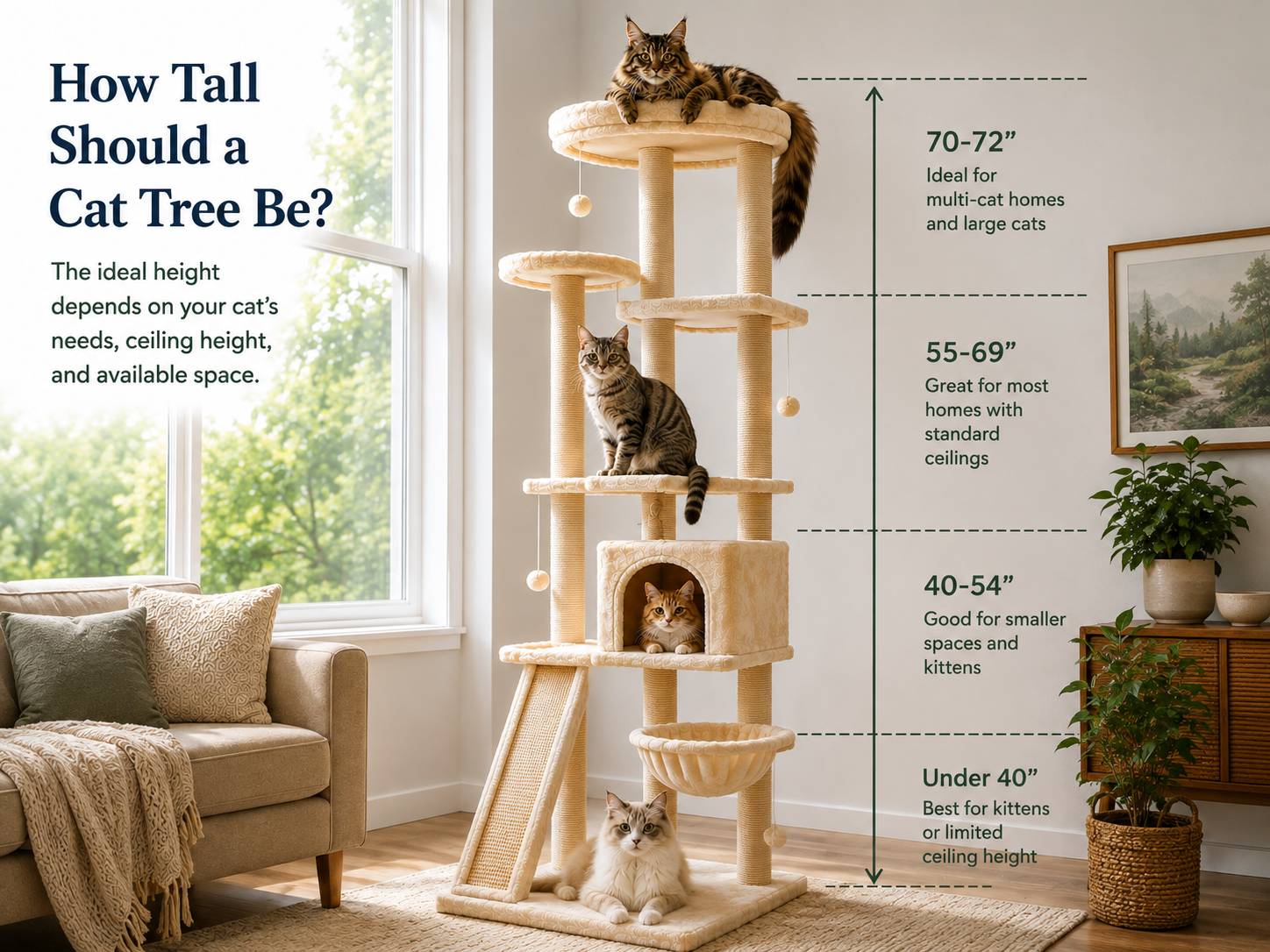
Short on time? Most adult cats do well with a cat tree around 36–60 inches tall, while large, active, or multi-cat households often benefit from sturdier 60–72+ inch designs.
Browse This Guide
Height Guide │ Cat Weight │ Large Cats │ By Breed │ Small Spaces │ Multiple Cats │ Dimensions │ FAQ
Use the guide below to choose the right cat tree based on your cat's size, breed, age, activity level, and available space.
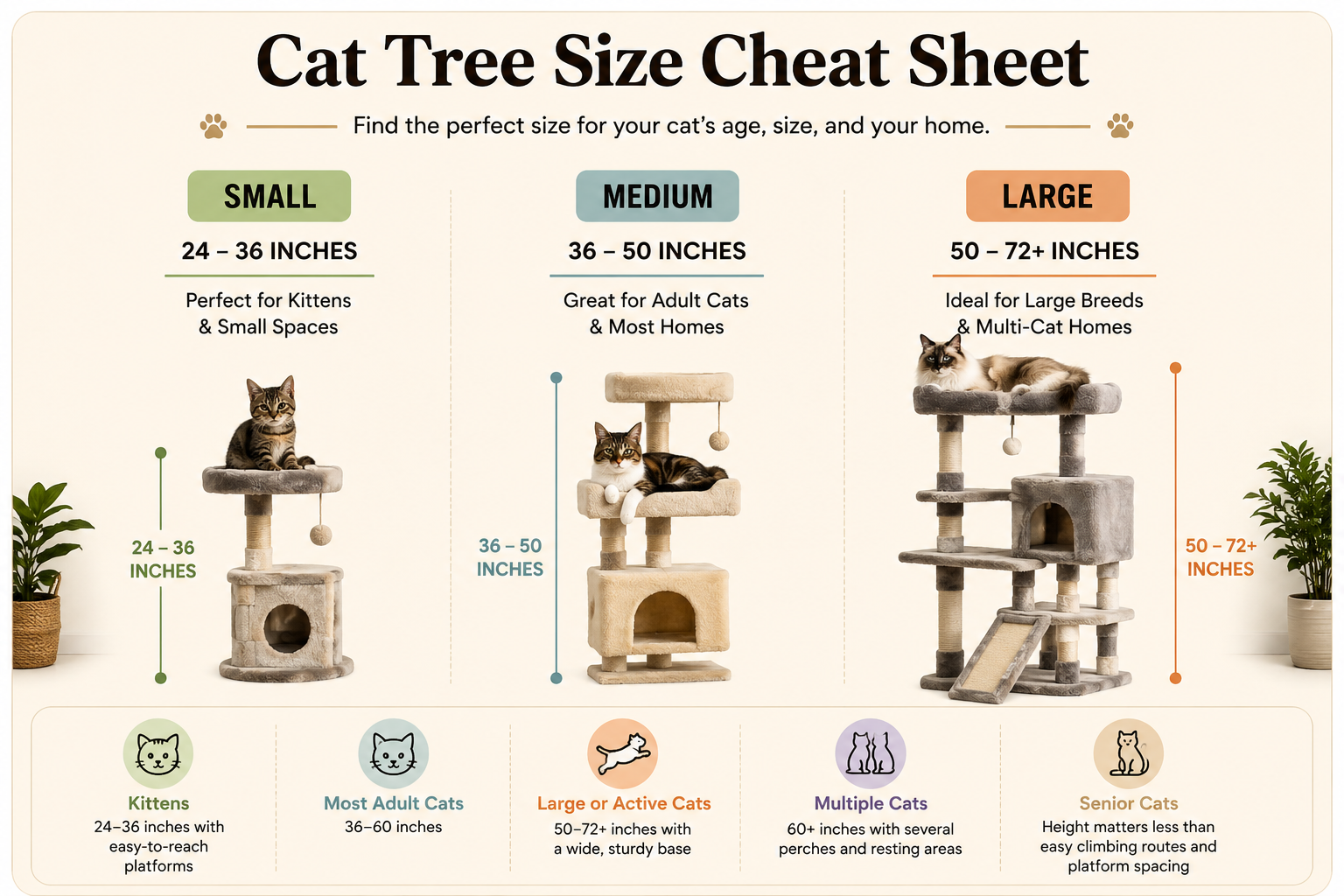
Cat Tree Height Guide
Choosing the right height is the biggest factor in whether your cat will actually use a cat tree. While every cat is different, most indoor cats naturally prefer elevated resting spots where they can observe their surroundings. The right height depends on your cat's age, confidence, activity level, and available space.
Small Cat Trees (24–36 Inches)
Small cat trees are ideal for kittens, senior cats, apartments, and homes where floor space is limited. They're easy to climb and fit comfortably beside sofas, windows, or desks.
Best for:
- Kittens
- Senior cats
- Studio apartments
- Small rooms
Best for
Kittens
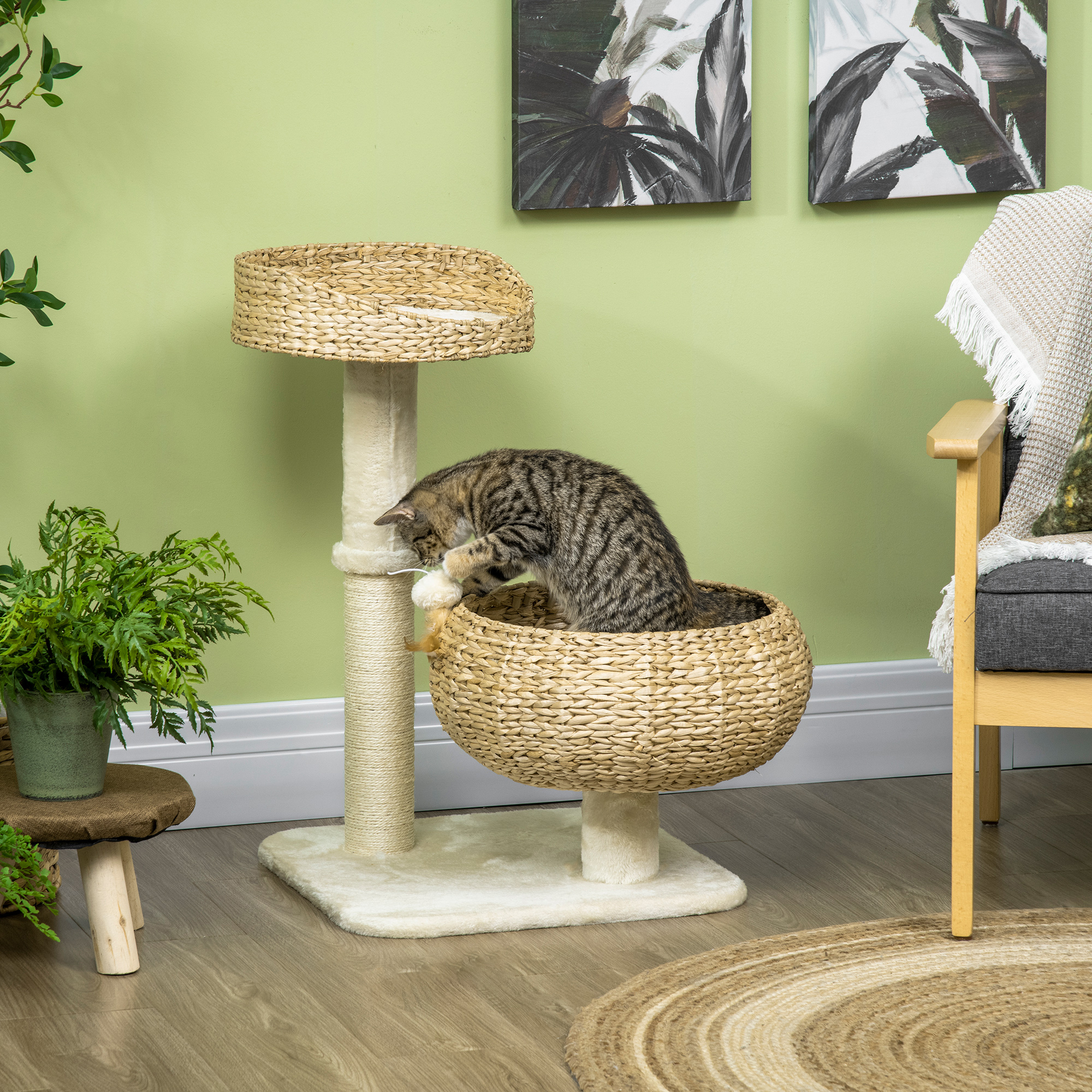
28" Cat Tree for Kittens & Small Cats
★★★★★ 4.8/5
Recommended For
Kittens • Napping • Small Spaces
Height: 28" • Material: Wicker + Sisal
- Cozy basket-style bed
- Stable compact base
- Durable sisal scratching post
- Great for apartments
Why We Love It
Ideal for kittens that love to curl up and relax. The elevated basket perch provides a cozy sleeping spot while the scratching post encourages healthy scratching habits without taking up much floor space.
✓ Fast Shipping • Easy Returns
Best for
Senior Cats
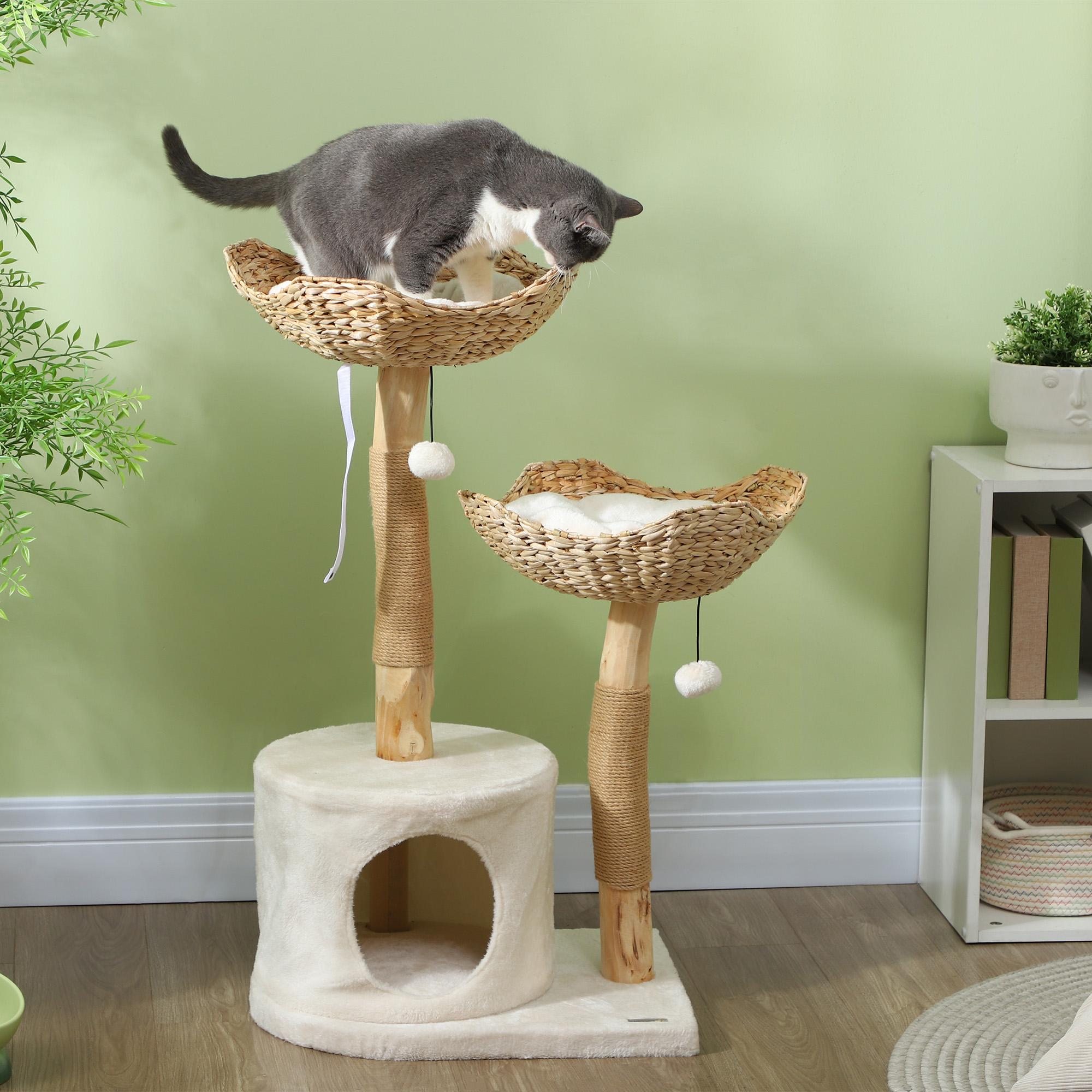
Cat Tree with Condo & Elevated Bed
★★★★★ 4.9/5
Recommended For
Senior Cats • Easy Access • Indoor Homes
Height: Low Profile • Material: Plush + Sisal
- Lower platforms for easier climbing
- Cozy enclosed condo for comfortable naps
- Soft elevated perch for gentle lounging
- Stable base with durable sisal scratching posts
Why We Love It
Designed with senior cats in mind, this low-profile tree features easy-to-reach platforms, a cozy enclosed condo, and a stable base. It's a comfortable everyday choice for older cats who prefer gentle climbing and plenty of relaxing.
✓ Fast Shipping • Easy Returns
Best for
Apartments & Small Spaces
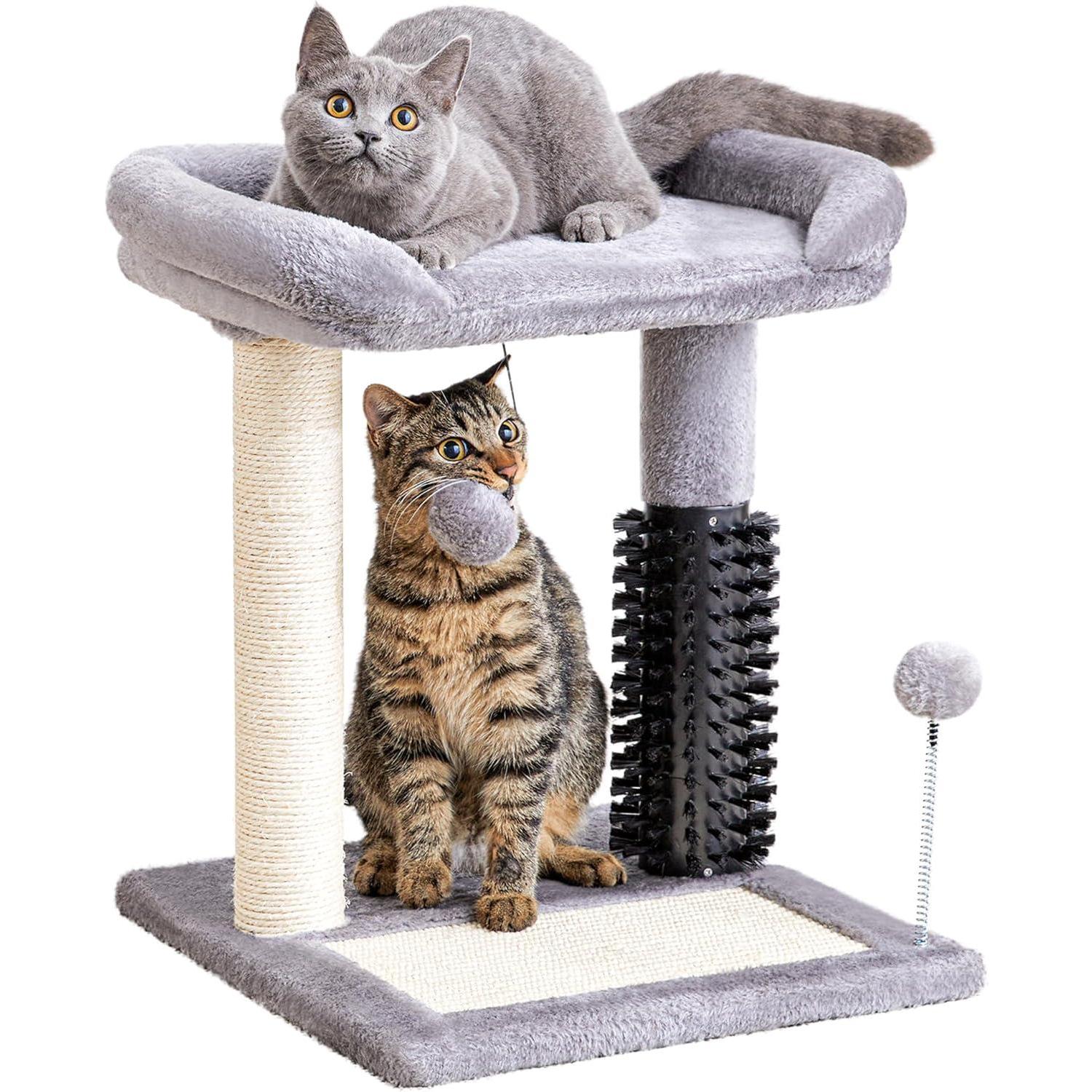
Small Cat Tree with Grooming Brush & Scratching Post
★★★★★ 4.9/5
Recommended For
Kittens • First-Time Owners • Apartments
Height: Compact • Material: Plush + Sisal
- Soft elevated lounging perch
- Built-in grooming brush
- Durable sisal scratching post
- Hanging toy for interactive play
Why We Love It
An excellent first cat tree for young kittens learning to climb and scratch. The built-in grooming brush and compact footprint make it a fun, space-friendly choice for new cat parents.
✓ Fast Shipping • Easy Returns
Medium Cat Trees (36–50 Inches)
Medium-height cat trees are the best choice for most households. They provide enough vertical space for climbing without overwhelming smaller rooms.
Best for:
- Adult cats
- One or two-cat homes
- Average-sized living rooms
- First-time cat owners
Best for
Adult Cats
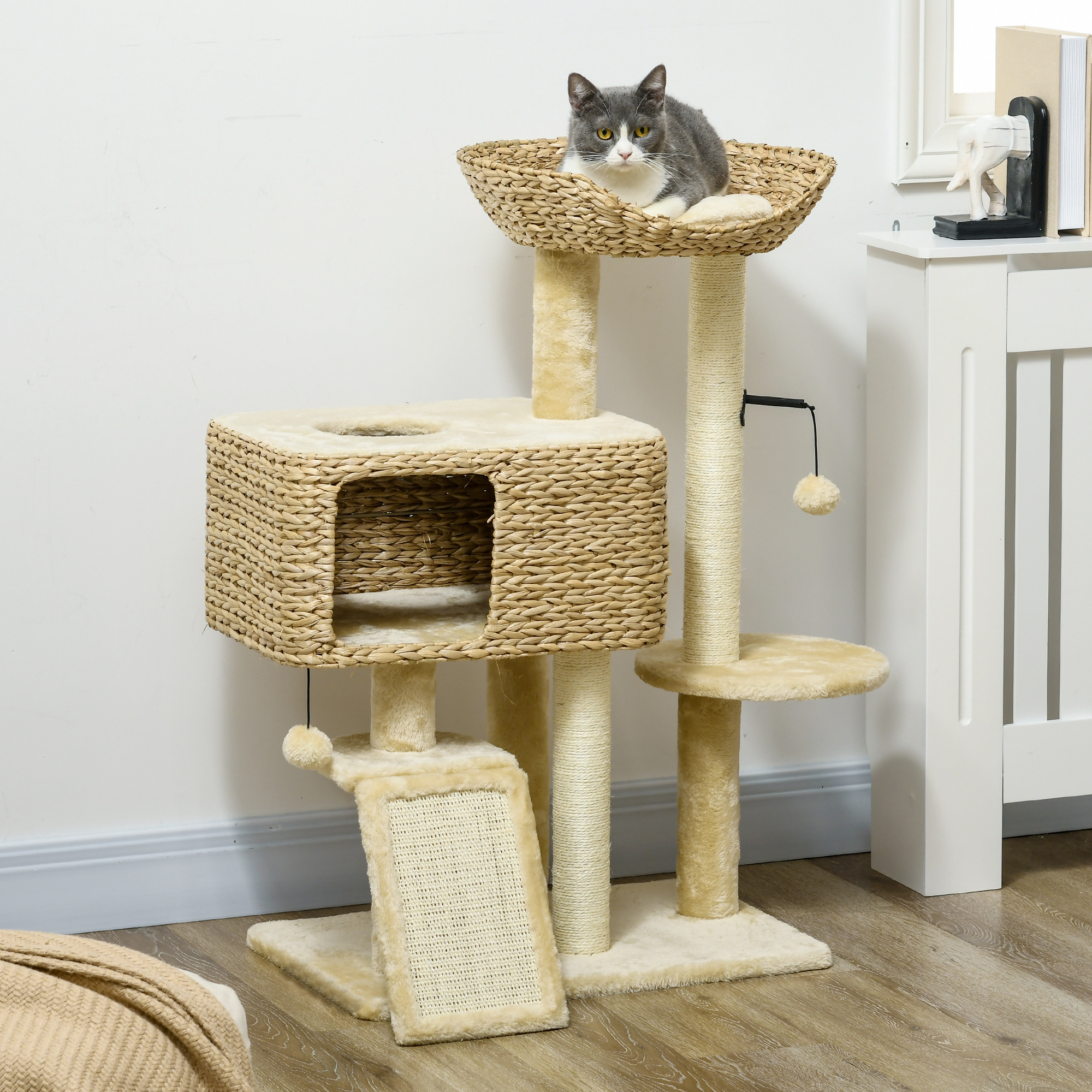
38.5" Wicker Cat Tree
★★★★★ 4.8/5
Recommended For
Adult Cats • Everyday Use • Indoor Homes
Height: 38.5" • Material: Wicker + Plush
- Comfortable elevated hammock
- Cozy enclosed wicker condo
- Modern furniture-inspired design
- Stable platform for everyday climbing
Why We Love It
This 38.5-inch cat tree is an excellent everyday choice for most adult cats. The elevated hammock provides a comfortable place to lounge, while the enclosed condo offers a quiet retreat. Its compact yet sturdy design delivers plenty of climbing, scratching, and resting space without taking over your room.
✓ Fast Shipping • Easy Returns
Best for
First-Time Cat Owners
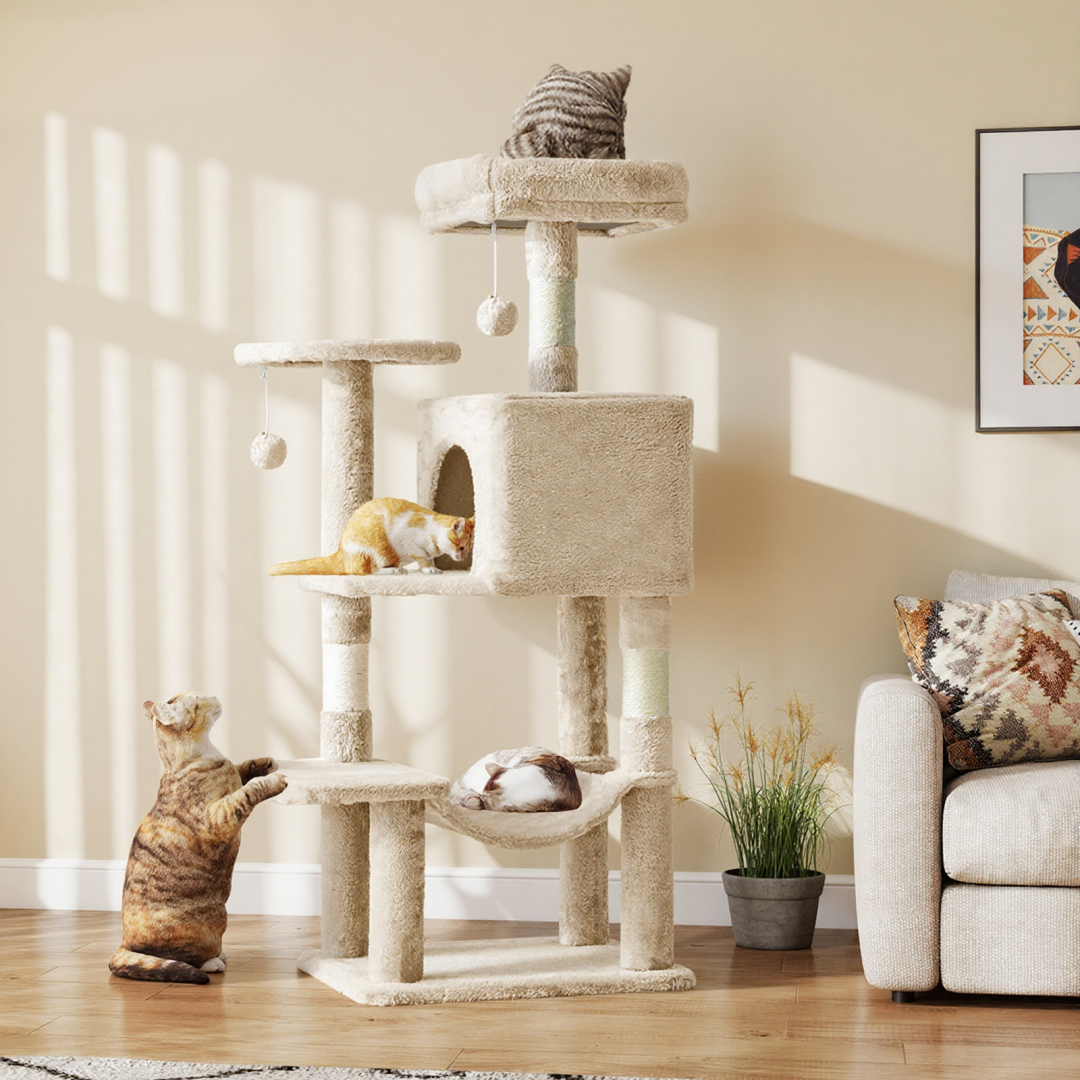
44" Compact Cat Tree with Condo & Hammock
★★★★★ 4.8/5
Recommended For
First-Time Owners • Apartments • Indoor Cats
Height: 44" • Material: Plush + Sisal
- Compact apartment-friendly footprint
- Cozy condo & hammock for lounging
- Durable sisal scratching posts
- Easy size for everyday living
Why We Love It
This compact cat tree offers everything most indoor cats need without taking over your living space. The combination of a cozy condo, elevated perch, and scratching posts makes it an excellent first cat tree for apartments, condos, and smaller homes.
✓ Fast Shipping • Easy Returns
Best for
Apartments & Small Spaces
Small Cat Tree with Grooming Brush & Scratching Post
★★★★★ 4.9/5
Recommended For
Kittens • First-Time Owners • Apartments
Height: Compact • Material: Plush + Sisal
- Soft elevated lounging perch
- Built-in grooming brush
- Durable sisal scratching post
- Hanging toy for interactive play
Why We Love It
An excellent first cat tree for young kittens learning to climb and scratch. The built-in grooming brush and compact footprint make it a fun, space-friendly choice for new cat parents.
✓ Fast Shipping • Easy Returns
Best Cat Trees for Indoor Cats
Compare our favorite everyday cat trees for most homes.
Large Cat Trees (50–72+ Inches)
Tall cat trees provide the climbing height and observation points that energetic cats crave. Look for models with thick posts, wide platforms, and sturdy bases for maximum stability.
Best for:
- Large breeds
- Active cats
- Multi-cat homes
- Cats that love climbing
Best for
Large Breeds
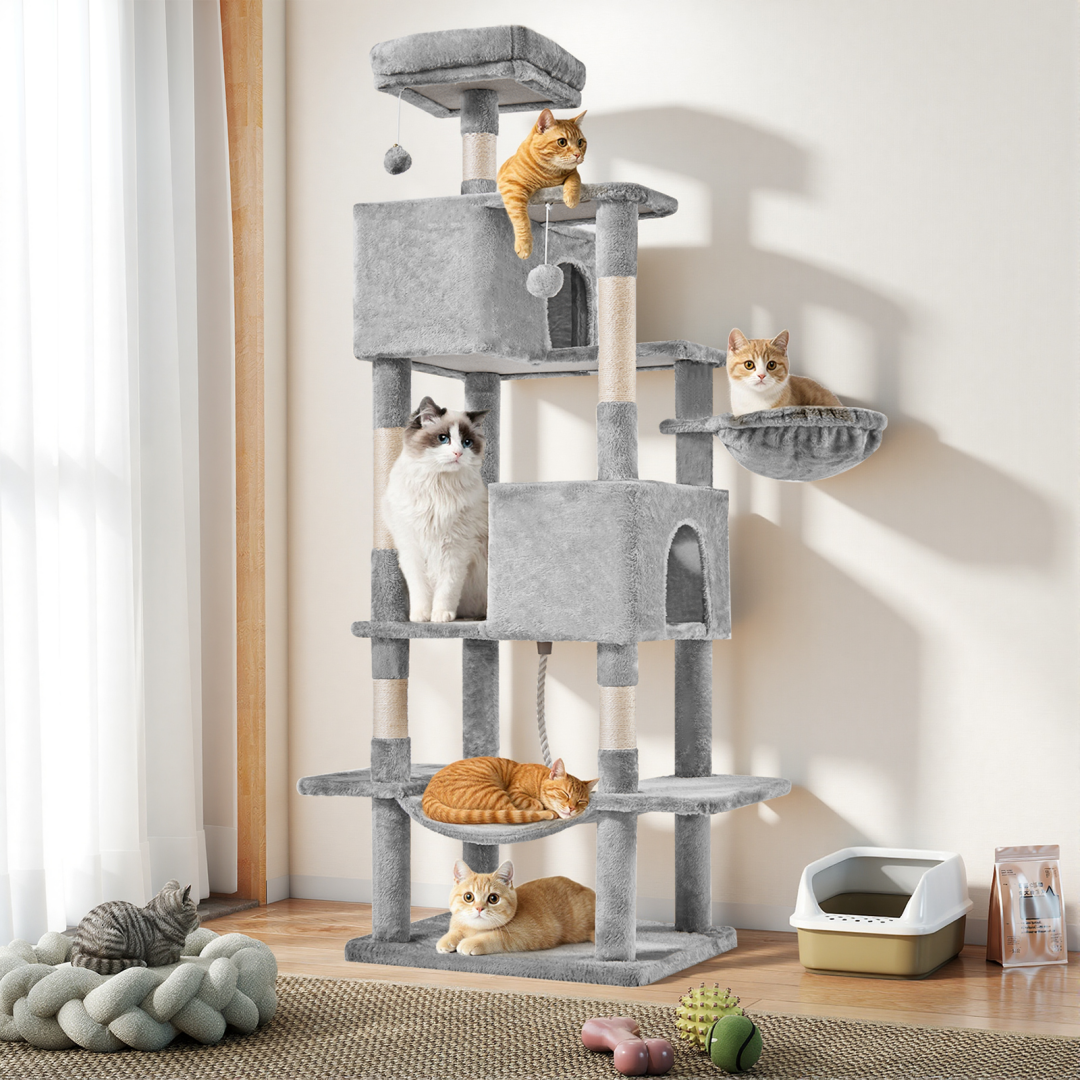
66” Multi-Level Cat Tree
★★★★★ 4.9/5
Recommended For
Large Cats • Multi-Cat Homes • Active Climbers
Height: 66" • Material: Plush + Sisal
- 66" climbing height
- Reinforced frame
- Spacious platforms
- Wide stable base
Why We Love It
One of the sturdiest cat trees we've tested, with excellent climbing space and roomy platforms for multiple cats.
✓ Fast Shipping • Easy Returns
Best for
Active
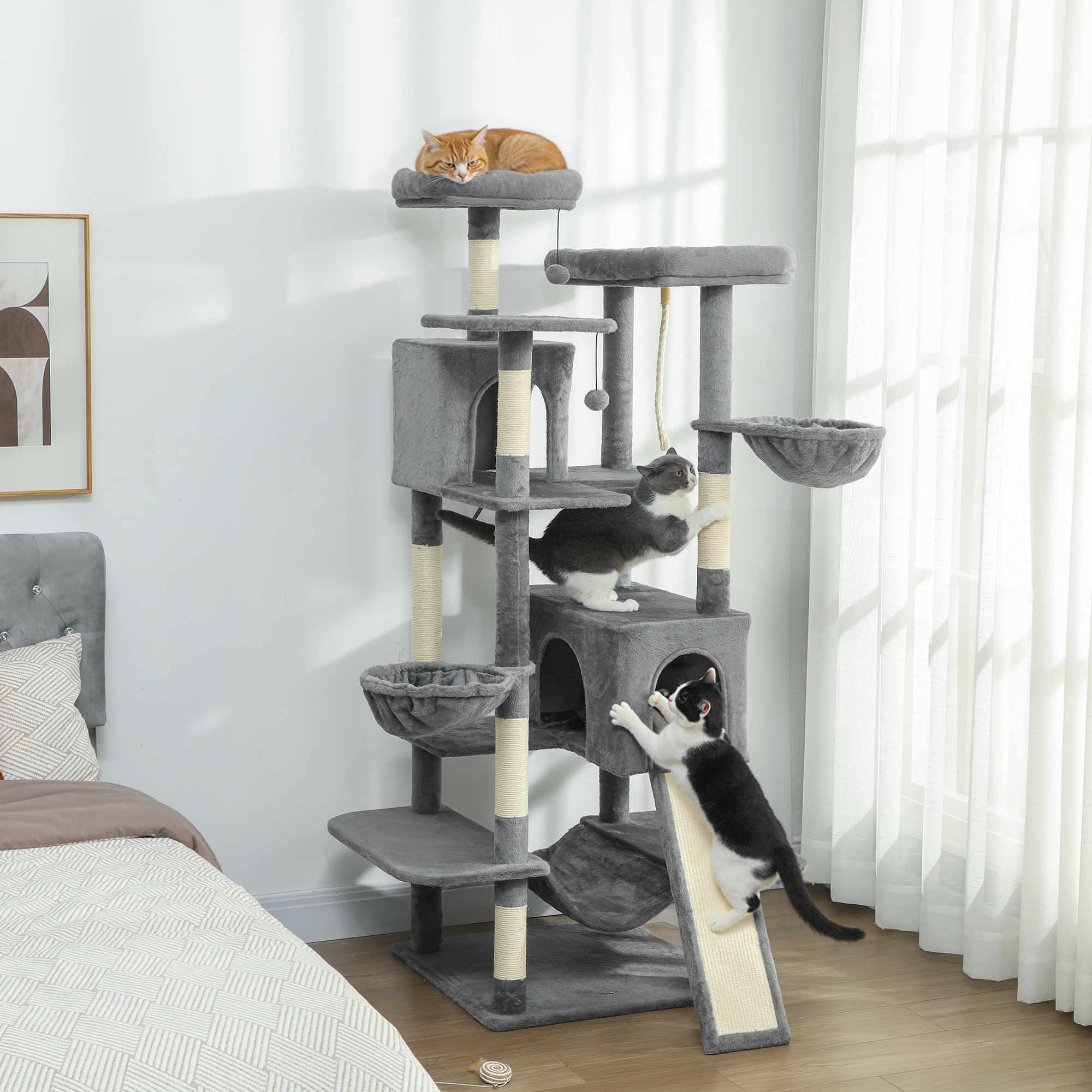
69" Multi-Level Cat Tree
★★★★★ 4.9/5
Recommended For
Large Cats • Multi-Cat Homes • Active Climbers
Height: 69" • Material: Plush + Sisal
- 69" extra-tall climbing height
- Three spacious platforms
- Two cozy condos & dual hammocks
- Reinforced wide base for stability
Why We Love It
Designed for active cats that love to climb, this premium multi-level cat tree offers plenty of vertical space, multiple resting areas, and excellent stability for homes with several cats.
✓ Fast Shipping • Easy Returns
Best for
Multi-Cat Homes
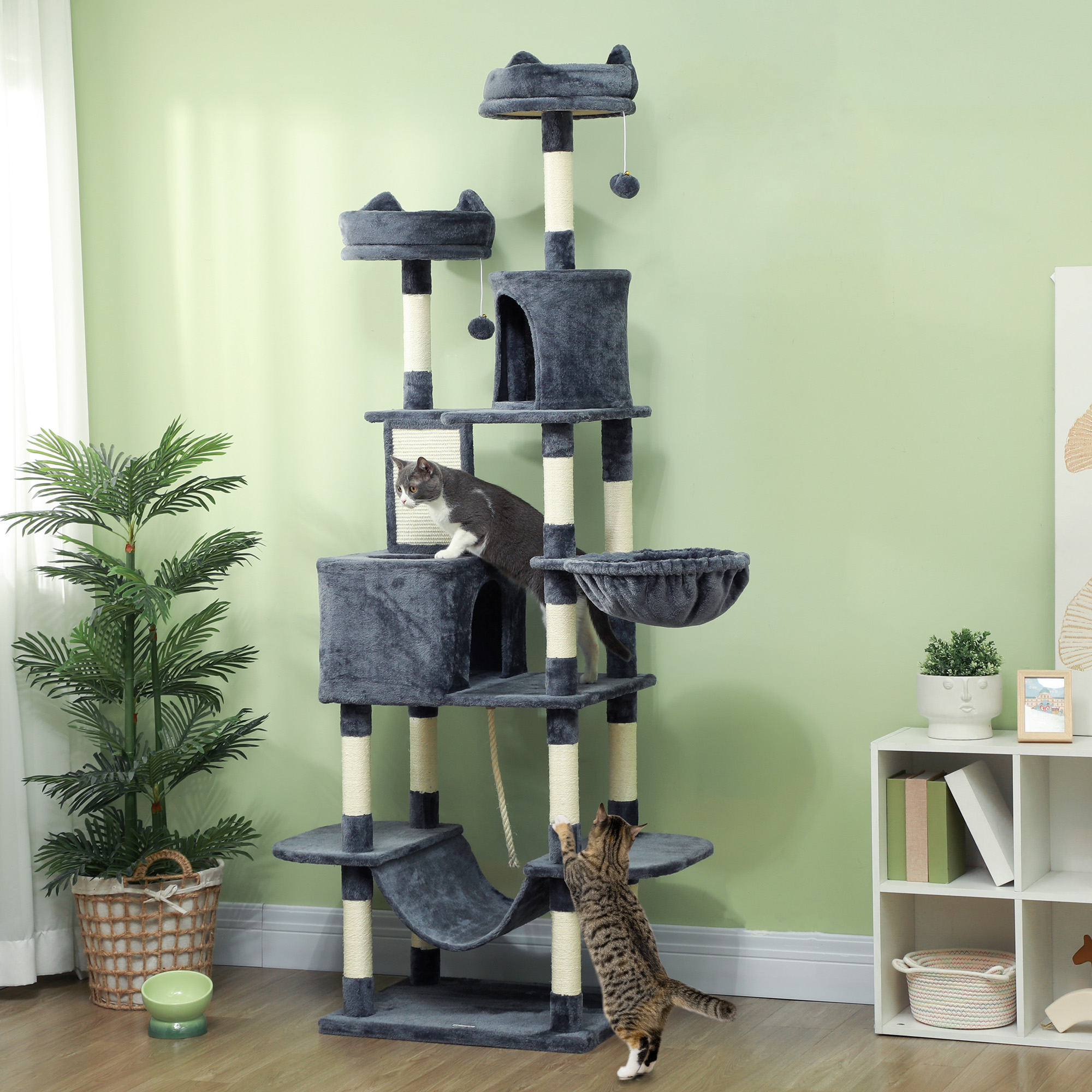
81" Heavy-Duty Cat Tree
★★★★★ 4.8/5
Recommended For
Active Cats • Multi-Level Play • Indoor Homes
Height: 81" • Material: Plush + Sisal
- Towering 81" climbing height
- Multiple condos & lounging spots
- Reinforced anti-tip construction
- Designed for climbing, jumping & play
Why We Love It
Built for energetic indoor cats, this extra-tall cat tree encourages climbing, exploring, and daily exercise while providing multiple cozy places to rest. It's an excellent choice for active cats that love vertical space.
✓ Fast Shipping • Easy Returns
Best Cat Trees for Large Cats
See our top picks designed for bigger breeds and active climbers.
What Size Cat Tree Based on Your Cat's Weight
Height isn't everything. Your cat's weight determines how sturdy the tree needs to be. A lightweight kitten can safely use a narrow platform, while a 20-pound Maine Coon needs thicker posts and reinforced construction.
Under 10 Pounds
Most standard cat trees work well for smaller cats. Prioritize comfortable platforms and scratching posts over heavy-duty construction.
10–15 Pounds
Choose a sturdy tree with wider platforms and thicker scratching posts. This size covers most healthy adult cats.
15+ Pounds
Large cats need reinforced bases, extra-wide perches, thick sisal posts, and minimal wobble. Stability is more important than overall height.
Best Cat Trees for Maine Coons
Oversized platforms, reinforced bases, and extra stability.
Best Cat Tree Size by Breed
Different breeds have different climbing habits and body sizes.
Maine Coons
Choose a tree at least 60 inches tall with oversized beds, thick posts, and reinforced platforms.
Ragdolls
Ragdolls enjoy lounging more than jumping. Wide hammocks and spacious platforms work better than narrow perches.
Bengals
Highly active Bengals thrive on tall multi-level cat trees with ramps, tunnels, and plenty of climbing opportunities.
British Shorthairs
Because of their heavier build, choose sturdy trees with lower platform spacing and wide resting areas.
Best Cat Tree Size for Small Spaces
Living in an apartment doesn't mean your cat has to miss out on vertical territory. Compact cat trees can still provide excellent enrichment when chosen carefully.
Studio Apartments
Look for narrow footprints with plenty of vertical height.
Small Living Rooms
Corner cat trees maximize climbing space without taking over the room.
Bedrooms
Shorter trees placed near windows create a comfortable observation spot while keeping the room open.
Best for
Studio Apartments
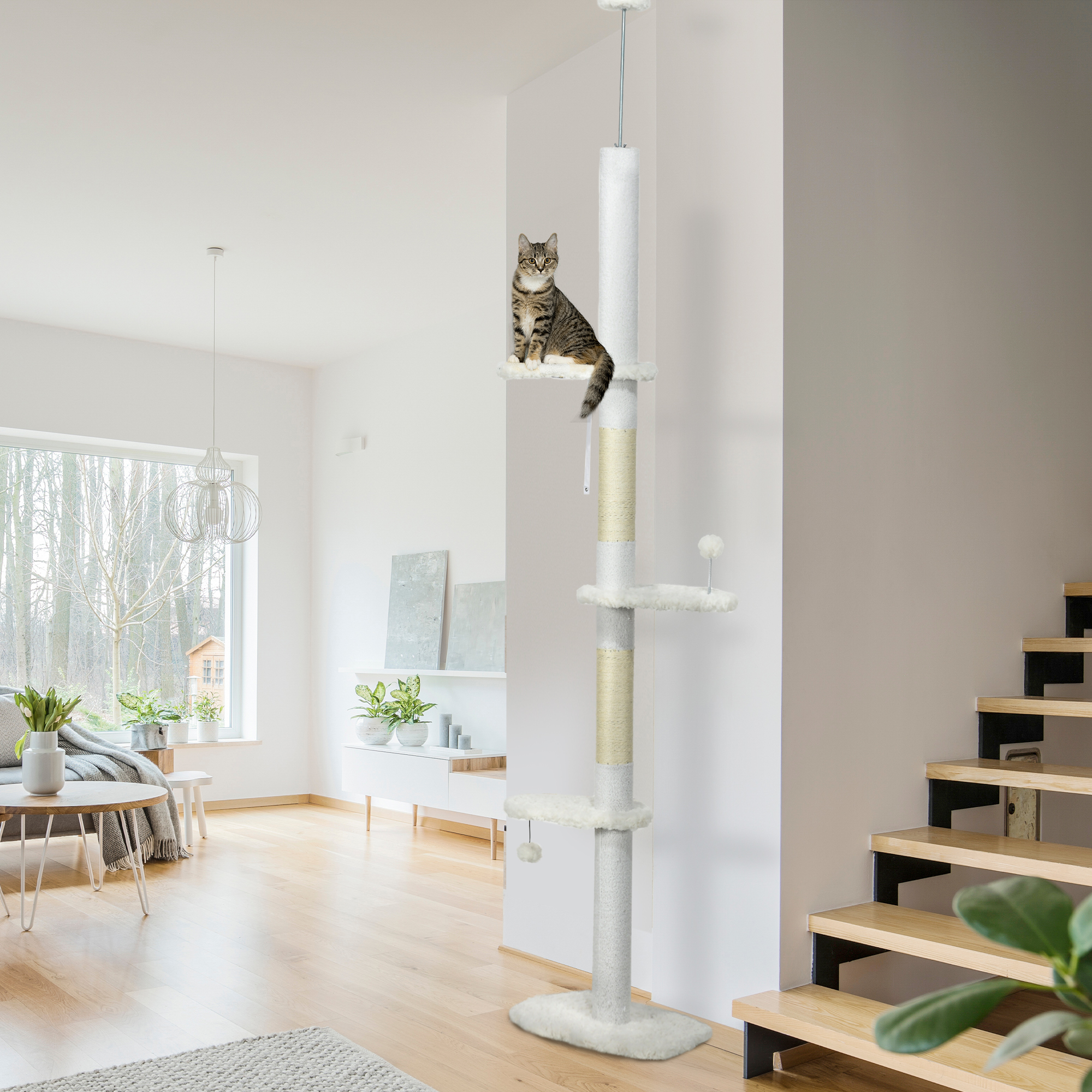
Adjustable Floor-to-Ceiling Cat Tree
★★★★★ 4.8/5
Recommended For
Apartments • Studios • Active Climbers
Height: Adjustable 88.5"–100.5" • Material: Plush + Sisal
- Adjustable floor-to-ceiling design
- Zero bulky footprint
- Stable tension-mounted construction
- Perfect for climbing and exercise
Why We Love It
If floor space is limited, this is one of the smartest cat tree designs available. Its adjustable floor-to-ceiling frame creates plenty of climbing opportunities while keeping your living space open, making it ideal for apartments, studios, and modern homes.
✓ Fast Shipping • Easy Returns
Best for
Small Living Rooms
38.5" Wicker Cat Tree
★★★★★ 4.8/5
Recommended For
Apartments • Condos • Small Rooms
Height: 38.5" • Material: Wicker + Plush
- Compact footprint
- Cozy condo & hammock
- Modern furniture-style design
- Stable everyday construction
Why We Love It
Its compact footprint saves valuable floor space, while the woven wicker design blends beautifully into modern apartments. It gives indoor cats a cozy place to nap, scratch, and perch without making the room feel crowded.
✓ Fast Shipping • Easy Returns
Best for
Bedrooms
44" Compact Cat Tree with Condo & Hammock
★★★★★ 4.8/5
Recommended For
First-Time Owners • Apartments • Indoor Cats
Height: 44" • Material: Plush + Sisal
- Compact apartment-friendly footprint
- Cozy condo & hammock for lounging
- Durable sisal scratching posts
- Easy size for everyday living
Why We Love It
This compact cat tree offers everything most indoor cats need without taking over your living space. The combination of a cozy condo, elevated perch, and scratching posts makes it an excellent first cat tree for apartments, condos, and smaller homes.
✓ Fast Shipping • Easy Returns
Best Cat Tree Size for Multiple Cats
Multiple cats require more than extra height—they need enough space to avoid competing for the same perch.
Two Cats
Choose a tree with at least three resting platforms.
Three or More Cats
Look for 60-inch or taller cat trees featuring multiple beds, condos, hammocks, and scratching posts.
Large Multi-Cat Homes
Prioritize stability, reinforced bases, and wide platform spacing so several cats can climb safely at once.
Best for
Two Cats
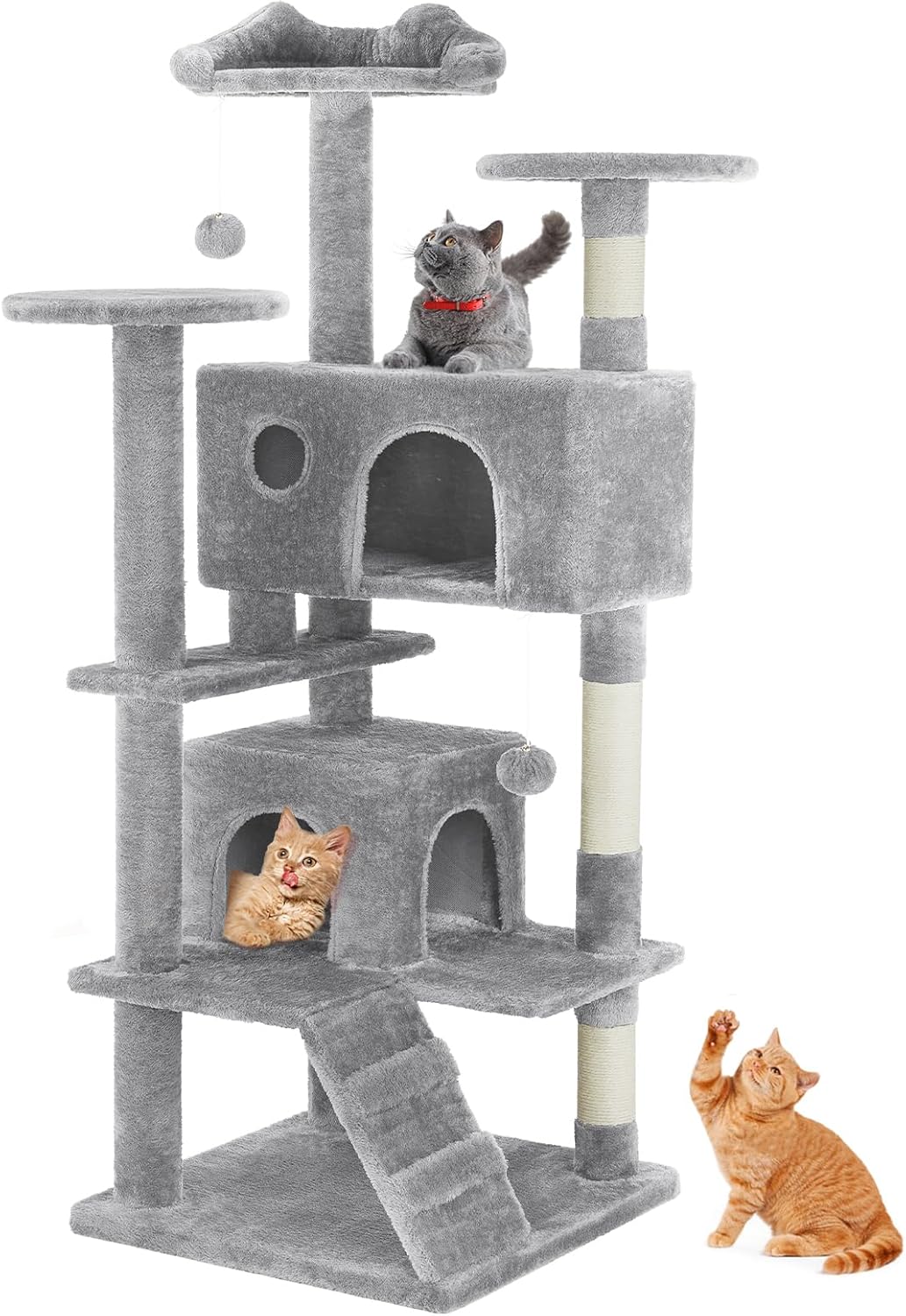
54" Multi-Level Cat Tree
★★★★★ 4.8/5
Recommended For
Indoor Cats • Daily Play • Small–Medium Cats
Height: 54" • Material: Plush + Sisal
- 54" multi-level climbing design
- Cozy condos for rest & privacy
- Durable sisal scratching posts
- Compact footprint for everyday use
Why We Love It
An excellent everyday cat tree that offers climbing, scratching, and comfortable resting spots without taking up excessive floor space. A great choice for single-cat homes or smaller indoor spaces.
✓ Fast Shipping • Easy Returns
Best for
Three or More Cats
69" Multi-Level Cat Tree
★★★★★ 4.9/5
Recommended For
Large Cats • Multi-Cat Homes • Active Climbers
Height: 69" • Material: Plush + Sisal
- 69" extra-tall climbing height
- Three spacious platforms
- Two cozy condos & dual hammocks
- Reinforced wide base for stability
Why We Love It
Designed for active cats that love to climb, this premium multi-level cat tree offers plenty of vertical space, multiple resting areas, and excellent stability for homes with several cats.
✓ Fast Shipping • Easy Returns
Best for
Large Multi-Cat Homes
81" Heavy-Duty Cat Tree
★★★★★ 4.8/5
Recommended For
Active Cats • Multi-Level Play • Indoor Homes
Height: 81" • Material: Plush + Sisal
- Towering 81" climbing height
- Multiple condos & lounging spots
- Reinforced anti-tip construction
- Designed for climbing, jumping & play
Why We Love It
Built for energetic indoor cats, this extra-tall cat tree encourages climbing, exploring, and daily exercise while providing multiple cozy places to rest. It's an excellent choice for active cats that love vertical space.
✓ Fast Shipping • Easy Returns
Understanding Cat Tree Dimensions
Manufacturers list several measurements that shoppers often overlook.
Overall Height
The total height from the floor to the highest platform.
Base Dimensions
A wider base creates better stability and reduces tipping.
Platform Size
Larger breeds need platforms around 18–24 inches wide for comfortable lounging.
Condo Openings
Ensure enclosed condos are large enough for your cat to enter comfortably, especially for larger breeds.
Common Cat Tree Size Mistakes
Avoid these common buying mistakes that often lead to unused cat trees.
Buying Too Small
Cats quickly outgrow undersized trees, especially active breeds.
Ignoring Base Stability
A tall tree with a narrow base can wobble or tip during play.
Choosing Height Over Usability
Several medium-height platforms are often more useful than one very tall perch.
Not Measuring Your Space
Always measure ceiling height, nearby furniture, and walking clearance before ordering
Frequently Asked Questions About Cat Tree Size
What size cat tree do most cats need?
Most adult indoor cats do well with a cat tree between 36 and 60 inches tall. This height provides enough climbing, scratching, and elevated resting space without overwhelming most homes.
How tall should a cat tree be?
A good rule is:
- Kittens: 24–36 inches
- Adult cats: 36–60 inches
- Large breeds: 50–72+ inches
- Multiple cats: 60+ inches with several platforms
Is a taller cat tree always better?
Not necessarily. Cats love height, but the tree should match your cat's confidence, age, and mobility. Senior cats often prefer shorter trees with easy-to-reach platforms, while active climbers usually enjoy taller designs.
What size cat tree is best for large cats?
Large breeds like Maine Coons, Norwegian Forest Cats, and Ragdolls need trees with:
- Wide platforms
- Thick scratching posts
- Heavy-duty construction
- Heights around 50–72 inches
What size cat tree is best for apartments?
A 24–40 inch cat tree is usually enough for apartments or smaller rooms. Look for a compact footprint while still providing at least one elevated resting spot.
Can a cat tree be too small?
Yes. If your cat can't fully stretch while scratching or comfortably lounge on the platforms, the tree is probably too small. Larger cats especially need wider beds and stronger platforms.
How many levels should a cat tree have?
Most cats enjoy at least three levels. Multiple platforms encourage climbing, jumping, and give cats different places to rest throughout the day.
Where should I put a cat tree?
The best location is near a window where your cat can watch birds and outdoor activity. Avoid hiding the tree in unused rooms—cats are more likely to use it near where the family spends time.
What is the best cat tree height for multiple cats?
Homes with two or more cats should look for trees 60 inches or taller with several platforms, condos, and scratching posts so each cat has its own space.
Do kittens need a tall cat tree?
No. Kittens generally do best with trees between 24 and 36 inches that have closely spaced platforms, making them easier and safer to climb.
Explore More Cat Tree Guides
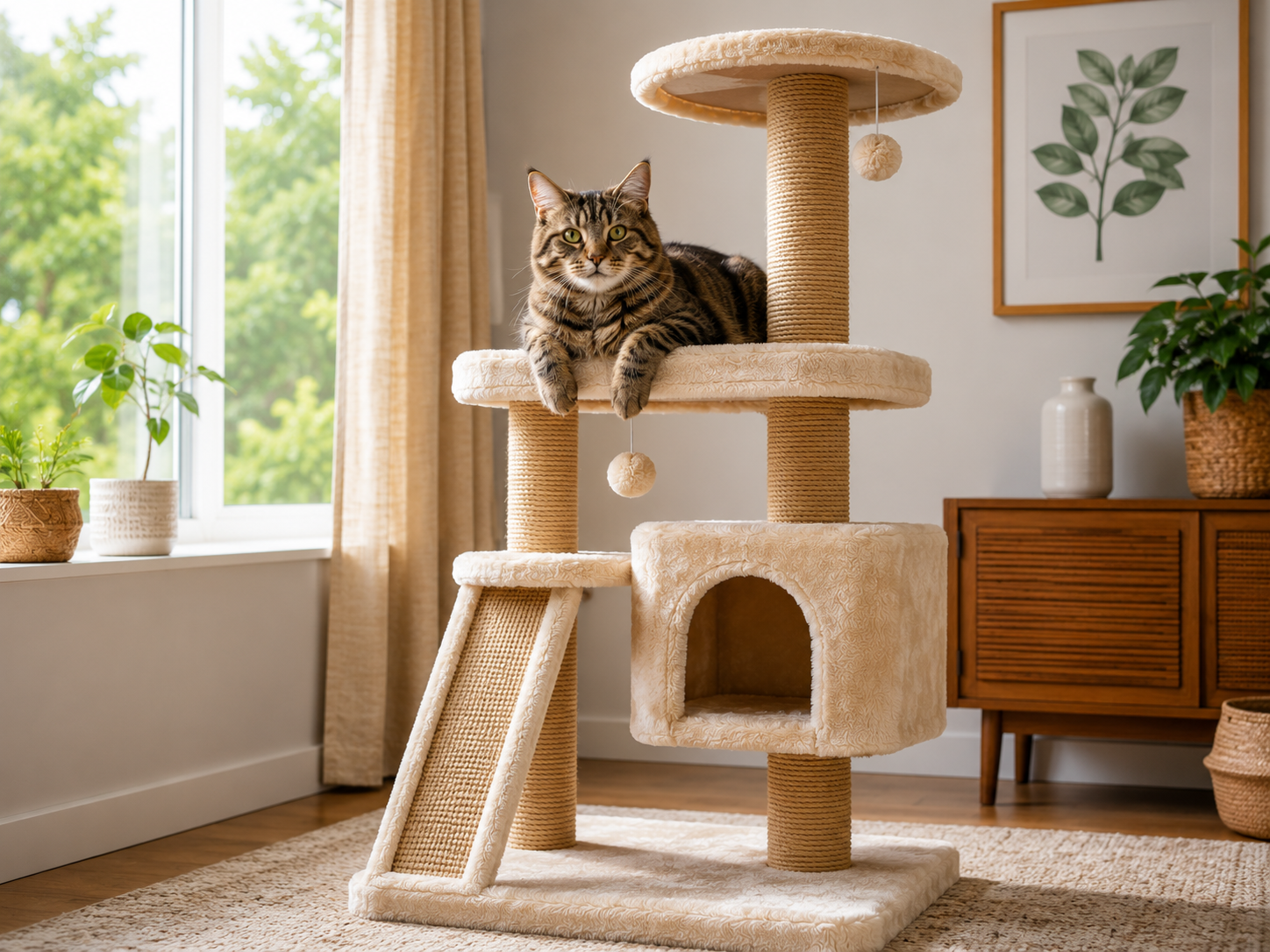
Best Cat Trees for Indoor Cats
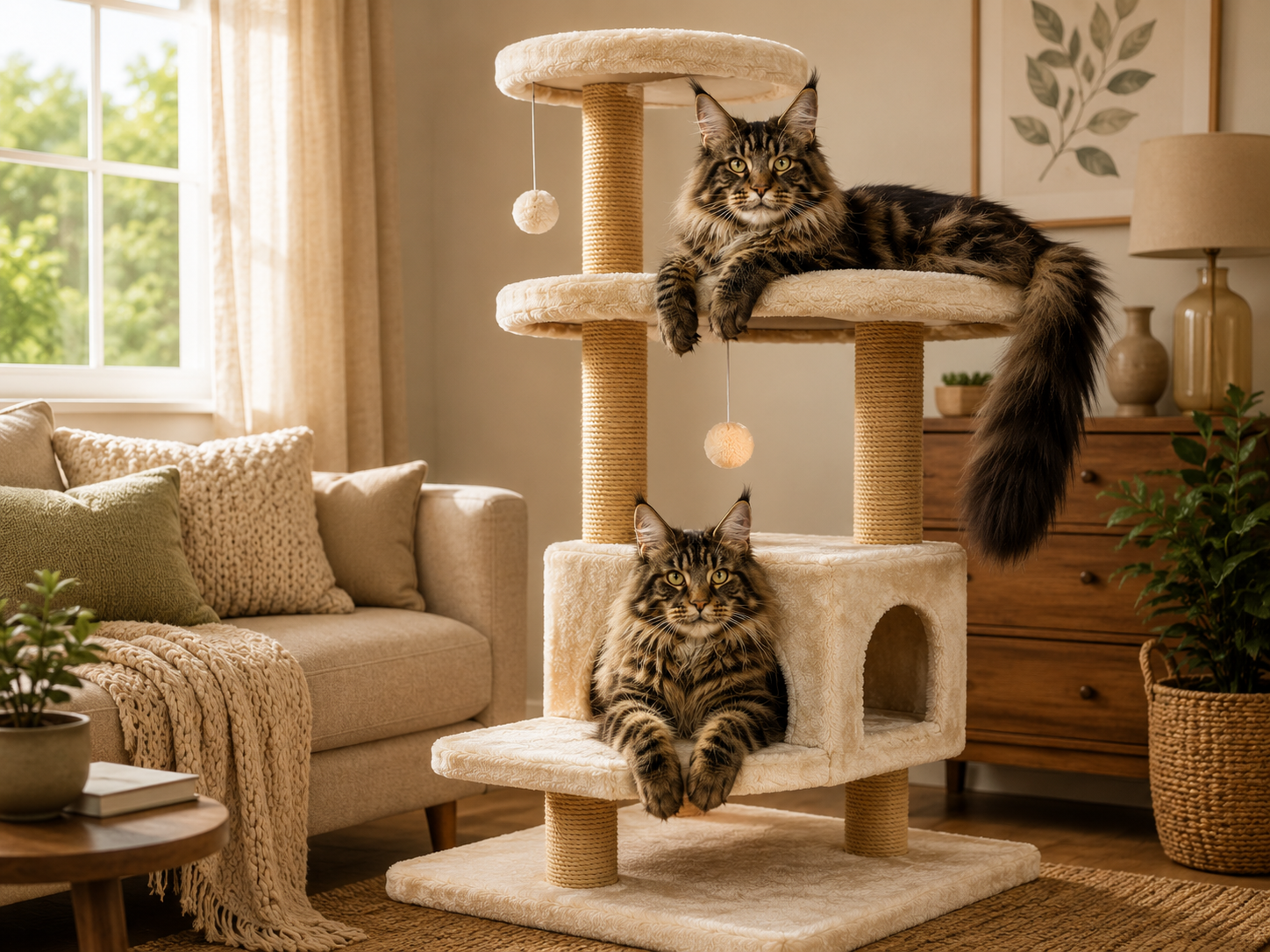
Best Cat Tree for Large Cats
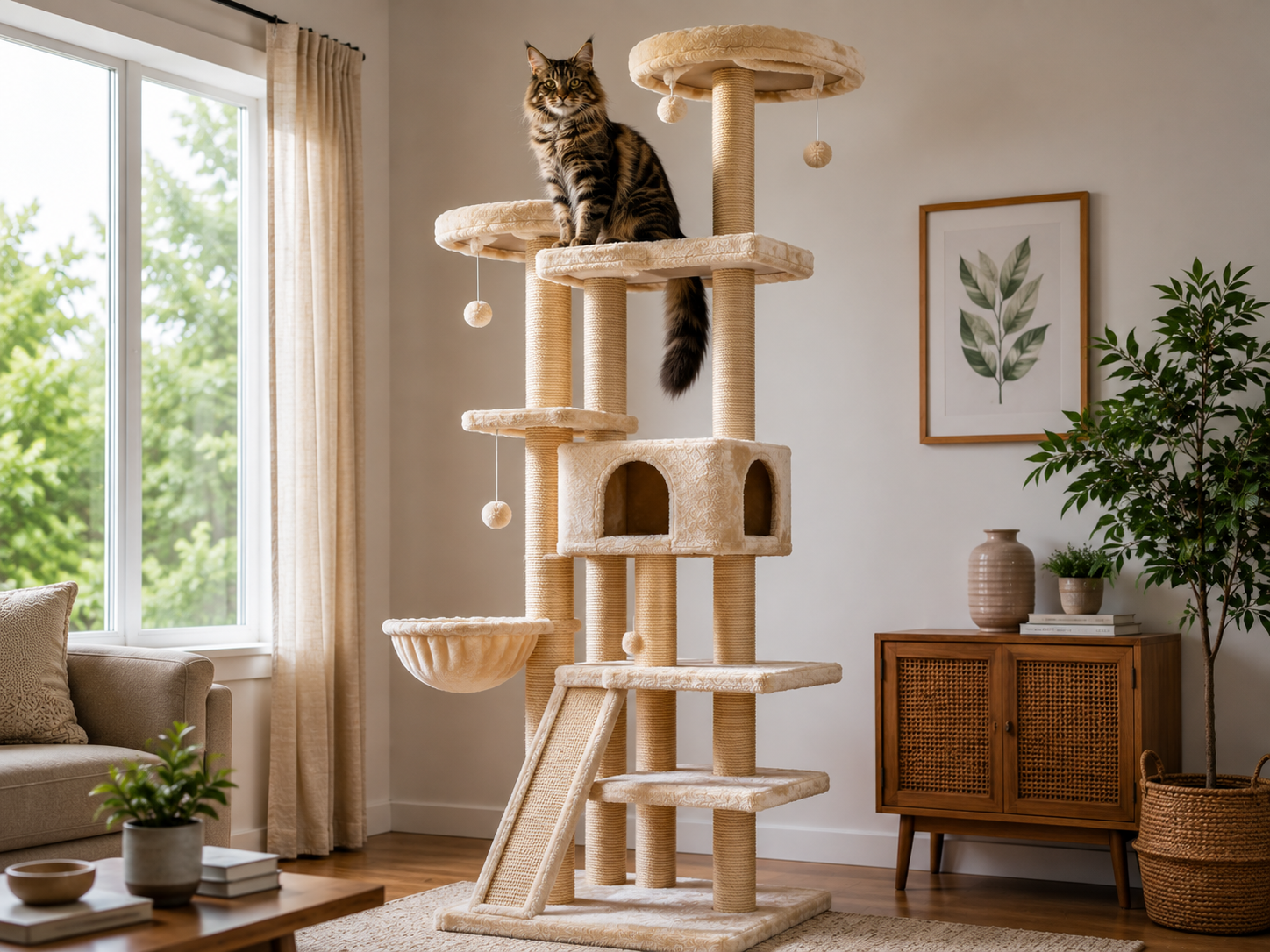
Why Cats Need Vertical Space
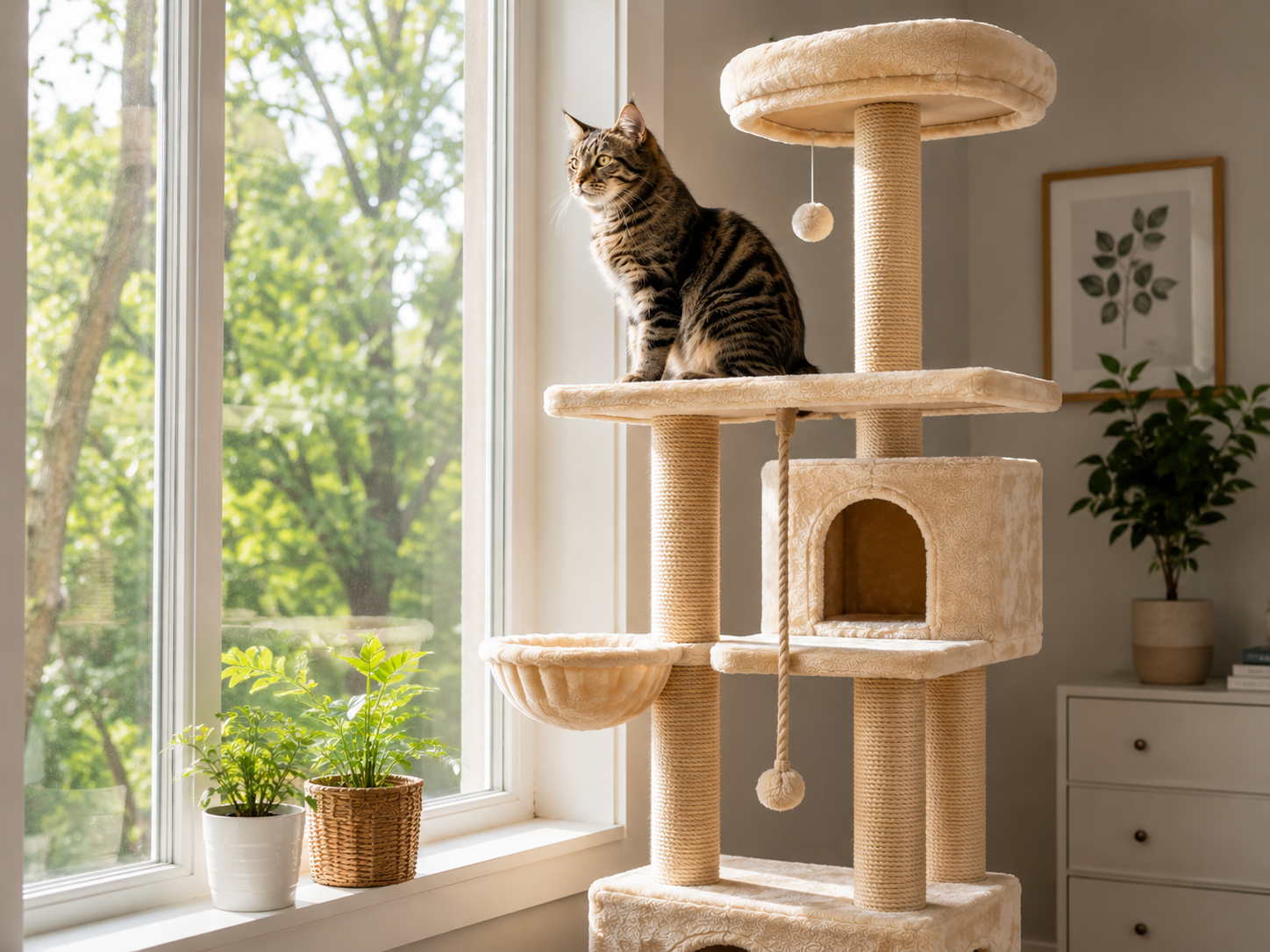
Cat Tree Placement Guide
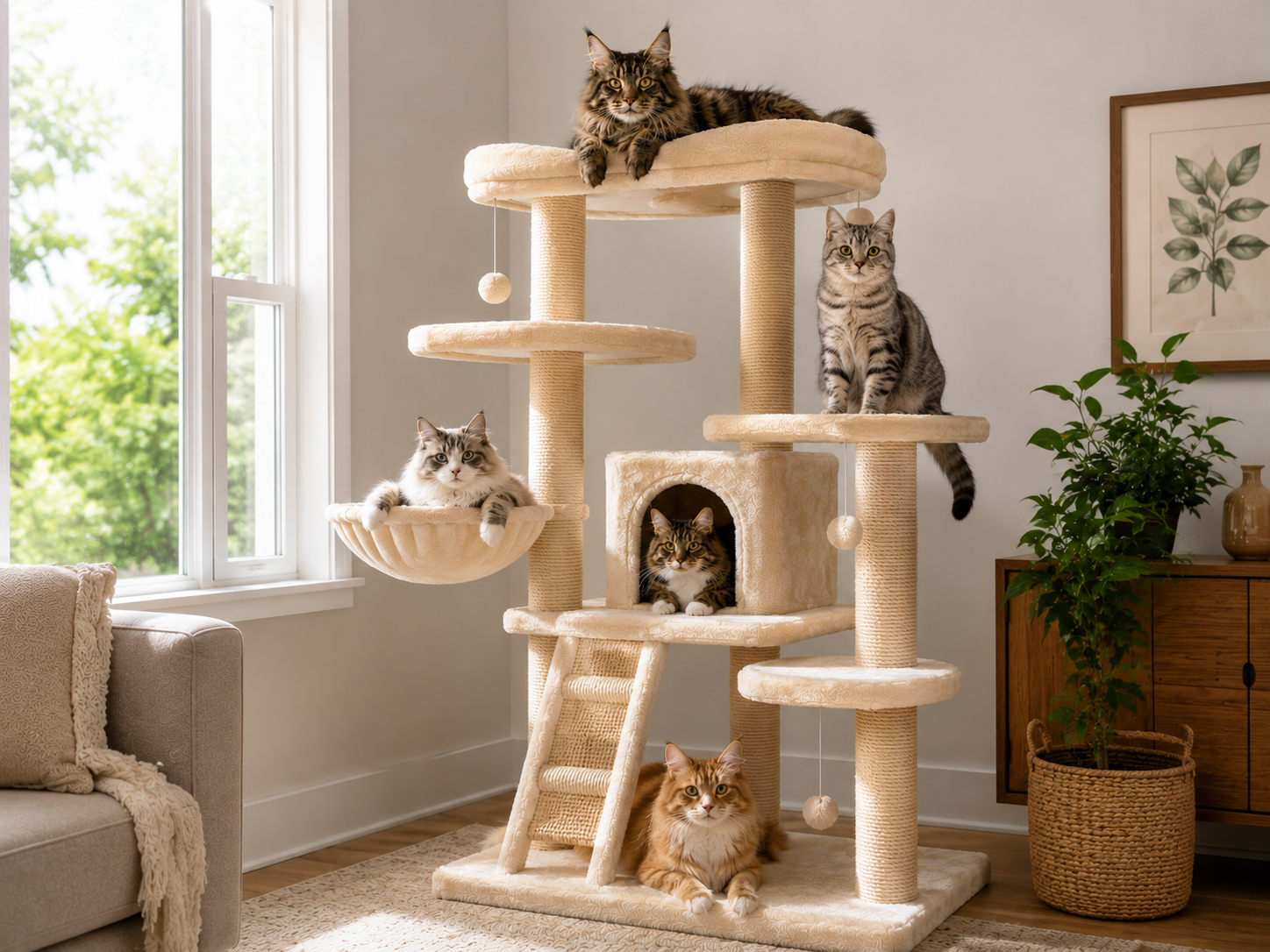
Best Cat Trees for Multiple Cats
How Tall Should a Cat Tree Be?
Final Thoughts: Choosing the Right Cat Tree Size
Choosing the right cat tree isn't about buying the biggest model you can find—it's about matching the tree to your cat's size, age, activity level, and your available space. A well-sized cat tree gives your cat a safe place to climb, stretch, scratch, nap, and observe the world from above, making it much more likely they'll use it every day.
If you're still deciding, remember these simple guidelines:
- 24–36 inches: Best for kittens, senior cats, and small apartments.
- 36–60 inches: The ideal choice for most adult indoor cats.
- 50–72+ inches: Best for large breeds, active climbers, and multi-cat households.
The right cat tree can become your cat's favorite spot for years. Choosing one with sturdy construction, comfortable platforms, and enough height for your cat's personality will provide far more value than simply picking the tallest or least expensive option.
Still comparing options? Browse our recommended cat trees above, or explore our related buying guides to find the perfect cat tree for large cats, multiple-cat homes, apartments, or your specific living space. With the right size and design, you'll give your cat a place they'll truly love to climb, play, and relax.