Best Cat Trees for Small Spaces: 6 Space-Saving Picks for 2026
Living in a small home doesn't mean your cat has to give up climbing, scratching, or a favorite high-up perch. The best cat trees for small spaces use vertical space and compact footprints to give cats plenty of usable territory without taking over the room.
We compared space-saving designs for apartments, bedrooms, condos, and other tight spaces, focusing on stability, usable platforms, scratching areas, and overall footprint.
Quick Answer:
For most small rooms, look for a cat tree that builds up rather than out. A narrow, stable base combined with multiple vertical levels gives your cat more usable territory while preserving valuable floor space.
Top Picks: Best Cat Trees for Small Spaces
Short on time? These are our six favorite cat trees for small spaces, chosen for their compact footprints, smart use of vertical space, stability, and features that work especially well in apartments and smaller rooms.
Best
Overall
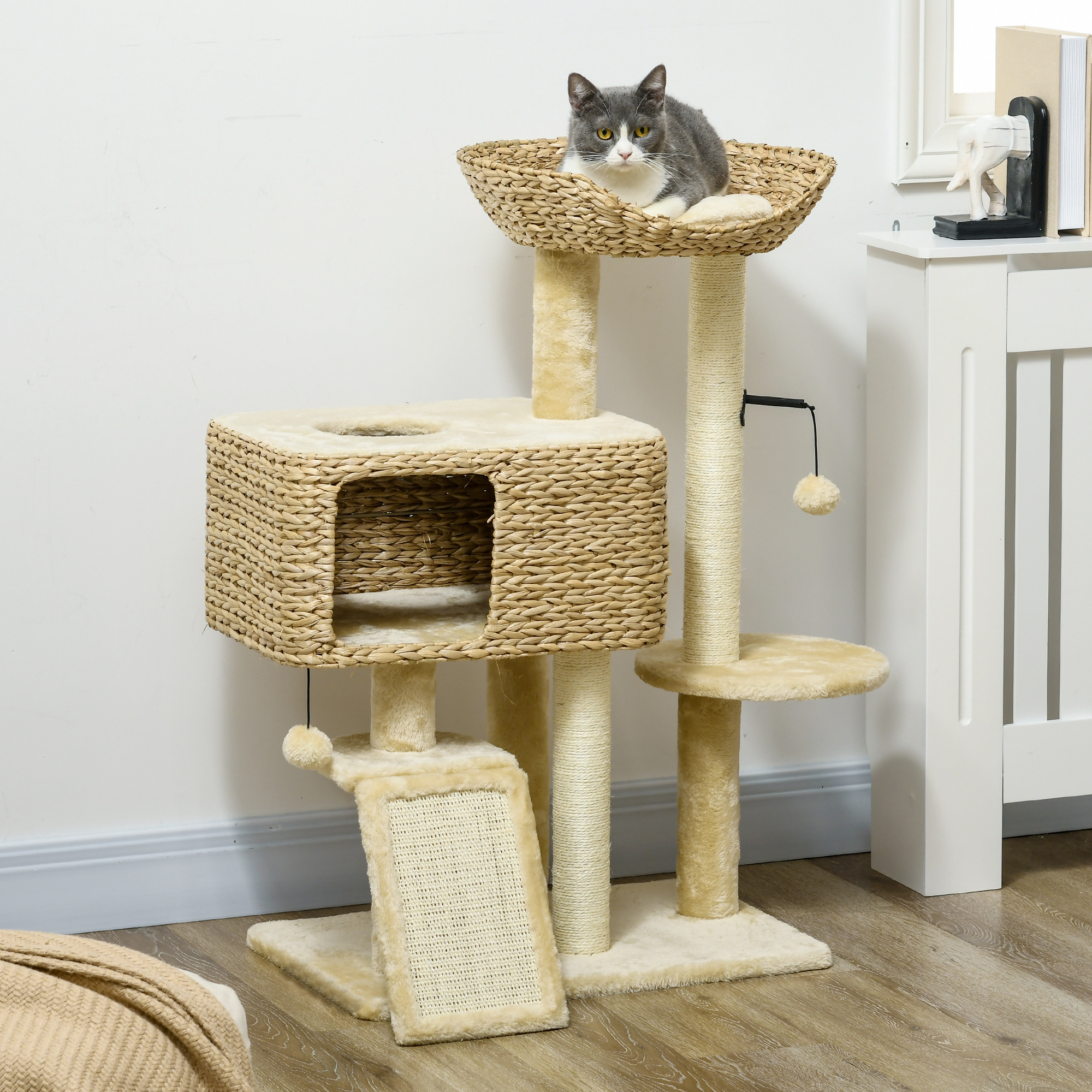
38.5" Wicker Cat Tree
★★★★★ 4.8/5
Recommended For
Apartments • Condos • Small Rooms
Height: 38.5" • Material: Wicker + Plush
- Compact footprint
- Cozy condo & hammock
- Modern furniture-style design
- Stable everyday construction
Why We Love It
Its compact footprint saves valuable floor space, while the woven wicker design blends beautifully into modern apartments. It gives indoor cats a cozy place to nap, scratch, and perch without making the room feel crowded.
✓ Fast Shipping • Easy Returns
Best
Tall & Narrow
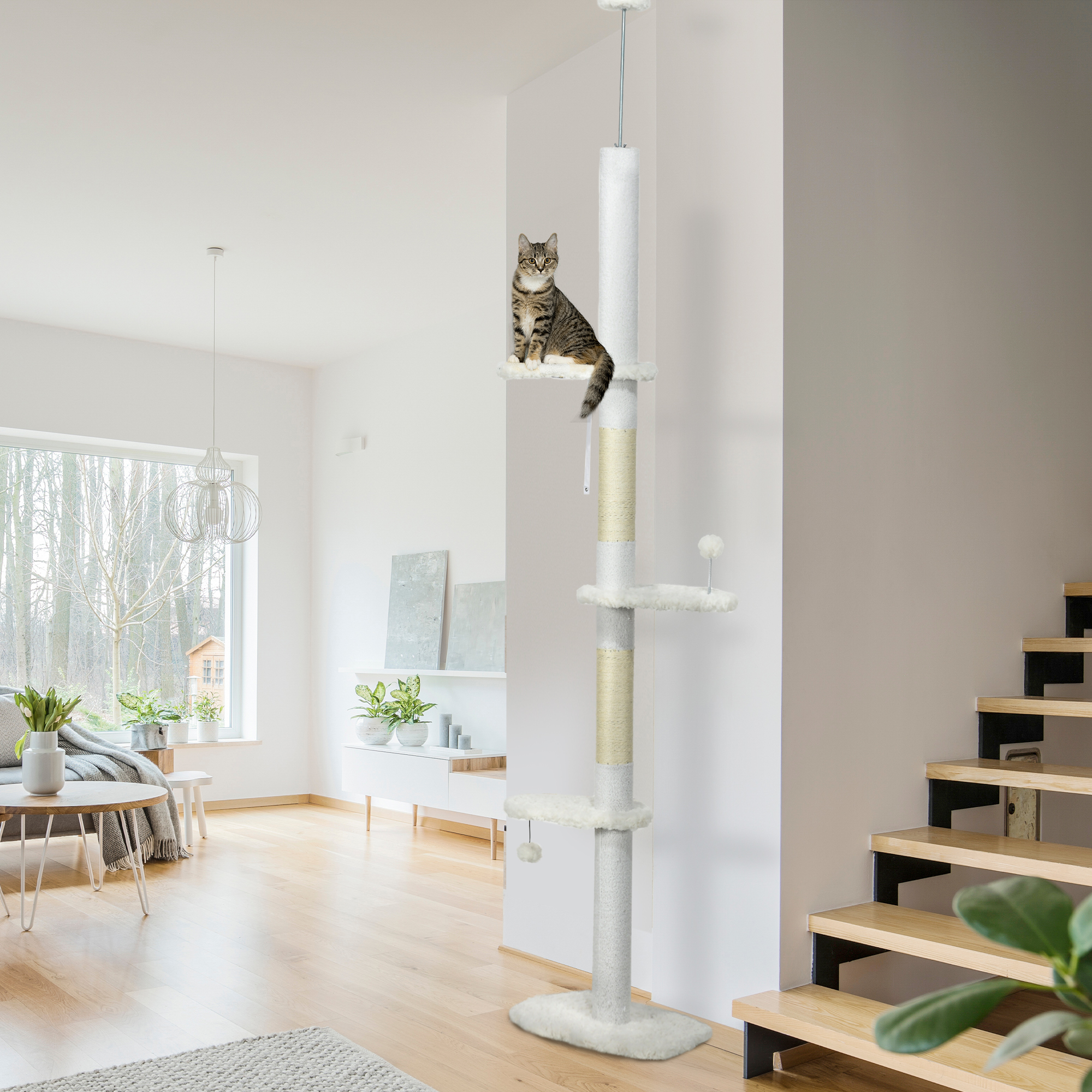
Adjustable Floor-to-Ceiling Cat Tree
★★★★★ 4.8/5
Recommended For
Apartments • Studios • Active Climbers
Height: Adjustable 88.5"–100.5" • Material: Plush + Sisal
- Adjustable floor-to-ceiling design
- Zero bulky footprint
- Stable tension-mounted construction
- Perfect for climbing and exercise
Why We Love It
If floor space is limited, this is one of the smartest cat tree designs available. Its adjustable floor-to-ceiling frame creates plenty of climbing opportunities while keeping your living space open, making it ideal for apartments, studios, and modern homes.
✓ Fast Shipping • Easy Returns
Best
For Apartments
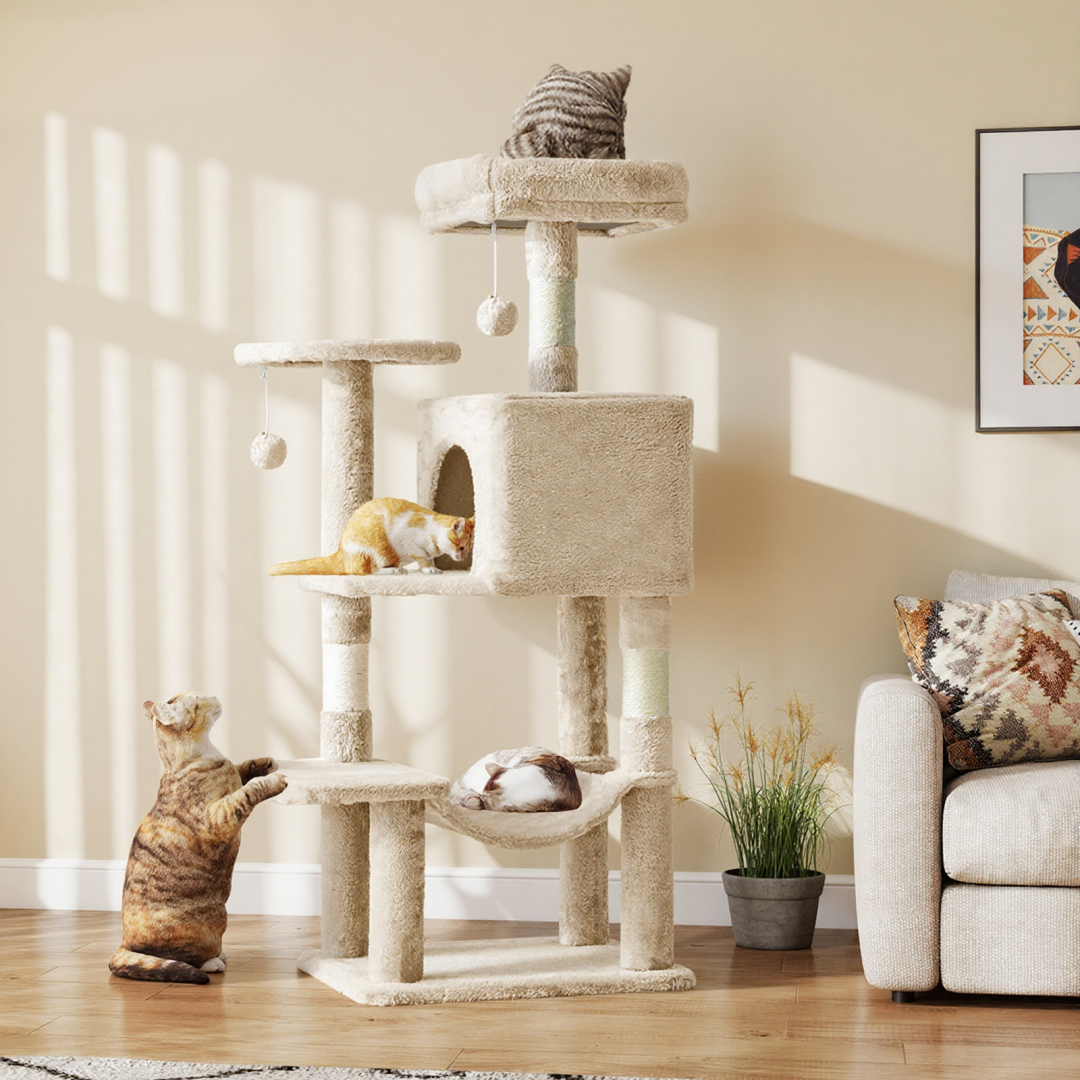
44" Compact Cat Tree with Condo & Hammock
★★★★★ 4.8/5
Recommended For
First-Time Owners • Apartments • Indoor Cats
Height: 44" • Material: Plush + Sisal
- Compact apartment-friendly footprint
- Cozy condo & hammock for lounging
- Durable sisal scratching posts
- Easy size for everyday living
Why We Love It
This compact cat tree offers everything most indoor cats need without taking over your living space. The combination of a cozy condo, elevated perch, and scratching posts makes it an excellent first cat tree for apartments, condos, and smaller homes.
✓ Fast Shipping • Easy Returns
Best
Space-Saving Scratcher
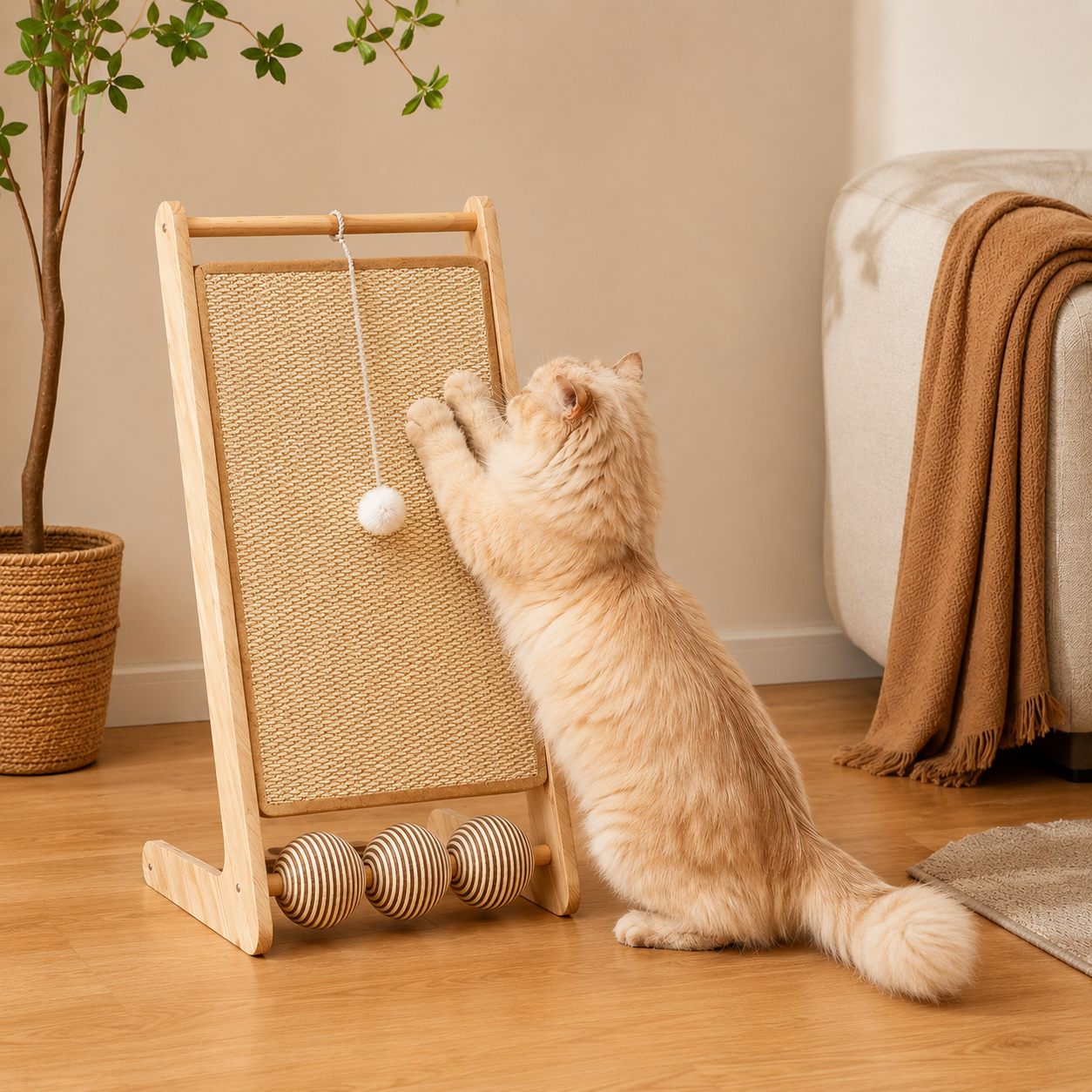
Large Leaning Sisal Cat Scratcher with Hanging Toys
★★★★★ 4.8/5
Recommended For
Apartments • Furniture Protection • All Cats
Material: Natural Sisal • Style: Leaning Scratcher
- Large natural sisal scratching surface
- Space-saving leaning design
- Hanging teaser toys for daily play
- Durable solid wood frame
Why We Love It
Not every cat needs a full cat tree. This leaning scratcher provides a dedicated place to scratch, stretch, and play while taking up very little floor space. It's an excellent choice for protecting furniture in apartments and smaller homes.
✓ Fast Shipping • Easy Returns
Best
For Modern Homes
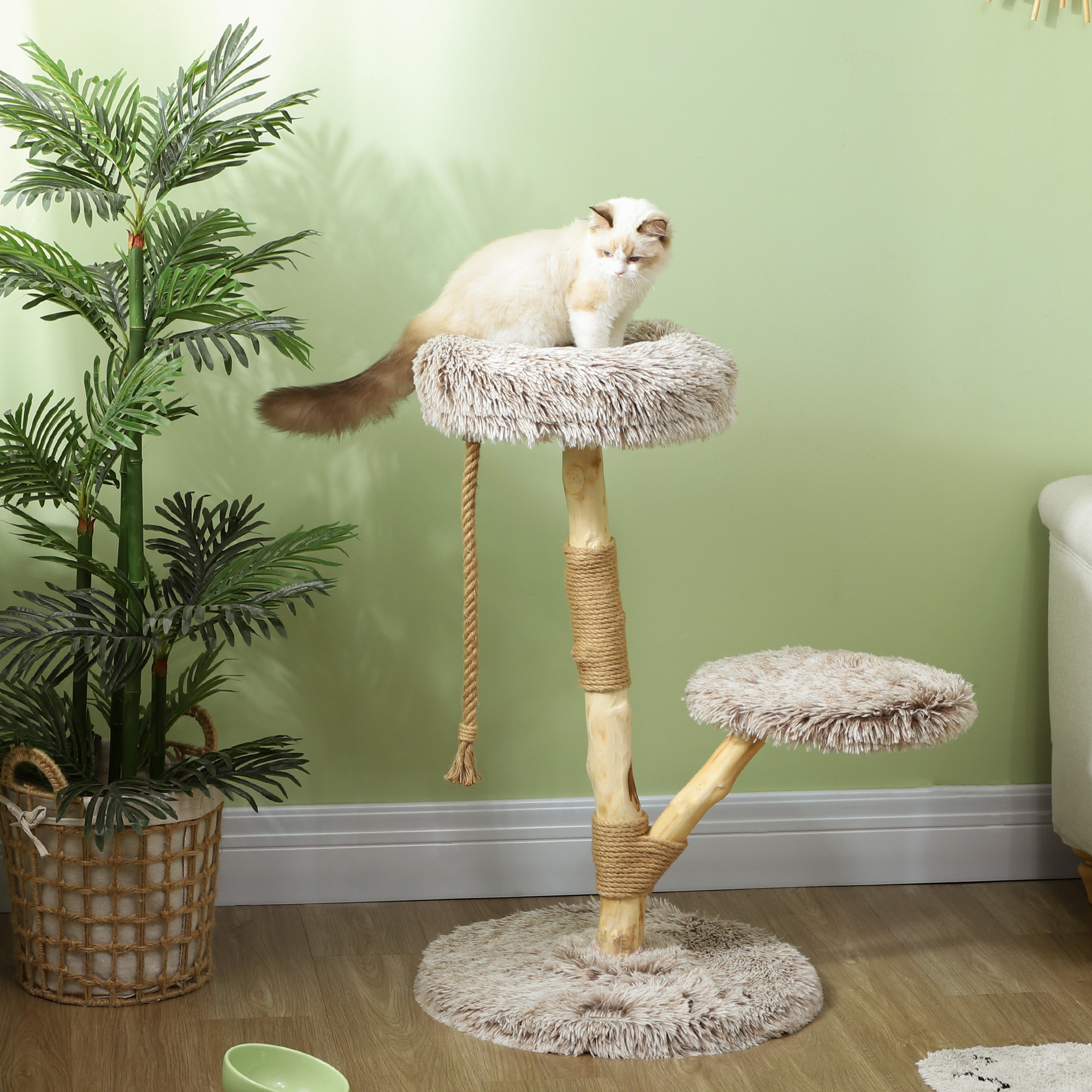
35" Solid Wood Cat Tree
★★★★★ 4.9/5
Recommended For
Modern Homes • Small Cats • Kittens
Height: 35" • Material: Solid Wood + Natural Jute
- Premium solid wood construction
- Soft elevated perch for relaxing
- Natural jute scratching post
- Compact modern footprint
Why We Love It
This elegant solid wood cat tree blends seamlessly into modern interiors while giving smaller cats a comfortable perch and durable scratching surface. It's an excellent choice if you want pet furniture that complements your home instead of standing out.
✓ Fast Shipping • Easy Returns
Best
For Kittens & Small Cats
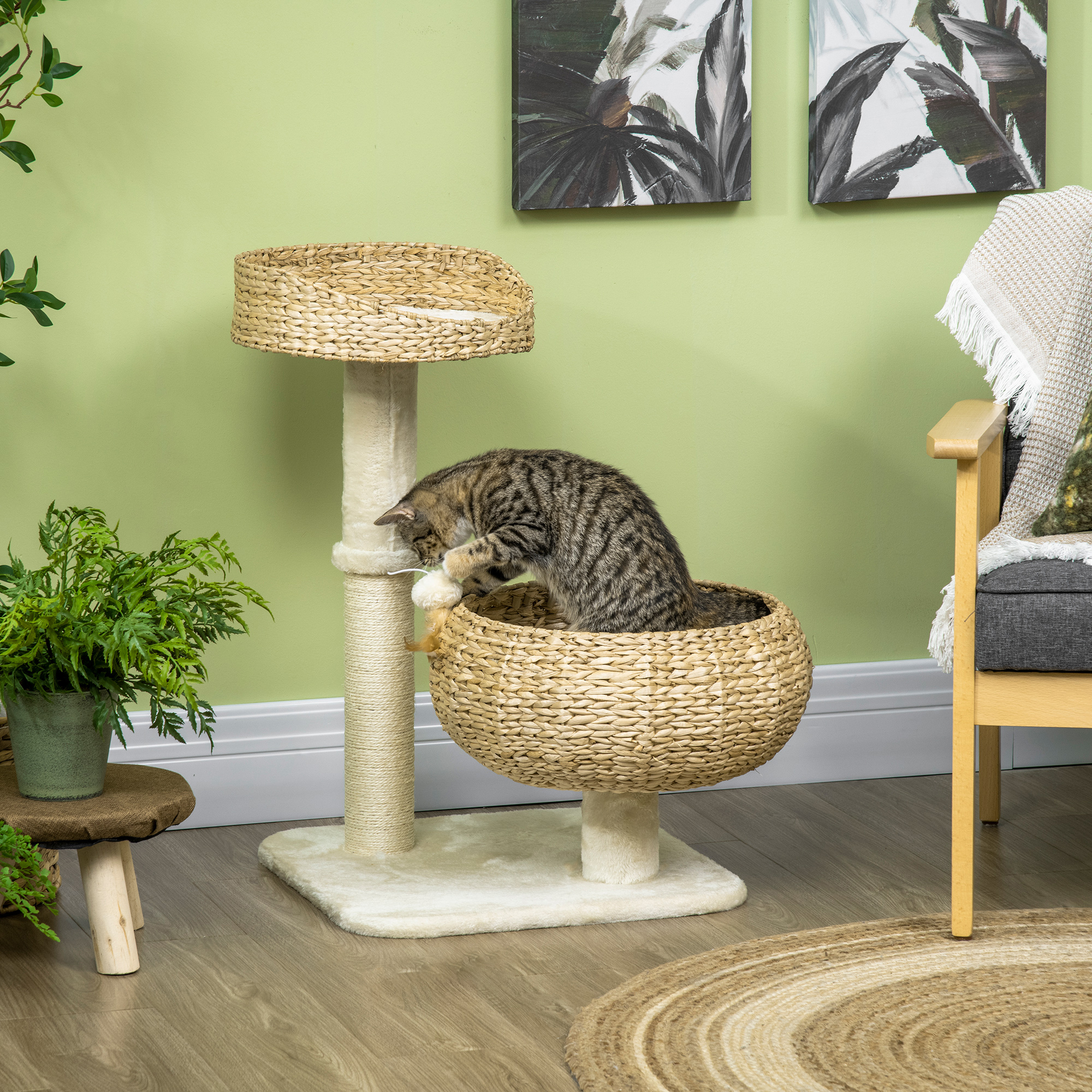
28" Cat Tree for Kittens & Small Cats
★★★★★ 4.8/5
Recommended For
Kittens • Napping • Small Spaces
Height: 28" • Material: Wicker + Sisal
- Cozy basket-style bed
- Stable compact base
- Durable sisal scratching post
- Great for apartments
Why We Love It
Ideal for kittens that love to curl up and relax. The elevated basket perch provides a cozy sleeping spot while the scratching post encourages healthy scratching habits without taking up much floor space.
✓ Fast Shipping • Easy Returns
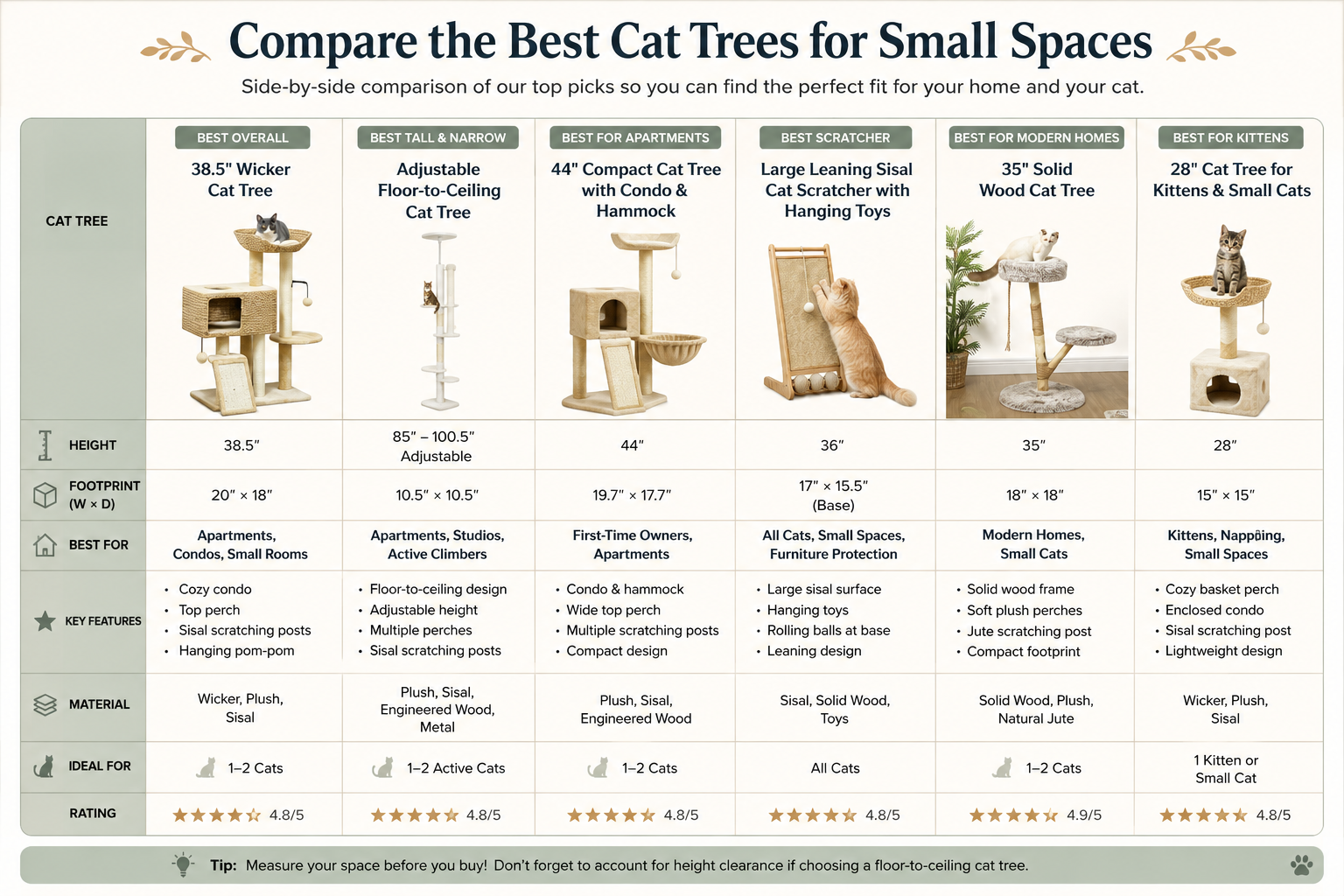
Our In-Depth Reviews of the Best Cat Trees for Small Spaces
A compact footprint is important, but the best cat tree for a small space also needs to work for your cat. We took a closer look at each of our top picks, including how it uses vertical space, the features it offers, and the type of home and cat it's best suited for.
Best Overall: 38.5" Wicker Cat Tree
The 38.5" Wicker Cat Tree earns our Best Overall spot because it packs several useful features into a relatively compact design. Your cat gets an elevated basket-style perch, enclosed condo, scratching surfaces, and multiple levels without the sprawling footprint of a traditional large cat tower.
We especially like this option for apartments, condos, bedrooms, and smaller living rooms where the cat tree will remain visible. The woven wicker-style design has more of a furniture-like appearance than a standard carpeted tower, helping it blend naturally into the room.
What We Like
- Compact design for smaller rooms
- Elevated perch for lounging and watching the room
- Enclosed condo for cats that like privacy
- Multiple scratching surfaces
- Furniture-style appearance
Best For
Apartments • Condos • One or two cats • Small rooms • Cats that enjoy both perching and hiding
Keep in Mind
At 38.5 inches tall, this isn't the best choice for a cat that wants to climb as high as possible. If vertical territory is your priority, our floor-to-ceiling pick below provides considerably more climbing height while using very little floor space.
Best Tall & Narrow: Adjustable Floor-to-Ceiling Cat Tree
The Adjustable Floor-to-Ceiling Cat Tree is one of the smartest options for homes where every square foot matters. Instead of spreading outward like a traditional cat tower, its slim design uses vertical space to create multiple climbing and perching levels while keeping the floor area remarkably open.
We especially like this style for apartments, studios, bedrooms, and active indoor cats that love to climb. The adjustable floor-to-ceiling design also gives cats considerably more height than most compact trees, making it a great option when you want to provide vertical enrichment without adding another bulky piece of furniture.
What We Like
- Extremely small footprint
- Makes excellent use of vertical space
- Multiple levels for climbing and perching
- Great option for active indoor cats
- Ideal for apartments and studios
Best For
Apartments • Studios • Active cats • Climbers • Homes with very limited floor space
Keep in Mind
Because this style extends from the floor to the ceiling, measure your ceiling height carefully before buying and check the manufacturer's recommended height range. It also needs to be installed securely so the structure remains stable as your cat climbs.
Best for Apartments: 44" Compact Cat Tree with Condo & Hammock
The 44" Compact Cat Tree with Condo & Hammock is a great fit for apartment living because it combines several of the features cats love without requiring an oversized tower. Its vertical layout gives your cat places to climb, scratch, hide, perch, and nap while keeping the overall design manageable for smaller rooms.
We especially like the combination of an enclosed condo and cozy hammock, which creates two different resting spaces within one compact piece of cat furniture. Multiple sisal scratching posts add even more functionality, making this a practical choice when you don't have room for separate beds, scratchers, and climbing furniture.
What We Like
- Compact, apartment-friendly design
- Enclosed condo for hiding and sleeping
- Hammock for lounging
- Multiple sisal scratching posts
- Several activities built into one tree
Best For
Apartments • Small living rooms • Indoor cats • First-time cat owners • Cats that love cozy sleeping spots
Keep in Mind
At 44 inches tall, this tree offers a nice balance of climbing space and compact size, but cats that strongly prefer very high perches may be happier with a taller design. Consider both your available floor space and your cat's climbing habits when choosing between a compact mid-height tree and a taller tower.
Best Space-Saving Scratcher: Large Leaning Sisal Cat Scratcher
The Large Leaning Sisal Cat Scratcher is our pick for homes where there simply isn't room for a traditional cat tree. Its slim, leaning design gives cats a tall surface for scratching and stretching while taking up very little floor space—making it especially useful in apartments, bedrooms, hallways, or other tight areas.
We like this option for cats that are more interested in scratching and stretching than climbing or lounging. The tall sisal surface encourages full-body stretching, while the hanging toys add a little extra play value without adding bulk. It can also be a smart addition when your cat already has a favorite window perch or sleeping spot and doesn't need another large piece of cat furniture.
What We Like
- Very small footprint
- Tall scratching surface for full-body stretching
- Simple leaning design
- Built-in hanging toys for added play
- Easy to fit into especially tight spaces
Best For
Very small apartments • Bedrooms • Tight spaces • Cats that love scratching • Homes that don't need a full-size tower
Keep in Mind
This is more of a space-saving scratching and activity station than a traditional cat tree. It doesn't provide the elevated platforms, condos, or sleeping areas found on our other picks, so it's best for cats whose main need is a dedicated place to scratch and stretch.
Best Modern: 35" Solid Wood Cat Tree
The 35" Solid Wood Cat Tree is our favorite pick for small spaces where style matters just as much as function. Its clean wood construction and compact profile give cats dedicated space to scratch, perch, and relax without the bulky appearance of a traditional carpet-covered cat tower.
At just 35 inches tall, it's especially easy to work into apartments, bedrooms, home offices, and smaller living rooms. We also like that the open design keeps the tree from visually overwhelming a small room, while the elevated platforms still give your cat multiple places to climb and lounge.
What We Like
- Modern, furniture-inspired appearance
- Compact 35-inch height
- Solid wood construction
- Multiple levels without excessive bulk
- Easy to incorporate into smaller living spaces
Best For
Modern homes • Apartments • Bedrooms • Home offices • Cats that prefer open perches
Keep in Mind
This is a lower-profile option, so it won't provide the same vertical climbing experience as a tall tower or floor-to-ceiling tree. It's a better choice when you want a compact everyday perch and scratching area that blends naturally with your furniture.
Best for Kittens & Small Cats: 28" Cat Tree
The 28" Cat Tree is our favorite compact pick for kittens and smaller cats that don't need the height or bulk of a full-size tower. Its low-profile design provides a comfortable place to perch, scratch, play, and relax while taking up minimal room—making it especially easy to fit into bedrooms, apartments, and other tight spaces.
We like the combination of accessible platforms, built-in scratching surfaces, and a cozy resting area for younger or smaller cats. The shorter height also makes the different levels easier to reach, while still giving your cat a dedicated piece of furniture to call their own.
What We Like
- Extremely compact design
- Easy-to-reach levels
- Built-in scratching surfaces
- Comfortable resting and play areas
- Doesn't overwhelm a small room
Best For
Kittens • Smaller cats • One-cat homes • Bedrooms • Apartments • Limited floor space
Keep in Mind
The compact dimensions that make this tree so convenient also mean it may feel cramped for a larger adult cat. If your kitten is still growing, consider their expected adult size before choosing a smaller tree so you don't have to replace it too quickly.
What Makes a Cat Tree Good for a Small Space?
The best cat tree for a small space isn't necessarily the smallest one you can find. What matters more is how efficiently it uses the space it takes up. A well-designed compact cat tree should give your cat plenty of opportunities to climb, scratch, perch, and rest without dominating the room.
Here are the features we think matter most when choosing one
Look for a Compact Footprint
Start with the measurements that actually affect your floor space: width and depth.
A tall cat tree with a narrow base can sometimes fit a small room better than a shorter tree with platforms that spread outward. Before buying, measure the exact area where you want the tree to go and compare it with the manufacturer's listed dimensions.
Don't forget to check whether upper platforms extend beyond the base, especially if you're placing the tree beside a wall, sofa, or window.
Use Vertical Space to Your Advantage
When floor space is limited, building up instead of out can give your cat considerably more usable territory.
Tall, narrow cat trees can provide multiple levels for climbing, perching, and sleeping without requiring a large footprint. This can be especially useful for active indoor cats that naturally seek elevated places to observe their surroundings.
Choose Features That Do More Than One Job
In a small home, every piece of furniture has to earn its space—and cat furniture is no different.
Look for designs that combine several useful features, such as scratching posts, perches, condos, hammocks, and play areas. A multifunctional cat tree can reduce the need for separate scratching posts, cat beds, and other pieces of furniture around the room.
Make Sure the Platforms Aren't Too Small
A compact footprint shouldn't mean tiny platforms.
Your cat still needs enough room to comfortably sit, turn around, stretch out, and settle onto their favorite perch. This becomes particularly important for adult and larger cats.
When comparing compact trees, pay attention to the dimensions of the individual platforms and condos—not just the overall dimensions of the tree.
Don't Sacrifice Stability to Save Space
A narrow cat tree still needs to feel secure when your cat jumps onto it.
Look for a sturdy base, well-supported platforms, durable materials, and construction appropriate for your cat's size. Taller trees with particularly narrow footprints may also use tension against the ceiling or other stabilization methods.
A tree that wobbles excessively can make some cats reluctant to use it, so stability should be just as important as footprint when you're comparing space-saving designs.
SMALL-SPACE TIP:
Measure the footprint on your floor with painter's tape before buying. It gives you a much better sense of how much room the tree will actually occupy..
How Much Space Does a Cat Tree Really Need?
There isn't one perfect amount of space for every cat tree. What matters is whether the tree fits comfortably into your room without blocking walkways, crowding furniture, or limiting your cat's ability to climb on and off safely.
Measure the Width and Depth
Start with the tree's footprint—the amount of floor space occupied by its base.
Measure the width and depth of the area where you plan to put the tree, then compare those numbers with the product dimensions. If you're working with a particularly tight space, you can even mark the dimensions on the floor with painter's tape to see exactly how much room the tree will take up.
A few inches can make a surprisingly big difference in a small apartment or bedroom.
Leave Room for Your Cat to Get On and Off
The tree may technically fit into a space, but your cat still needs enough room to actually use it.
Think about how your cat will approach the tree, jump onto lower platforms, and get down from higher ones. Avoid squeezing a tree into an area where furniture or other objects make the main platforms difficult to access.
You also don't want the tree positioned where your cat has to jump directly into a busy walkway.
Check the Widest Part, Not Just the Base
One measurement that's easy to overlook is the total width of the upper platforms.
Perches, hammocks, baskets, and condos can extend beyond the base of the tree. A base that fits perfectly beside your sofa or wall may still leave an upper perch sticking farther into the room than you expected.
Check the complete assembled dimensions before buying—not just the dimensions of the bottom platform.
Don't Forget Ceiling Height
If you're considering a floor-to-ceiling cat tree, ceiling height becomes just as important as floor space.
Measure from the floor to the ceiling at the exact location where you plan to install the tree, then compare that measurement with the manufacturer's adjustable height range.
This is especially important with tension-mounted designs, which need to fit correctly to remain secure.
Think About the Space Your Cat Actually Uses
You don't necessarily need to put a cat tree wherever you happen to have an empty spot.
A compact tree near a favorite window or in the room where your family spends most of its time may get far more use than a larger tree tucked away somewhere your cat rarely visits.
The goal isn't simply to find somewhere the tree fits—it's to find a location where the tree fits and your cat will actually want to use it.
Where Should You Put a Cat Tree in a Small Space?
In a smaller home, where you place a cat tree can matter almost as much as the size of the tree itself. The right location can give your cat a comfortable place to climb, watch, scratch, and relax without making the room feel crowded.
Instead of simply looking for an empty spot, think about where your cat already likes to spend time and how the tree will fit into the natural flow of the room.
Near a Window
A spot near a window can turn even a compact cat tree into one of the most interesting places in the house.
Cats can perch above the floor while watching birds, people, and outdoor activity, giving them both vertical territory and visual enrichment without requiring additional cat furniture.
Just make sure the tree is stable and isn't blocking a frequently used door or walkway.
In an Empty Corner
Corners are often some of the best places for cat trees in small rooms because they make use of space that might otherwise go unused.
A tall, narrow cat tree can work particularly well here, providing several levels of usable cat space while keeping the center of the room open.
Beside a Sofa or Other Furniture
Placing a cat tree beside a sofa, dresser, or other sturdy furniture can help it feel like part of the room instead of an object taking up its own separate area.
Just leave enough clearance around the platforms for your cat to climb and jump safely, and make sure nearby furniture won't interfere with the tree's upper levels.
In a Room Your Cat Actually Uses
That unused corner of a spare room might seem like the perfect place for a cat tree—but it won't save much space if your cat never uses it.
Cats often prefer being near the people, windows, and activity they enjoy. A smaller tree in a favorite living area can be more valuable than a large tree tucked away in an isolated room.
Avoid Busy Walkways and Unstable Areas
Try not to place a cat tree where people constantly have to squeeze around it or where doors can bump into it.
The floor underneath should also be level and stable. This becomes especially important with tall, narrow designs, since reducing the footprint shouldn't come at the expense of stability.
Not sure which room or location is best? See our complete guide Where to Put a Cat Tree for more placement tips.
What Type of Cat Tree Is Best for a Small Space?
The best type of cat tree for a small space depends on more than square footage. Your cat’s size, activity level, favorite sleeping spots, and climbing habits can all help determine which design will work best.
Here’s how the most common space-saving styles compare.
Tall and Narrow Cat Trees
For many small homes, a tall, narrow cat tree offers the best balance between floor space and usable cat space. Instead of spreading outward, these trees provide multiple levels vertically, giving cats room to climb and perch while preserving valuable floor space.
They're especially useful for active cats and cats that naturally seek high vantage points.
Best for: Apartments, bedrooms, active cats, climbers, and homes with limited floor space.
Floor-to-Ceiling Cat Trees
When floor space is extremely limited, a floor-to-ceiling design can be one of the most space-efficient options available.
These trees typically use a very narrow base while extending upward toward the ceiling, creating several climbing and perching levels. They're particularly useful in studios and apartments where a traditional wide cat tower would take up too much room.
Best for: Very small apartments, studios, active cats, and cats that love height.
Top Pick
Adjustable Floor-to-Ceiling Cat Tree
Adjustable Floor-to-Ceiling Cat Tree
★★★★★ 4.8/5
Recommended For
Apartments • Studios • Active Climbers
Height: Adjustable 88.5"–100.5" • Material: Plush + Sisal
- Adjustable floor-to-ceiling design
- Zero bulky footprint
- Stable tension-mounted construction
- Perfect for climbing and exercise
Why We Love It
✓ Fast Shipping • Easy Returns
Best
For Kittens & Small Cats
28" Cat Tree for Kittens & Small Cats
★★★★★ 4.8/5
Recommended For
Kittens • Napping • Small Spaces
Height: 28" • Material: Wicker + Sisal
- Cozy basket-style bed
- Stable compact base
- Durable sisal scratching post
- Great for apartments
Why We Love It
Ideal for kittens that love to curl up and relax. The elevated basket perch provides a cozy sleeping spot while the scratching post encourages healthy scratching habits without taking up much floor space.
✓ Fast Shipping • Easy Returns
Best
For Kittens & Small Cats
28" Cat Tree for Kittens & Small Cats
★★★★★ 4.8/5
Recommended For
Kittens • Napping • Small Spaces
Height: 28" • Material: Wicker + Sisal
- Cozy basket-style bed
- Stable compact base
- Durable sisal scratching post
- Great for apartments
Why We Love It
Ideal for kittens that love to curl up and relax. The elevated basket perch provides a cozy sleeping spot while the scratching post encourages healthy scratching habits without taking up much floor space.
✓ Fast Shipping • Easy Returns
Short and Compact Cat Trees
Not every cat needs a towering structure. A shorter compact tree can work beautifully for kittens, smaller cats, calmer adults, or cats that prefer lounging over climbing.
Compact trees are also easier to fit beneath windows or alongside existing furniture.
Best for: Kittens, smaller cats, bedrooms, window placement, and cats that prefer lower perches.
Corner Cat Trees
A corner-style tree can turn otherwise unused floor space into dedicated territory for your cat.
Look for designs with platforms arranged vertically rather than extending far into the room. This allows the tree to take advantage of both the corner and the wall space above it.
Best for: Living-room corners, bedrooms, apartments, and awkward unused spaces.
Best Overall
Apartments & Small Spaces
38.5" Wicker Cat Tree
★★★★★ 4.8/5
Recommended For
Apartments • Condos • Small Rooms
Height: 38.5" • Material: Wicker + Plush
- Compact footprint
- Cozy condo & hammock
- Modern furniture-style design
- Stable everyday construction
Why We Love It
✓ Fast Shipping • Easy Returns
Top Pick
Adjustable Floor-to-Ceiling Cat Tree
Adjustable Floor-to-Ceiling Cat Tree
★★★★★ 4.8/5
Recommended For
Apartments • Studios • Active Climbers
Height: Adjustable 88.5"–100.5" • Material: Plush + Sisal
- Adjustable floor-to-ceiling design
- Zero bulky footprint
- Stable tension-mounted construction
- Perfect for climbing and exercise
Why We Love It
✓ Fast Shipping • Easy Returns
Top Pick
Adjustable Floor-to-Ceiling Cat Tree
Adjustable Floor-to-Ceiling Cat Tree
★★★★★ 4.8/5
Recommended For
Apartments • Studios • Active Climbers
Height: Adjustable 88.5"–100.5" • Material: Plush + Sisal
- Adjustable floor-to-ceiling design
- Zero bulky footprint
- Stable tension-mounted construction
- Perfect for climbing and exercise
Why We Love It
✓ Fast Shipping • Easy Returns
Multifunctional Cat Trees
When space is limited, a cat tree that performs several jobs can be especially valuable.
A single compact design might include a scratching post, sleeping condo, hammock, perch, and play area, potentially eliminating the need for several separate pieces of cat furniture.
Best for: Small homes where you want one piece of furniture to handle scratching, climbing, playing, and sleeping.
Wall-Mounted Cat Furniture
Wall-mounted shelves, steps, and perches can provide vertical territory while using virtually no traditional floor space.
However, they require secure installation and aren't ideal for every home—particularly rentals where drilling into walls may be restricted.
Best for: Extremely limited floor space, confident climbers, and homes where permanent wall installation is practical.
Not Sure Which Size Is Right?
The right cat tree should fit both your space and your cat. Before buying, consider the tree’s footprint, platform size, overall height, and whether your cat has enough room to climb, stretch, and lounge comfortably.
Not sure what dimensions to look for? Our What Size Cat Tree Do I Need? guide walks you through choosing the right height, footprint, and platform size for your cat and your home.
How to Choose the Best Cat Tree for Your Small Space
When space is limited, the goal isn't simply to buy the smallest cat tree you can find. You want a tree that fits comfortably in your home while still giving your cat enough room to climb, scratch, perch, play, and relax.
Before making your final choice, run through this quick checklist.
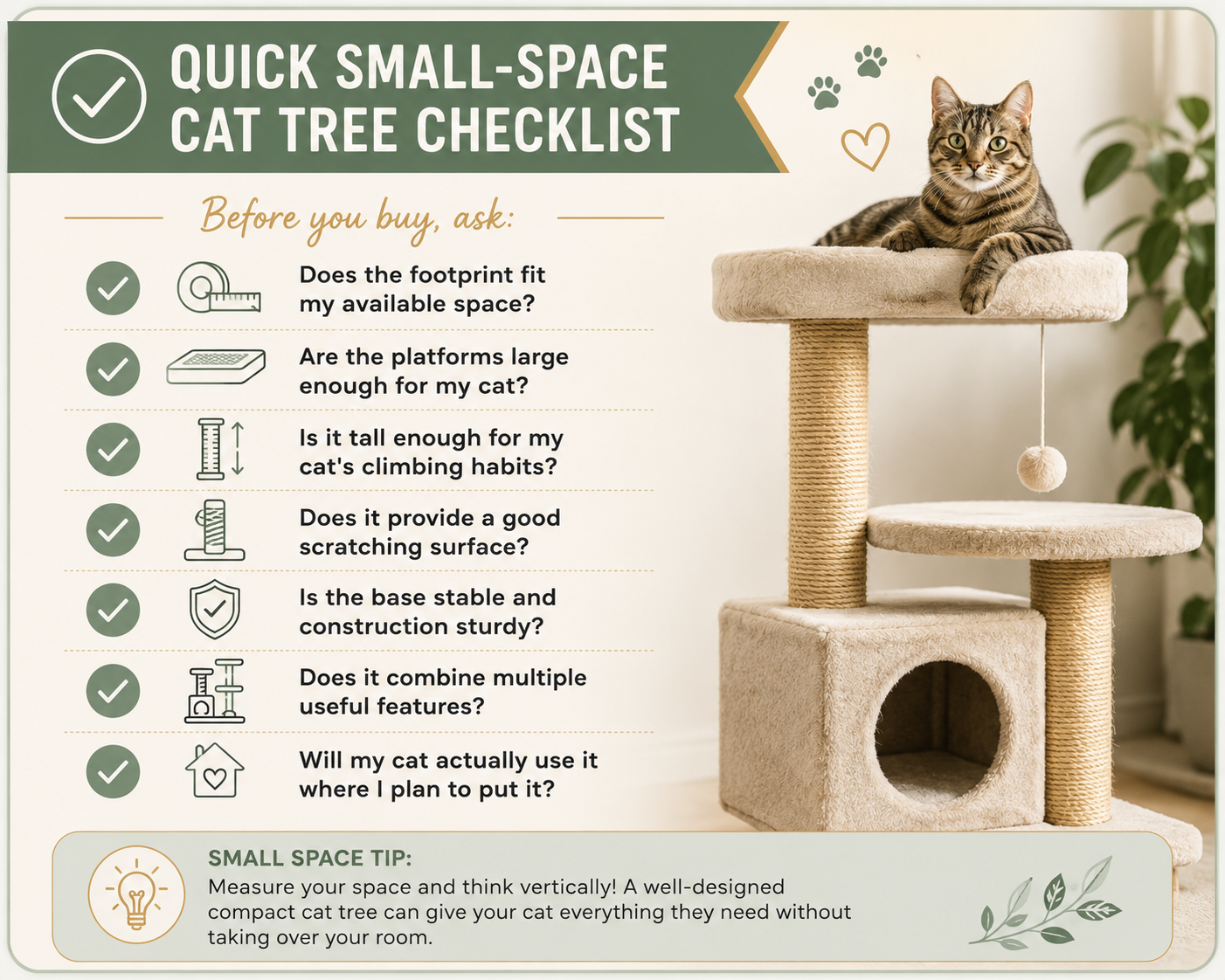
Start With Your Available Floor Space
Measure the exact spot where the tree will go, including both width and depth. Remember to check the full assembled dimensions because upper platforms and hammocks may extend beyond the base.
For particularly tight rooms, favor designs that build up rather than out.
Consider Your Cat's Size
A compact tree still needs to comfortably support your cat.
Check the dimensions of perches, condos, hammocks, and platforms—not just the overall size of the tree. Larger cats generally need wider resting areas and sturdier construction, even when you're trying to conserve floor space.
Think About How Your Cat Uses a Cat Tree
Different cats want different things from their furniture.
Climbers may be happiest with a tall, narrow or floor-to-ceiling tree.
Loungers may prefer a shorter tree with a large comfortable perch.
Scratchers need plenty of durable sisal surface.
Cats that like hiding may benefit from a compact tree with an enclosed condo.
Choosing around your cat's actual habits can be more important than choosing the tree with the most features.
Prioritize Stability
Don't sacrifice stability just to get the smallest possible footprint.
Look for a sturdy base, secure platforms, durable construction, and an appropriate weight capacity. Tall, narrow trees should be particularly stable because cats can generate considerable force when jumping between levels.
Look for Multifunctional Features
A compact cat tree can save even more space when it replaces several separate pieces of cat furniture.
Features such as scratching posts, hammocks, condos, beds, toys, and multiple perches can give your cat several activities in one relatively small footprint.
Choose a Tree You'll Be Happy to Look At
This one matters more in a small home than people sometimes realize.
When your cat tree is sitting in your living room, bedroom, or apartment, it's going to be highly visible. A design that complements your furniture can make the tree feel like part of the room rather than something you're constantly trying to hide.
Frequently Asked Questions About Cat Trees for Small Spaces
Choosing a cat tree when space is limited can bring up a lot of questions about height, footprint, stability, and comfort. Here are answers to some of the most common questions about finding the best cat tree for a small space.
What Is the Best Cat Tree for a Small Space?
The best cat tree for a small space typically has a compact footprint with plenty of usable vertical space. Tall, narrow trees and floor-to-ceiling designs can work especially well because they give cats room to climb and perch without taking up a large portion of the floor.
Does Petqo use grains? If so, why?
You don't necessarily need a large room for a cat tree. Measure the tree's width and depth, then leave enough surrounding room for your cat to comfortably jump on and off. Remember that platforms, hammocks, and beds may extend beyond the dimensions of the base.
How long does it take to get my order?
Yes. In many cases, a tall, narrow cat tree is one of the best choices for a small apartment because it uses vertical rather than horizontal space. Just make sure the tree has a stable base or secure mounting system and fits your ceiling height if it's a floor-to-ceiling model.
How much is shipping?
A spot near a window, wall, or unused corner often works well. Cats generally enjoy being where they can watch the room or look outside, so the best location isn't always the most hidden one.
Check out our Where Should I Put a Cat Tree Guide for more information.
What happens if my package gets lost?
It can be, but the platform and perch dimensions matter more than the overall height alone. An adult cat should be able to sit, turn around, and lounge comfortably without hanging excessively over the edges. Larger cats may need a sturdier tree with wider platforms even in a small home.
Is a Floor-to-Ceiling Cat Tree Good for a Small Space?
Yes. Floor-to-ceiling cat trees can be excellent for extremely limited floor space because they provide multiple climbing levels on a very narrow footprint. Measure your ceiling carefully and follow the manufacturer's installation instructions to ensure the tree is securely fitted.
Should I Get a Tall or Short Cat Tree for a Small Room?
Choose based on both your available space and your cat's preferences. Active cats and climbers often benefit from a tall, narrow tree, while kittens, senior cats, smaller cats, and cats that primarily want somewhere to lounge may be perfectly happy with a shorter compact tree.
Can a Cat Tree Be Too Small?
Yes. A cat tree may be too small if your cat struggles to fit on the platforms, can't comfortably enter the condo, or has very little room to stretch and change positions. A space-saving tree should save your floor space—not your cat's usable space.
Final Thoughts: Finding the Best Cat Tree for Your Small Space
Living in a smaller home doesn’t mean your cat has to miss out on the climbing, scratching, lounging, and perching opportunities a cat tree provides. The key is choosing a design that makes smart use of the space you already have.
For most homes, we think the 38.5" Wicker Cat Tree offers the best overall balance of a compact footprint, comfortable resting areas, scratching surfaces, and furniture-friendly style. If floor space is especially tight, the Adjustable Floor-to-Ceiling Cat Tree is a smart alternative because it builds upward while using very little room.
Ultimately, the best cat tree for a small space is one that fits both your home and your cat. Measure your available area carefully, consider your cat’s size and favorite activities, and prioritize sturdy construction and appropriately sized platforms over simply choosing the smallest tree available.
With the right design, even a small corner of an apartment, bedroom, condo, or living room can become a comfortable vertical space your cat can call their own.
Our Final Recommendation
Best Overall: 38.5" Wicker Cat Tree
Best for Very Limited Floor Space: Adjustable Floor-to-Ceiling Cat Tree
Best for Kittens & Small Cats: 28" Compact Cat Tree