How Tall Should a Cat
Tree Be?
Find the Perfect Height for Your Cat (2026 Guide)
Choosing the right height is one of the biggest factors in whether your cat actually uses their cat tree. In this guide, we'll show the ideal height for kittens, adult cats, large breeds, apartments, and multi-cat homes so you can choose with confidence.
Quick Answer:
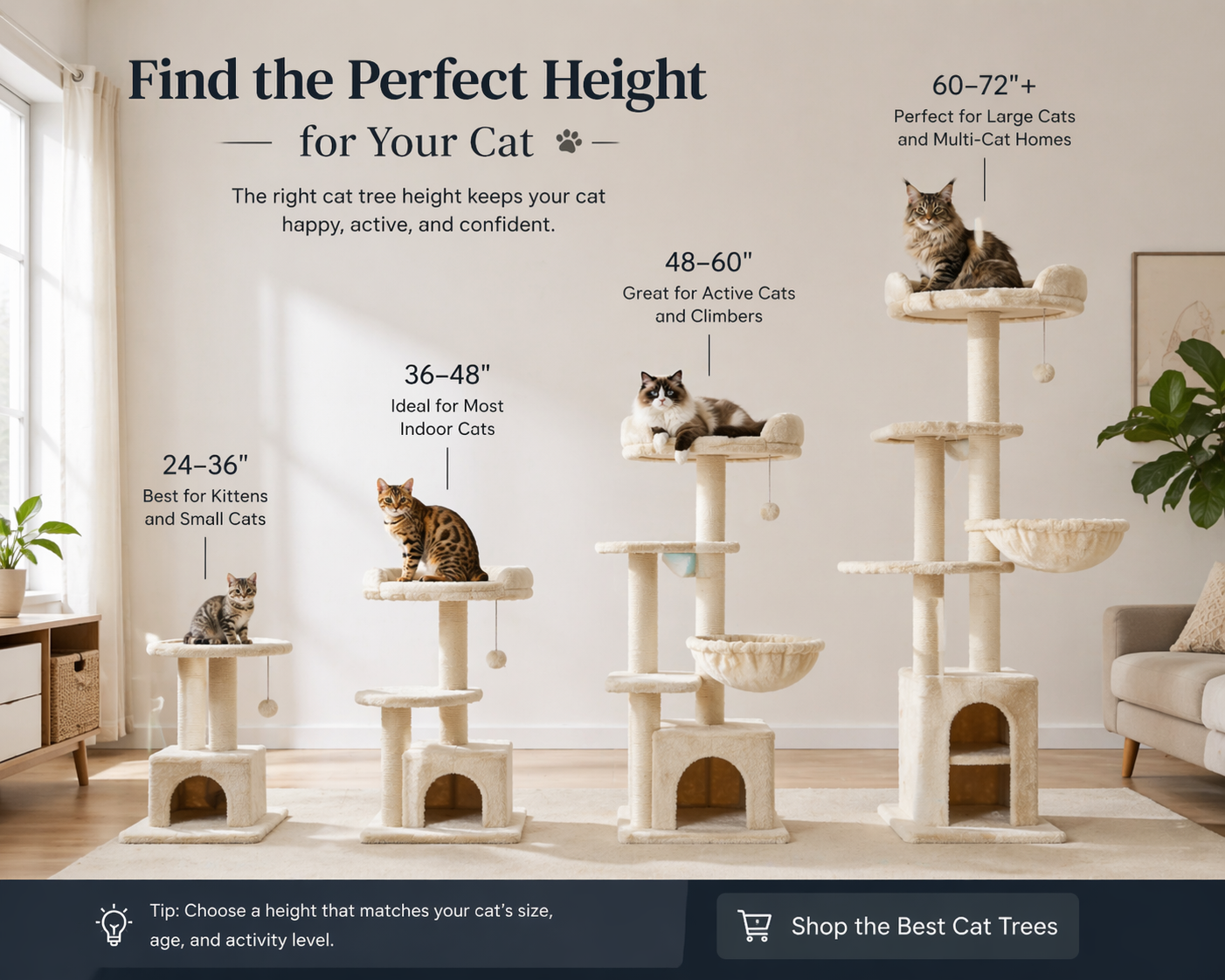
Most indoor cats do best with cat trees between 36–60 inches tall. Kittens usually need 24–36 inch trees, while large breeds and active cats benefit from 50–72+ inch models with multiple levels.
Inside This Guide
How Tall Should a Cat Tree Be?
The ideal cat tree height depends on your cat's age, size, activity level, and the space available in your home. While most indoor cats do best with a tree between 36 and 60 inches tall, kittens, large breeds, and multi-cat households often benefit from different heights. Choosing the right size helps your cat climb, stretch, and relax more comfortably. If the material and appearance matter as much as the height, compare our best wooden cat trees for modern homes.
Shop by Height
24-36"
Small Cats
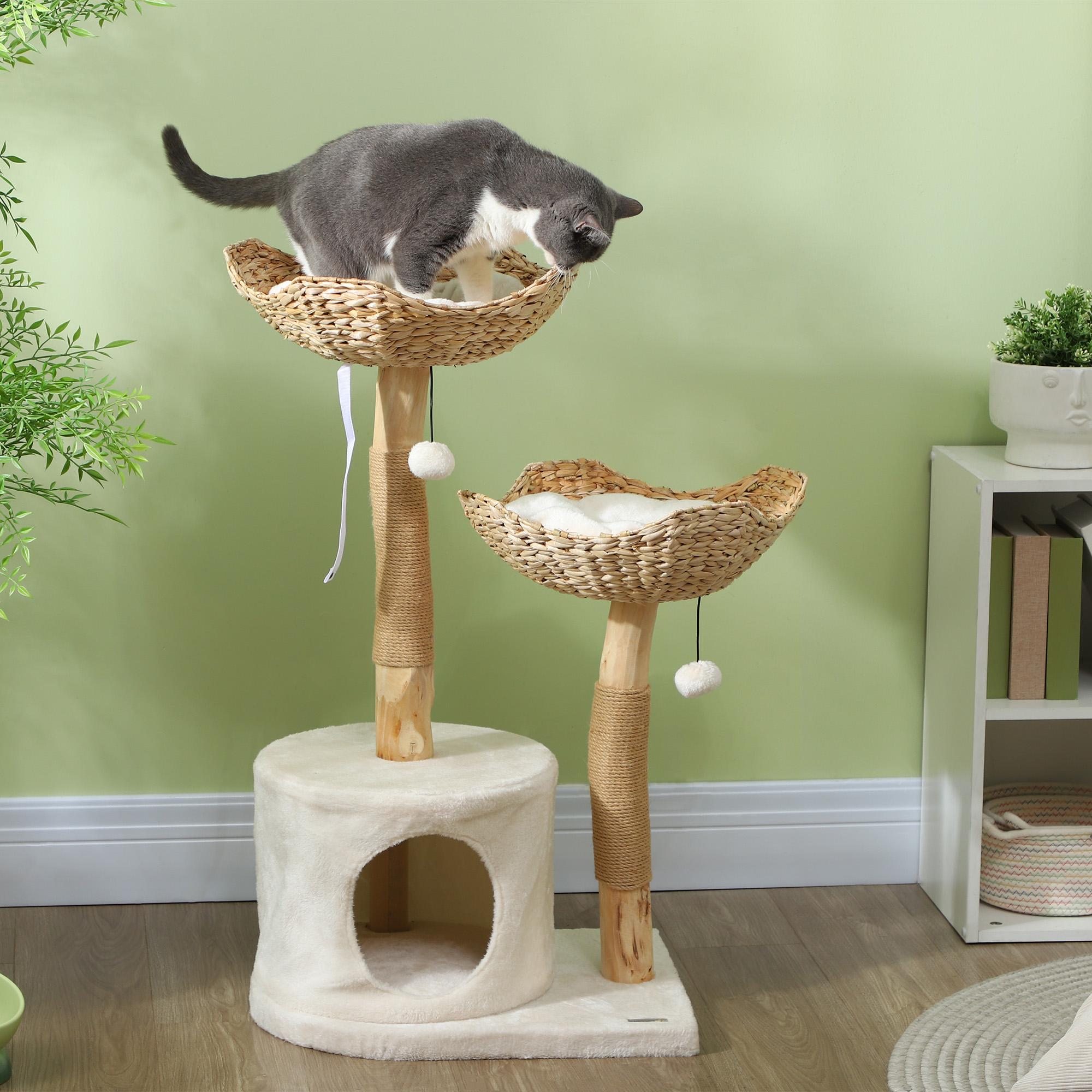
Cat Tree with Condo & Elevated Bed
★★★★★ 4.9/5
Recommended For
Growing Kittens • Small Cats • Indoor Homes
Height: Compact • Material: Plush + Sisal
- Cozy enclosed condo
- Elevated lounging perch
- Durable sisal scratching posts
- Compact apartment-friendly design
Why We Love It
This compact cat tree gives growing kittens everything they need to climb, nap, scratch, and build confidence. The enclosed condo offers a secure resting place while the elevated perch encourages exploration.
✓ Fast Shipping • Easy Returns
36-60"
Most Cats
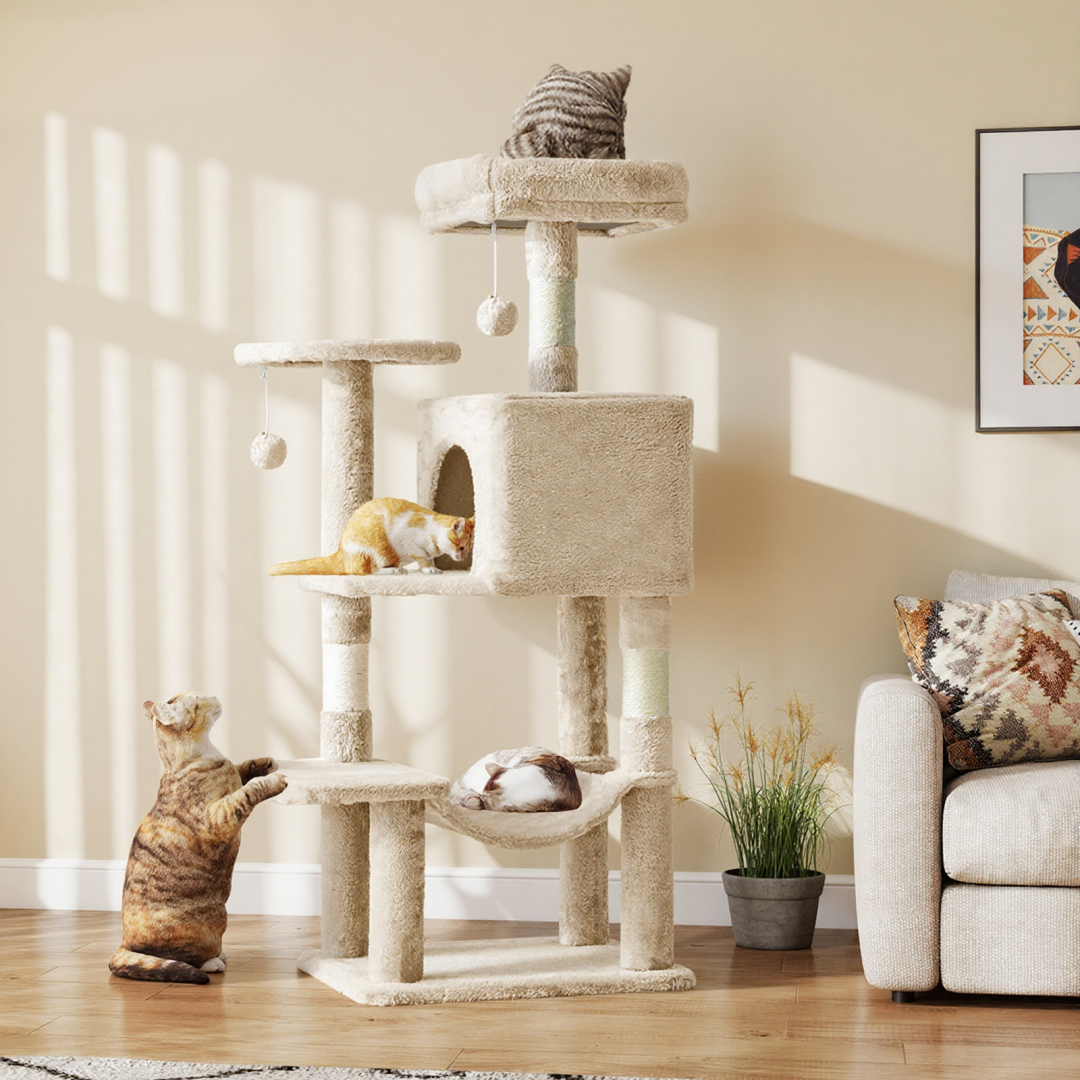
44" Compact Cat Tree with Condo & Hammock
★★★★★ 4.8/5
Recommended For
First-Time Owners • Apartments • Indoor Cats
Height: 44" • Material: Plush + Sisal
- Compact apartment-friendly footprint
- Cozy condo & hammock for lounging
- Durable sisal scratching posts
- Easy size for everyday living
Why We Love It
This compact cat tree offers everything most indoor cats need without taking over your living space. The combination of a cozy condo, elevated perch, and scratching posts makes it an excellent first cat tree for apartments, condos, and smaller homes.
✓ Fast Shipping • Easy Returns
60-72"
Large Active Cats
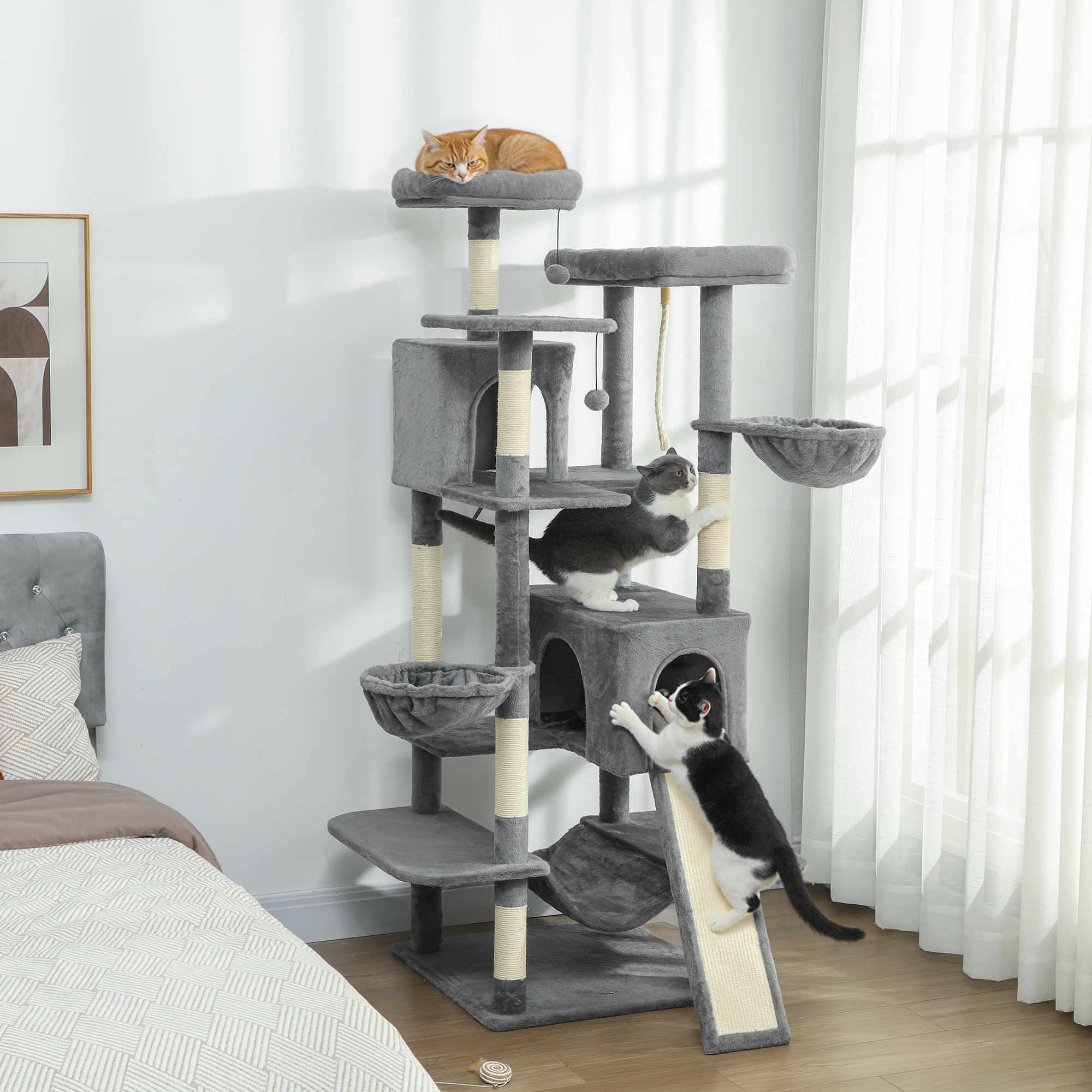
69" Multi-Level Cat Tree
★★★★★ 4.9/5
Recommended For
Large Cats • Multi-Cat Homes • Active Climbers
Height: 69" • Material: Plush + Sisal
- 69" extra-tall climbing height
- Three spacious platforms
- Two cozy condos & dual hammocks
- Reinforced wide base for stability
Why We Love It
Designed for active cats that love to climb, this premium multi-level cat tree offers plenty of vertical space, multiple resting areas, and excellent stability for homes with several cats.
✓ Fast Shipping • Easy Returns
What Is the Best Cat Tree Height for Different Types of Cats?
Best Height for Kittens
Kittens do best with cat trees between 24 and 36 inches tall. At this stage, confidence and safety are more important than maximum height. A shorter, stable tree lets young cats climb, scratch, and explore without large jumps that could discourage them or lead to falls.
Look for:
- Stable, wide base
- Low climbing distances
- Multiple scratching posts
- Soft sleeping perch
Best Height for Adult Cats
Most adult indoor cats are happiest with a 36–60 inch cat tree. This height provides enough vertical space for climbing, stretching, lounging, and observing the room without overwhelming smaller living spaces. For most households, this is the best all-around height range.
Look for:
- Multiple lounging platforms
- Tall scratching posts
- Comfortable top perch
- Durable construction
Best Height for Large Cats
Large breeds like Maine Coons, Norwegian Forest Cats, and Ragdolls typically benefit from 50–72+ inch cat trees with reinforced construction. Extra height gives them room to climb naturally, but height alone isn't enough — larger platforms, thicker posts, and a sturdy base are especially important for heavier cats. If you're shopping specifically for a bigger breed, see our Best Cat Trees for Large Cats guide for more size and stability recommendations.
Look for:
- Extra-wide platforms
- Reinforced posts
- Heavy base
- High weight capacity
Best Height for Senior Cats
Senior cats often prefer 24–48 inch cat trees with easy-to-reach platforms. While many older cats still enjoy climbing, lower levels and gradual steps reduce strain on aging joints while still providing a safe, elevated place to rest.
Look for:
- Low platforms
- Wide steps
- Soft beds
- Stable construction
What Cat Tree Height Is Best for Your Home?
Choosing the right cat tree isn't just about your cat—it's also about your available space. The best height balances your cat's natural climbing instincts with your home's layout, ceiling height, and floor space. Here's what we recommend for the most common living situations.
Best Cat Tree Height for Apartments
If you live in an apartment or condo, taller cat trees often make better use of limited floor space. A 50–72 inch cat tree provides plenty of climbing opportunities while keeping your cat's activity vertical instead of spreading across your furniture.
Look for:
- Narrow footprint
- Multiple platforms
- Window-friendly placement
- Stable base
Best Cat Tree Height for Multi-Cat Homes
Homes with multiple cats benefit from taller trees with several resting spots. A 60–72+ inch cat tree gives each cat their own perch, helping reduce competition and giving every cat a comfortable place to climb and relax. For more options designed with multiple resting areas, see our Best Cat Trees for Multiple Cats guide.
Look for:
- Multiple sleeping platforms
- Wide perches
- Reinforced construction
- Heavy-duty base
Our Recommendation
Multi-Cat Homes
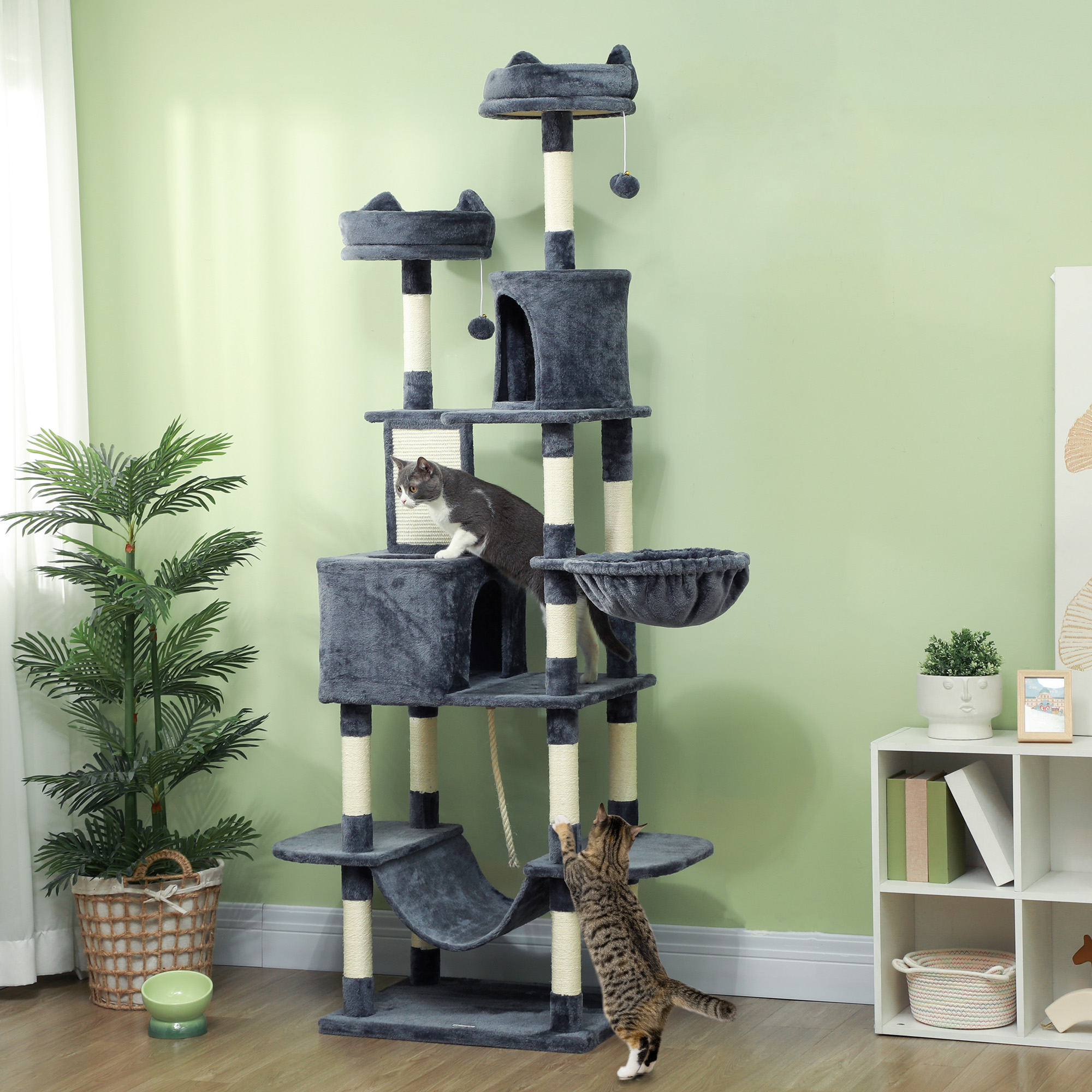
81" Heavy-Duty Cat Tree
★★★★★ 4.8/5
Recommended For
Active Cats • Multi-Level Play • Indoor Homes
Height: 81" • Material: Plush + Sisal
- Towering 81" climbing height
- Multiple condos & lounging spots
- Reinforced anti-tip construction
- Designed for climbing, jumping & play
Why We Love It
Built for energetic indoor cats, this extra-tall cat tree encourages climbing, exploring, and daily exercise while providing multiple cozy places to rest. It's an excellent choice for active cats that love vertical space.
✓ Fast Shipping • Easy Returns
Our Recommendation
Apartments
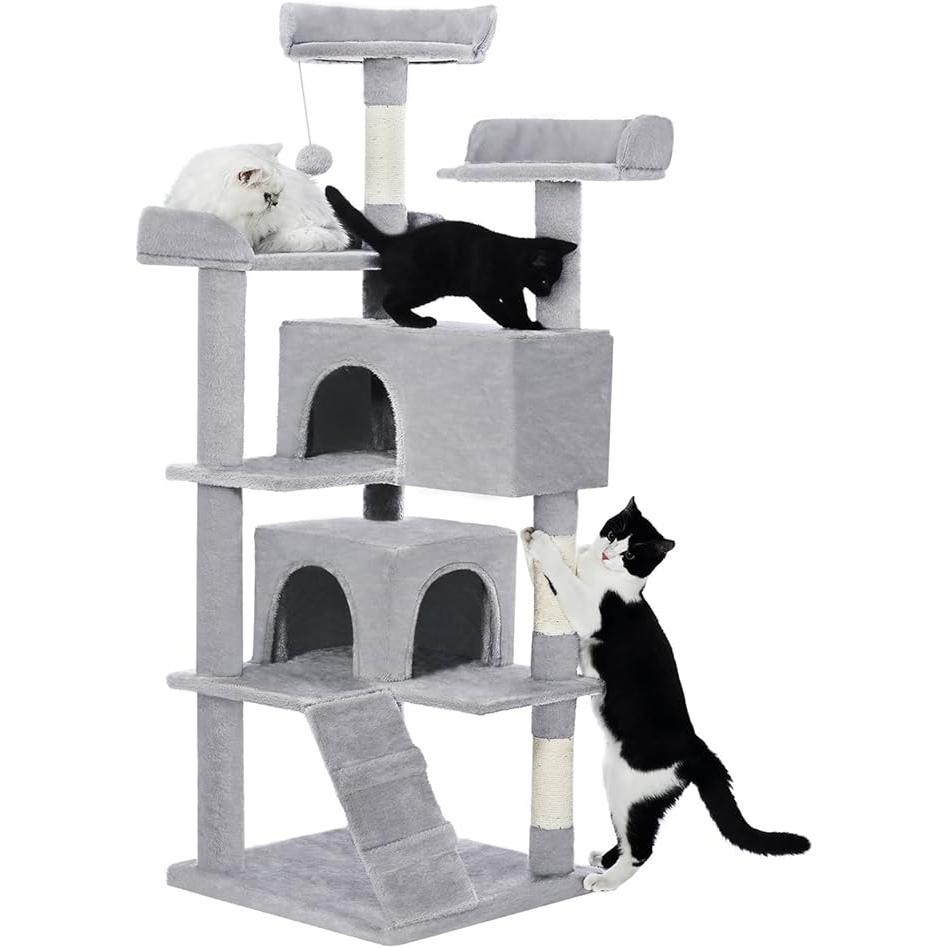
56" Multi-Level Cat Tree
★★★★★ 4.7/5
Recommended For
Apartments • Multi-Cat Homes • Everyday Climbing
Height: 56" • Material: Plush + Sisal
- Spacious multi-level climbing design
- Two enclosed condos
- Durable sisal scratching posts
- Stable everyday construction
Why We Love It
A great everyday cat tree for larger indoor cats that need multiple lounging spots without the extra height of oversized towers.
✓ Fast Shipping • Easy Returns
Our Recommendation
Apartments
56" Multi-Level Cat Tree
★★★★★ 4.7/5
Recommended For
Apartments • Multi-Cat Homes • Everyday Climbing
Height: 56" • Material: Plush + Sisal
- Spacious multi-level climbing design
- Two enclosed condos
- Durable sisal scratching posts
- Stable everyday construction
Why We Love It
A great everyday cat tree for larger indoor cats that need multiple lounging spots without the extra height of oversized towers.
✓ Fast Shipping • Easy Returns
Best Cat Tree Height for Small Spaces
Don't have room for a giant cat tree? A well-designed 36–48 inch model can still provide scratching, climbing, and lounging without overwhelming your room. Many compact cat trees include multiple levels while fitting neatly into corners or beside furniture.
Look for:
- Compact footprint
- Vertical design
- Comfortable perch
- Durable scratching post
Our Recommendation
Small Spaces
44" Compact Cat Tree with Condo & Hammock
★★★★★ 4.8/5
Recommended For
First-Time Owners • Apartments • Indoor Cats
Height: 44" • Material: Plush + Sisal
- Compact apartment-friendly footprint
- Cozy condo & hammock for lounging
- Durable sisal scratching posts
- Easy size for everyday living
Why We Love It
This compact cat tree offers everything most indoor cats need without taking over your living space. The combination of a cozy condo, elevated perch, and scratching posts makes it an excellent first cat tree for apartments, condos, and smaller homes.
✓ Fast Shipping • Easy Returns
Our Recommendation
Multi-Cat Homes
81" Heavy-Duty Cat Tree
★★★★★ 4.8/5
Recommended For
Active Cats • Multi-Level Play • Indoor Homes
Height: 81" • Material: Plush + Sisal
- Towering 81" climbing height
- Multiple condos & lounging spots
- Reinforced anti-tip construction
- Designed for climbing, jumping & play
Why We Love It
Built for energetic indoor cats, this extra-tall cat tree encourages climbing, exploring, and daily exercise while providing multiple cozy places to rest. It's an excellent choice for active cats that love vertical space.
✓ Fast Shipping • Easy Returns
Our Recommendation
Multi-Cat Homes
81" Heavy-Duty Cat Tree
★★★★★ 4.8/5
Recommended For
Active Cats • Multi-Level Play • Indoor Homes
Height: 81" • Material: Plush + Sisal
- Towering 81" climbing height
- Multiple condos & lounging spots
- Reinforced anti-tip construction
- Designed for climbing, jumping & play
Why We Love It
Built for energetic indoor cats, this extra-tall cat tree encourages climbing, exploring, and daily exercise while providing multiple cozy places to rest. It's an excellent choice for active cats that love vertical space.
✓ Fast Shipping • Easy Returns
Best Height for Cat Trees Near Windows
One of the easiest ways to encourage your cat to use their tree is placing it near a window. A 48–72 inch cat tree can give cats a comfortable perch for watching birds, people, and outdoor activity while enjoying natural light. Just make sure the tree has a stable base and enough clearance from curtains or nearby furniture. For more placement tips, see our guide on Where to Put a Cat Tree.
Look for:
- High top perch
- Comfortable bed
- Multiple viewing levels
- Stable construction
Our Recommendation
Near Windows
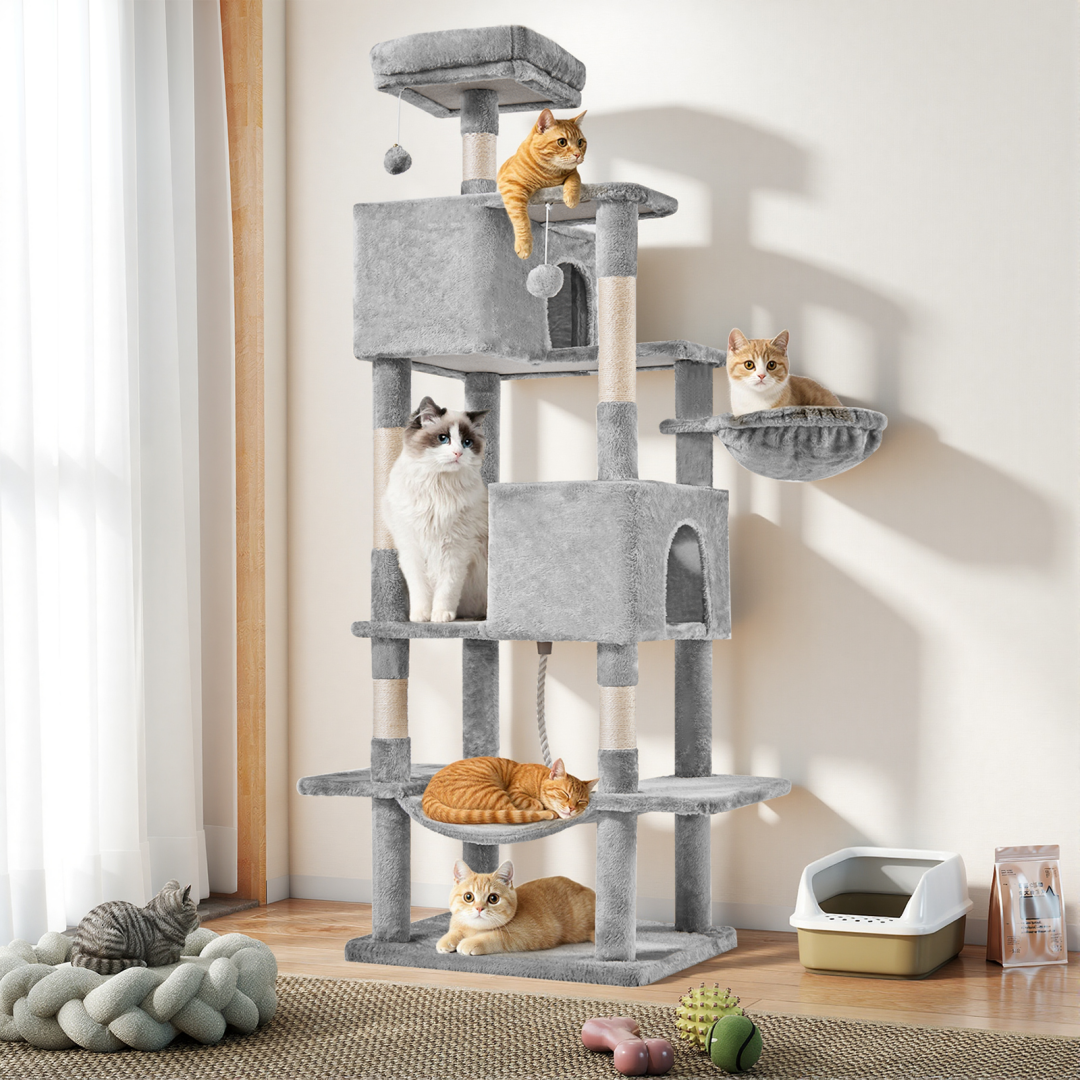
66” Multi-Level Cat Tree
★★★★★ 4.9/5
Recommended For
Large Cats • Multi-Cat Homes • Active Climbers
Height: 66" • Material: Plush + Sisal
- 66" climbing height
- Reinforced frame
- Spacious platforms
- Wide stable base
Why We Love It
One of the sturdiest cat trees we've tested, with excellent climbing space and roomy platforms for multiple cats.
✓ Fast Shipping • Easy Returns
Our Recommendation
Small Spaces
44" Compact Cat Tree with Condo & Hammock
★★★★★ 4.8/5
Recommended For
First-Time Owners • Apartments • Indoor Cats
Height: 44" • Material: Plush + Sisal
- Compact apartment-friendly footprint
- Cozy condo & hammock for lounging
- Durable sisal scratching posts
- Easy size for everyday living
Why We Love It
This compact cat tree offers everything most indoor cats need without taking over your living space. The combination of a cozy condo, elevated perch, and scratching posts makes it an excellent first cat tree for apartments, condos, and smaller homes.
✓ Fast Shipping • Easy Returns
Our Recommendation
Small Spaces
44" Compact Cat Tree with Condo & Hammock
★★★★★ 4.8/5
Recommended For
First-Time Owners • Apartments • Indoor Cats
Height: 44" • Material: Plush + Sisal
- Compact apartment-friendly footprint
- Cozy condo & hammock for lounging
- Durable sisal scratching posts
- Easy size for everyday living
Why We Love It
This compact cat tree offers everything most indoor cats need without taking over your living space. The combination of a cozy condo, elevated perch, and scratching posts makes it an excellent first cat tree for apartments, condos, and smaller homes.
✓ Fast Shipping • Easy Returns
Once you know which height fits your room, compare our 10 best modern cat trees for furniture-inspired designs that complement contemporary interiors.
Why Do Platform Size and Stability Matter?
A cat tree's height is only part of the equation. Platform size and overall stability determine whether your cat feels safe using it every day. Even the tallest cat tree won't get much use if the platforms are cramped or the structure wobbles when your cat climbs.
When choosing a cat tree, look beyond the height and pay close attention to how well it's built.
Choosing the Right Platform Size
Cats need enough room to comfortably stretch, turn around, and settle in for a nap. Small platforms may work for kittens, but larger cats often feel cramped and unsupported.
Choose larger platforms if your cat:
- Is a Maine Coon, Ragdoll, or another large breed
- Loves to stretch out while sleeping
- Shares the tree with other cats
- Spends long periods lounging on elevated perches
A spacious platform encourages your cat to use the tree more often and provides a more comfortable resting spot throughout the day.
Why Stability Is More Important Than Height
Many people assume taller is always better—but a stable 48-inch cat tree is far better than a wobbly 72-inch one.
Cats instinctively avoid furniture that feels unsafe. If a tree rocks, sways, or tips while climbing, your cat may stop using it altogether.
Look for features like:
- A wide, reinforced base
- Thick support posts
- Secure connections between platforms
- High weight capacity
- Anti-tip wall anchor (for extra-tall models)
These features become even more important for large breeds and multi-cat households.
Our Buying Advice
If you're deciding between two similar cat trees, always choose the model with better stability and larger platforms over the one that's simply taller.
A sturdy, well-built cat tree provides:
- Better climbing confidence
- Safer jumping and landings
- More comfortable lounging
- Longer product lifespan
- Greater everyday use
Your cat is far more likely to use a tree that feels secure than one that's tall but unstable.
Our Recommendation
Best Heavy-Duty Pick
66” Multi-Level Cat Tree
★★★★★ 4.9/5
Recommended For
Large Cats • Multi-Cat Homes • Active Climbers
Height: 66" • Material: Plush + Sisal
- 66" climbing height
- Reinforced frame
- Spacious platforms
- Wide stable base
Why We Love It
One of the sturdiest cat trees we've tested, with excellent climbing space and roomy platforms for multiple cats.
✓ Fast Shipping • Easy Returns
Our Recommendation
Near Windows
66” Multi-Level Cat Tree
★★★★★ 4.9/5
Recommended For
Large Cats • Multi-Cat Homes • Active Climbers
Height: 66" • Material: Plush + Sisal
- 66" climbing height
- Reinforced frame
- Spacious platforms
- Wide stable base
Why We Love It
One of the sturdiest cat trees we've tested, with excellent climbing space and roomy platforms for multiple cats.
✓ Fast Shipping • Easy Returns
Our Recommendation
Near Windows
66” Multi-Level Cat Tree
★★★★★ 4.9/5
Recommended For
Large Cats • Multi-Cat Homes • Active Climbers
Height: 66" • Material: Plush + Sisal
- 66" climbing height
- Reinforced frame
- Spacious platforms
- Wide stable base
Why We Love It
One of the sturdiest cat trees we've tested, with excellent climbing space and roomy platforms for multiple cats.
✓ Fast Shipping • Easy Returns
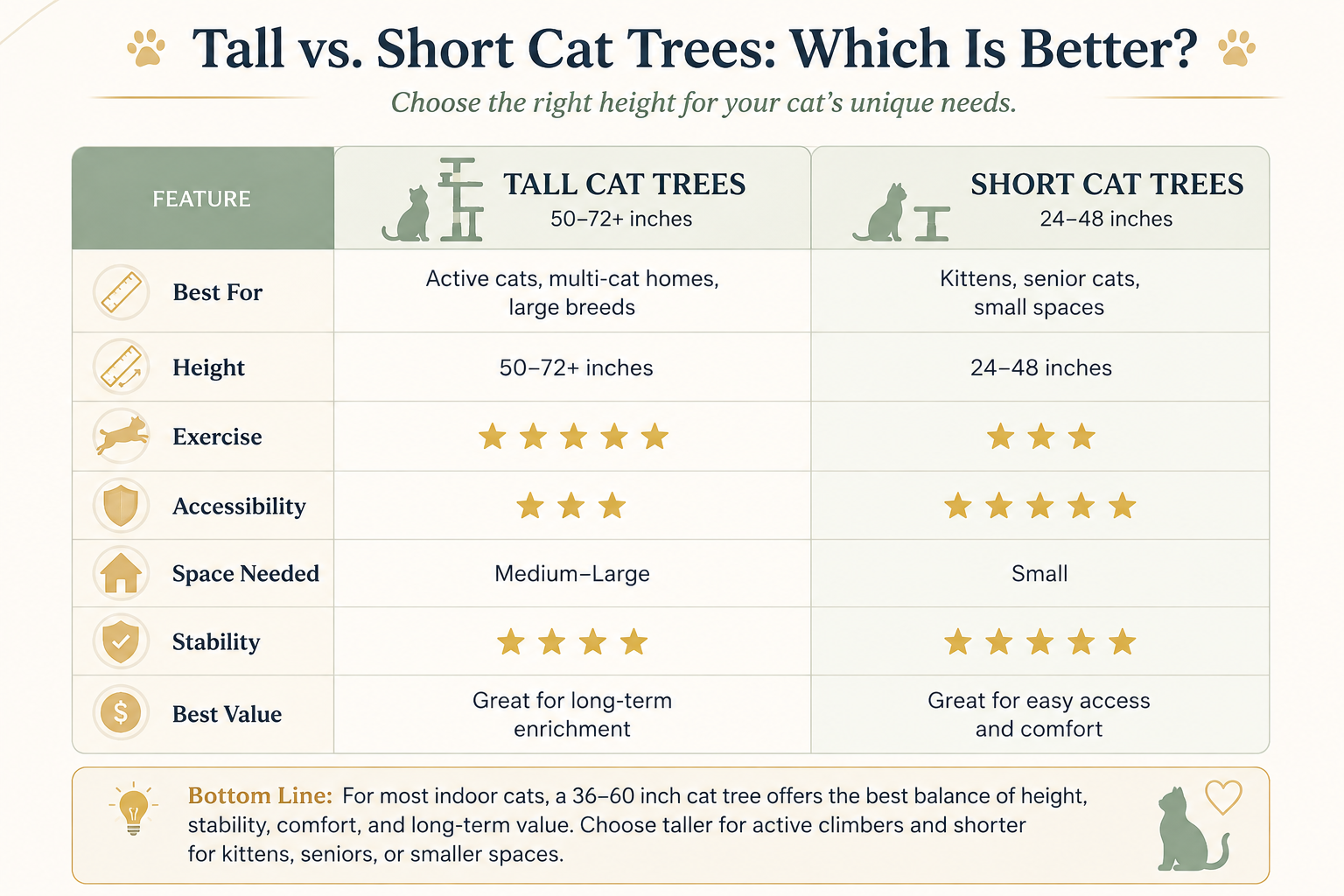
Tall vs. Short Cat Trees: Which Is Better?
There isn't a single "best" cat tree height for every cat. The right choice depends on your cat's age, activity level, and how much space you have available. While most indoor cats benefit from a taller tree, shorter models are often the better choice for kittens, senior cats, and smaller homes.
Benefits of Tall Cat Trees
Tall cat trees (typically 50–72+ inches) give cats the vertical space they naturally crave. They're ideal for energetic cats that enjoy climbing, jumping, and observing their surroundings from above.
Tall cat trees are best for:
- Active and playful cats
- Large breeds like Maine Coons and Ragdolls
- Multi-cat households
- Homes with limited floor space but high ceilings
Advantages
- More climbing and exercise
- Multiple elevated lounging spots
- Better use of vertical space
- Helps reduce boredom through enrichment
Our Pick
for Tall Cat Trees
69" Multi-Level Cat Tree
★★★★★ 4.9/5
Recommended For
Large Cats • Multi-Cat Homes • Active Climbers
Height: 69" • Material: Plush + Sisal
- 69" extra-tall climbing height
- Three spacious platforms
- Two cozy condos & dual hammocks
- Reinforced wide base for stability
Why We Love It
Designed for active cats that love to climb, this premium multi-level cat tree offers plenty of vertical space, multiple resting areas, and excellent stability for homes with several cats.
✓ Fast Shipping • Easy Returns
Our Recommendation
Best Heavy-Duty Pick
66” Multi-Level Cat Tree
★★★★★ 4.9/5
Recommended For
Large Cats • Multi-Cat Homes • Active Climbers
Height: 66" • Material: Plush + Sisal
- 66" climbing height
- Reinforced frame
- Spacious platforms
- Wide stable base
Why We Love It
One of the sturdiest cat trees we've tested, with excellent climbing space and roomy platforms for multiple cats.
✓ Fast Shipping • Easy Returns
Our Recommendation
Best Heavy-Duty Pick
66” Multi-Level Cat Tree
★★★★★ 4.9/5
Recommended For
Large Cats • Multi-Cat Homes • Active Climbers
Height: 66" • Material: Plush + Sisal
- 66" climbing height
- Reinforced frame
- Spacious platforms
- Wide stable base
Why We Love It
One of the sturdiest cat trees we've tested, with excellent climbing space and roomy platforms for multiple cats.
✓ Fast Shipping • Easy Returns
Benefits of Short Cat Trees
Short cat trees (typically 24–48 inches) focus on comfort, accessibility, and stability. They provide scratching, lounging, and climbing without requiring large jumps.
Short cat trees are best for:
- Kittens
- Senior cats
- Cats with limited mobility
- Smaller rooms or apartments
Advantages
- Easier to climb
- Lower risk of falls
- Compact footprint
- Often more stable because of the lower center of gravity
Our Pick
for Short Cat Trees
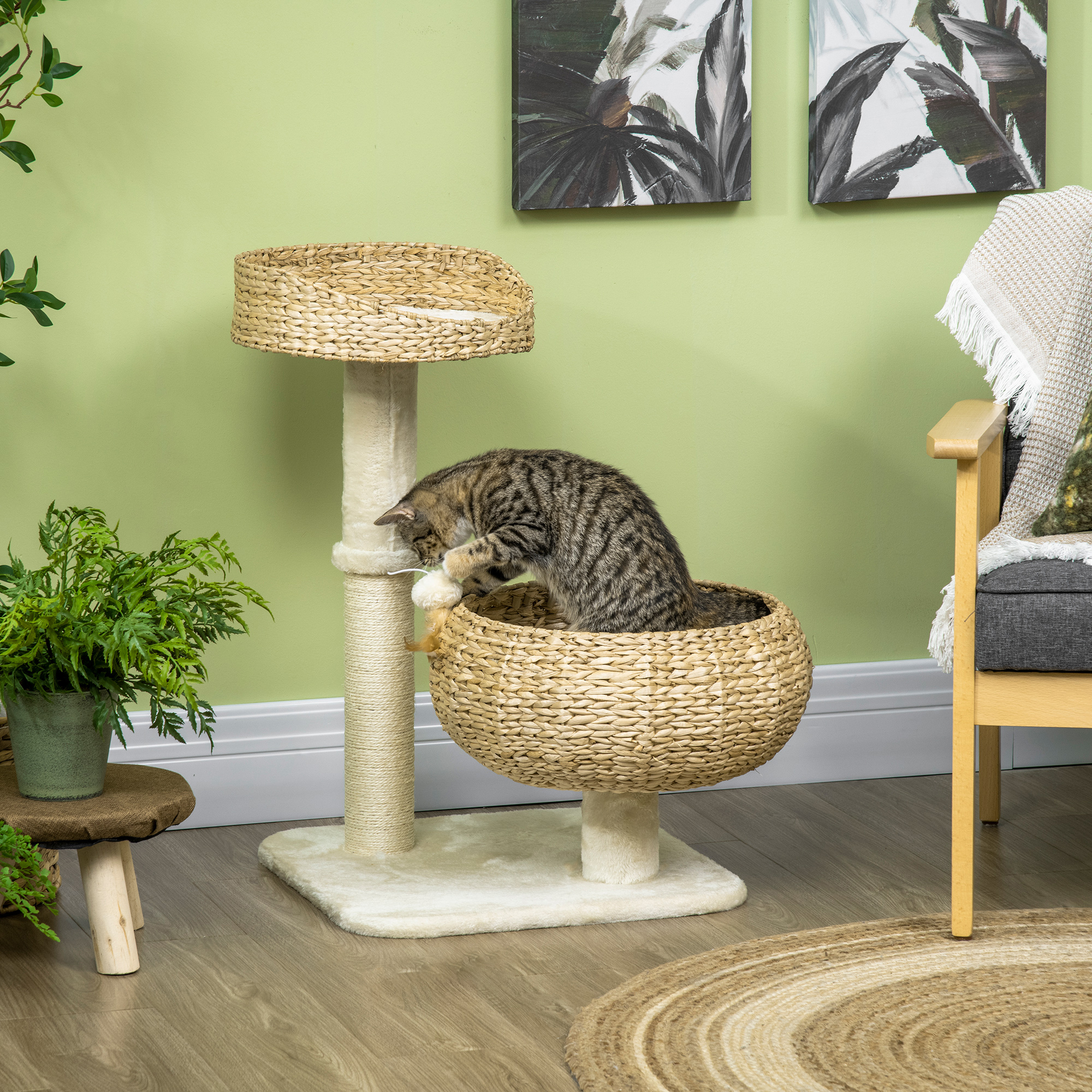
28" Cat Tree for Kittens & Small Cats
★★★★★ 4.8/5
Recommended For
Kittens • Napping • Small Spaces
Height: 28" • Material: Wicker + Sisal
- Cozy basket-style bed
- Stable compact base
- Durable sisal scratching post
- Great for apartments
Why We Love It
Ideal for kittens that love to curl up and relax. The elevated basket perch provides a cozy sleeping spot while the scratching post encourages healthy scratching habits without taking up much floor space.
✓ Fast Shipping • Easy Returns
Our Pick
for Tall Cat Trees
69" Multi-Level Cat Tree
★★★★★ 4.9/5
Recommended For
Large Cats • Multi-Cat Homes • Active Climbers
Height: 69" • Material: Plush + Sisal
- 69" extra-tall climbing height
- Three spacious platforms
- Two cozy condos & dual hammocks
- Reinforced wide base for stability
Why We Love It
Designed for active cats that love to climb, this premium multi-level cat tree offers plenty of vertical space, multiple resting areas, and excellent stability for homes with several cats.
✓ Fast Shipping • Easy Returns
Our Pick
for Tall Cat Trees
69" Multi-Level Cat Tree
★★★★★ 4.9/5
Recommended For
Large Cats • Multi-Cat Homes • Active Climbers
Height: 69" • Material: Plush + Sisal
- 69" extra-tall climbing height
- Three spacious platforms
- Two cozy condos & dual hammocks
- Reinforced wide base for stability
Why We Love It
Designed for active cats that love to climb, this premium multi-level cat tree offers plenty of vertical space, multiple resting areas, and excellent stability for homes with several cats.
✓ Fast Shipping • Easy Returns
So, Which One Should You Choose?
For most indoor cats, we recommend a cat tree between 36 and 60 inches tall. This height provides the best balance of climbing, lounging, scratching, and everyday usability without taking up excessive space.
Consider a taller tree (60–72+ inches) if your cat:
- Loves climbing and jumping
- Is highly active
- Shares the tree with other cats
- Enjoys sleeping on the highest perch
A shorter tree (24–48 inches) may be the better choice if your cat:
- Is a kitten or senior
- Has arthritis or reduced mobility
- Prefers lower resting areas
- Lives in a room with limited vertical space
Our Recommendation
If you're unsure which height to buy, a 36–60 inch cat tree is the safest choice for most households. It offers enough height to satisfy your cat's natural instincts while remaining stable, practical, and suitable for a wide range of homes.
Bottom Line: If you're shopping for the average indoor cat, a 36–60 inch cat tree offers the best combination of height, stability, comfort, and long-term value. Taller models are ideal for active climbers, while shorter trees are better suited for kittens, senior cats, and homes where easy access is the priority.
How Can You Tell If Your Cat Tree Is Too Small?
One of the biggest reasons cats ignore their cat tree isn't the material or the design—it's the size.
If your cat tree doesn't provide enough height, room to stretch, or comfortable resting spots, your cat will often choose your shelves, couch, countertops, or window sills instead.
Here are the most common signs your current cat tree may be too small.
Your Cat Doesn't Use It Very Often
If your cat only scratches the post occasionally but spends most of their time elsewhere, the tree may not meet their needs.
Cats naturally seek elevated spaces where they feel safe and can observe their surroundings. A tree that's too short or cramped often gets ignored.
Your Cat Can't Fully Stretch While Scratching
A healthy scratch should allow your cat to stretch from paws to tail.
If your cat has to crouch or bend while scratching, the tree is likely too short.
Look for:
- Taller scratching posts
- Full-length sisal posts
- Stable bases that won't wobble
Your Cat Hangs Off the Platforms
Your cat should be able to:
- Curl up comfortably
- Turn around easily
- Stretch out without hanging over the edges
If their body spills off every perch, the platforms simply aren't large enough. This is especially common with larger breeds like Maine Coons, Ragdolls, and Norwegian Forest Cats. If this sounds like your cat, our Best Cat Trees for Large Cats guide includes roomier options designed with bigger cats in mind.
Your Cat Chooses Furniture Instead
Does your cat prefer:
- Bookshelves
- Window ledges
- Kitchen counters
- The top of your refrigerator
That usually means they're looking for more height than their cat tree provides.
Cats instinctively seek the highest safe place in the room.
Your Cat Has Outgrown Their Tree
A cat tree that worked perfectly during kittenhood may become too small as your cat reaches adult size.
As cats grow, they need:
- Taller climbing space
- Larger sleeping platforms
- Stronger construction
- Higher weight capacity
If your cat has doubled in size since you bought the tree, it may be time to upgrade.
When Is It Time to Upgrade?
Consider replacing your cat tree if:
• Your cat ignores it most of the day.
• They no longer fit comfortably on the platforms.
• The tree wobbles during climbing.
• They scratch furniture instead.
• They constantly climb higher furniture.
• You've added another cat to your household.
• Your cat has become larger or more active.
Bottom Line
A cat tree that's too small isn't just less comfortable—it often goes unused. Choosing the right height, sturdy construction, and spacious platforms encourages climbing, scratching, exercise, and daily use.
Cat Tree Buying Checklist
Before you choose a cat tree, use this quick checklist to make sure you're buying the right one for your cat and your home.
✓ Height
Choose a height that matches your cat's age and activity level.
- 24–36 inches: Kittens and small cats
- 36–60 inches: Best for most indoor cats
- 50–72+ inches: Large breeds, active cats, and multi-cat homes
✓ Platform Size
Your cat should be able to:
- Stretch comfortably
- Curl up without hanging over the edge
- Turn around with ease
- Larger cats need wider, more supportive platforms.
✓ Stability
A stable cat tree is just as important as height.
Look for:
- Wide, sturdy base
- Thick support posts
- Quality construction
- Anti-tip wall anchor (for taller trees)
✓ Scratching Posts
Choose a tree with:
- Full-length sisal scratching posts
- Enough height for full-body stretching
- Multiple scratching areas for multi-cat homes
✓ Home Size
Think about where the cat tree will go.
- Apartments: Tall, narrow designs save floor space.
- Larger homes: Multi-level trees provide more climbing and lounging options.
- Near a window: Encourages climbing and gives your cat an entertaining view.
✓ Your Cat's Personality
Choose a tree that matches how your cat naturally behaves.
- Climbers: Taller trees with multiple levels
- Loungers: Large beds and roomy platforms
- Senior cats: Lower platforms with easy access
- Multiple cats: Extra height and several resting spots
Before You Buy
Ask yourself these questions:
- ✓ Is it tall enough for my cat?
- ✓ Are the platforms large enough?
- ✓ Will it fit comfortably in my home?
- ✓ Is the base sturdy and stable?
- ✓ Will my cat still enjoy it a few years from now?
- If you can answer yes to each question, you're much more likely to choose a cat tree your cat will actually use every day.
Explore More Cat Tree Guides
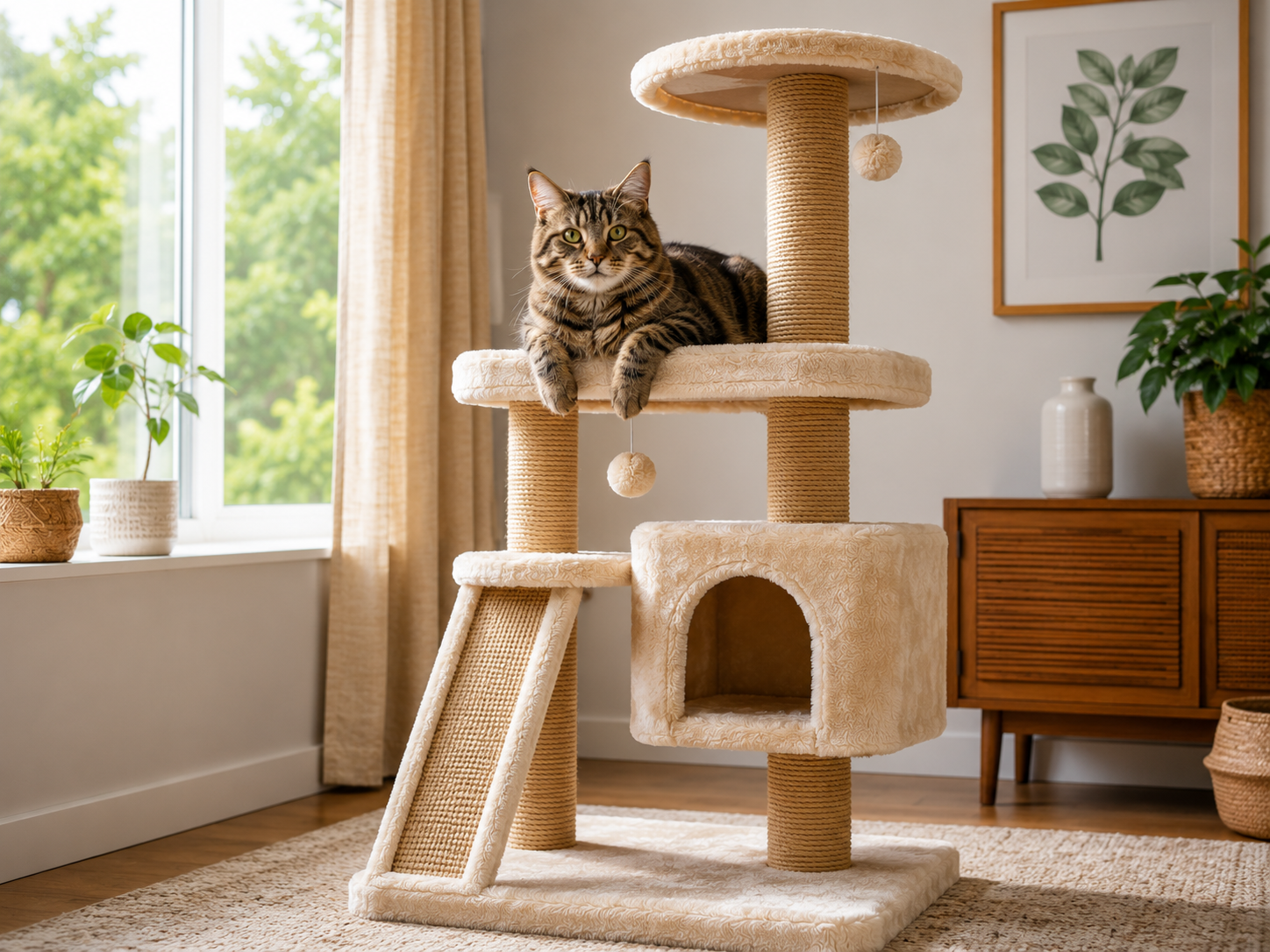
Best Cat Trees for Indoor Cats
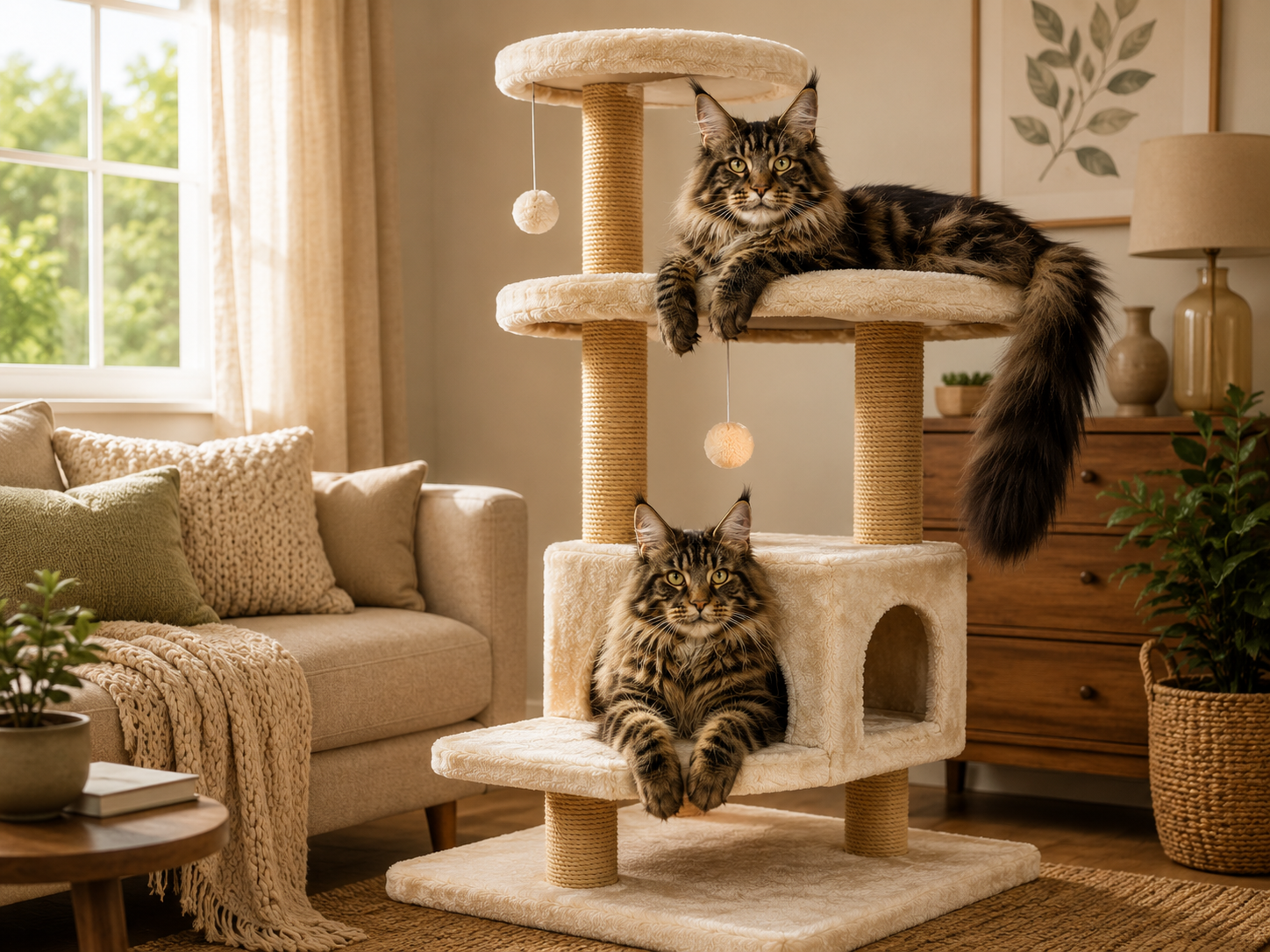
Best Cat Trees for Large Cats
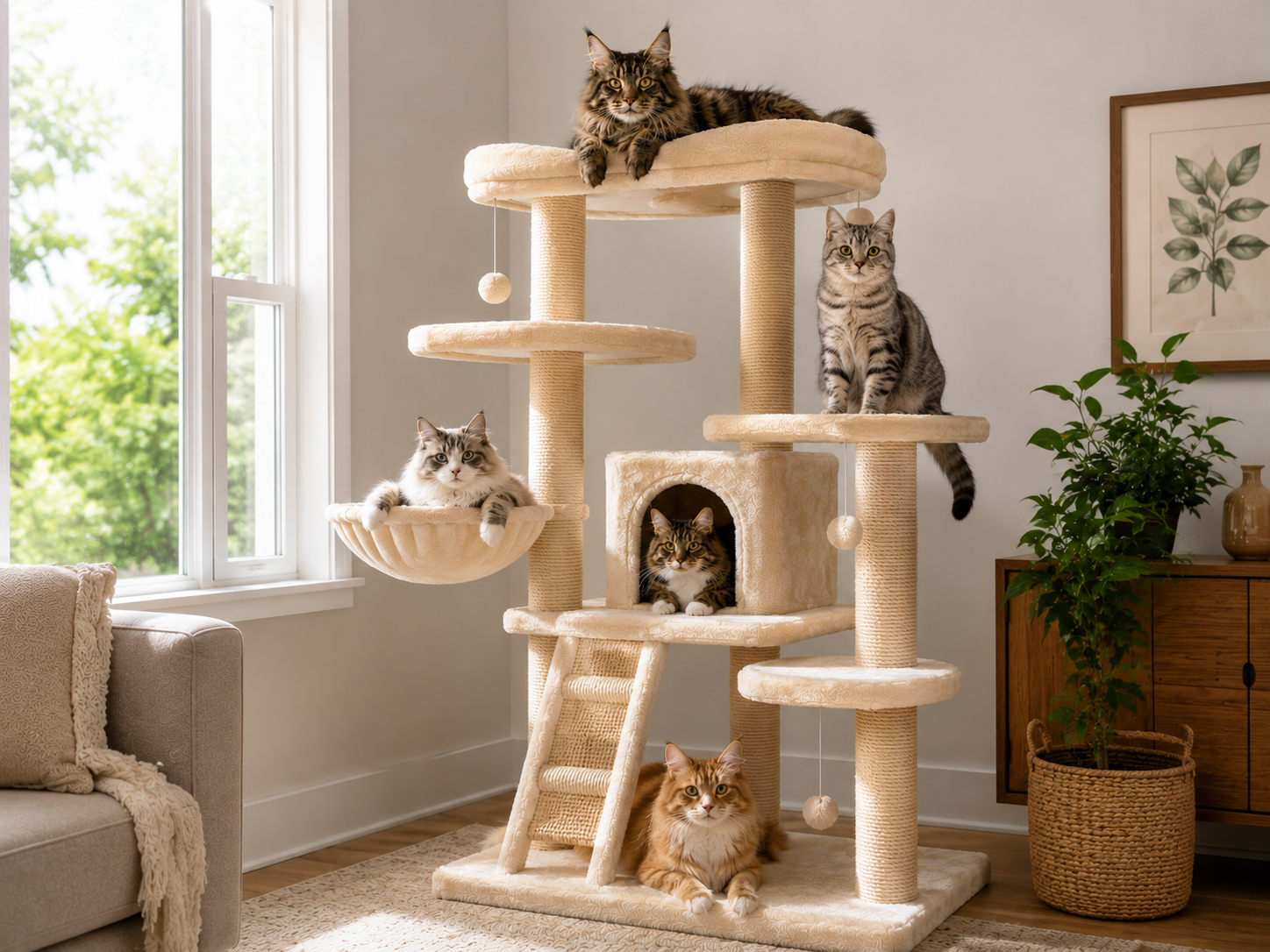
Best Cat Trees for Multiple Cats
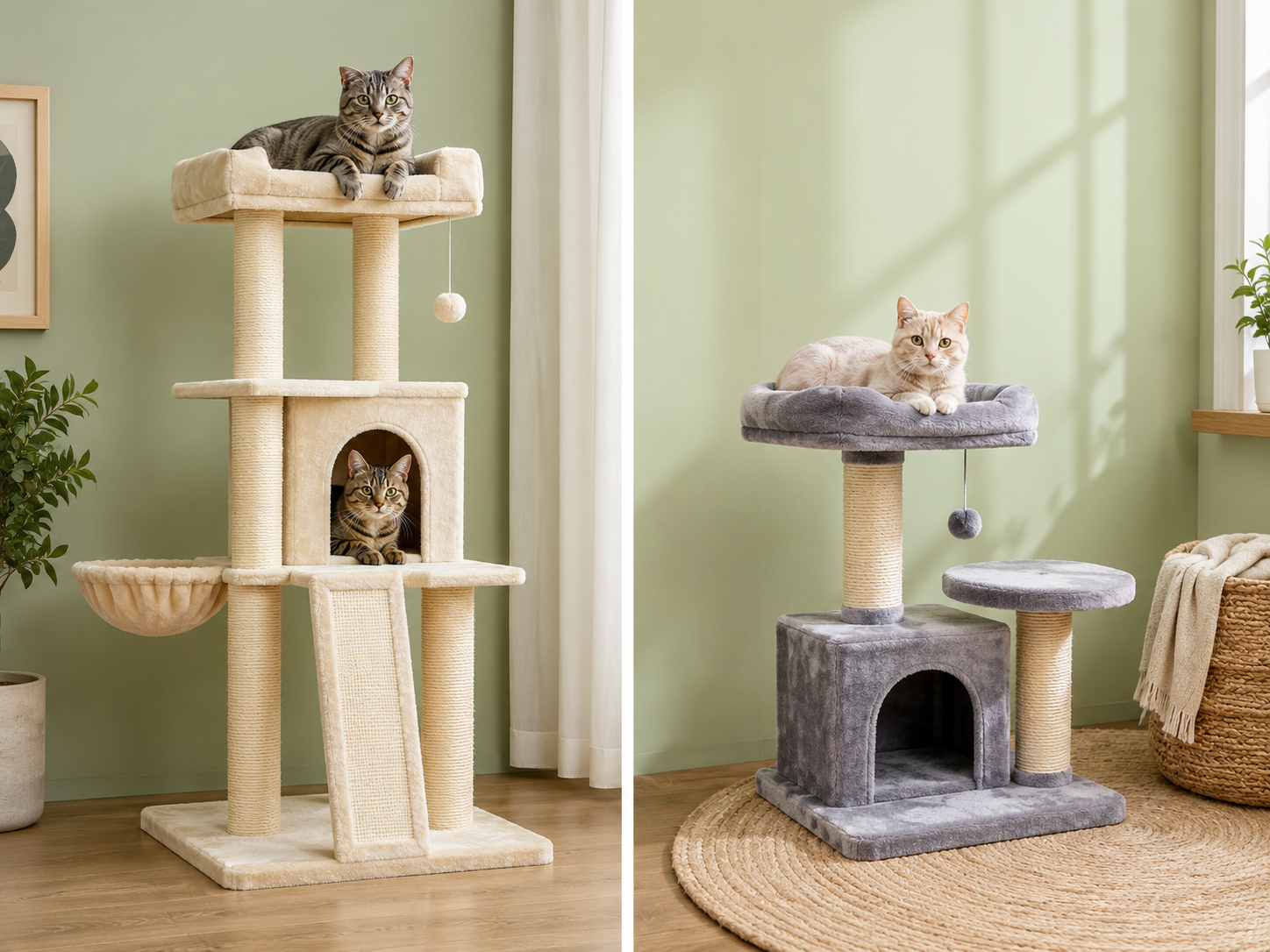
What Size Cat Tree Do I Need?
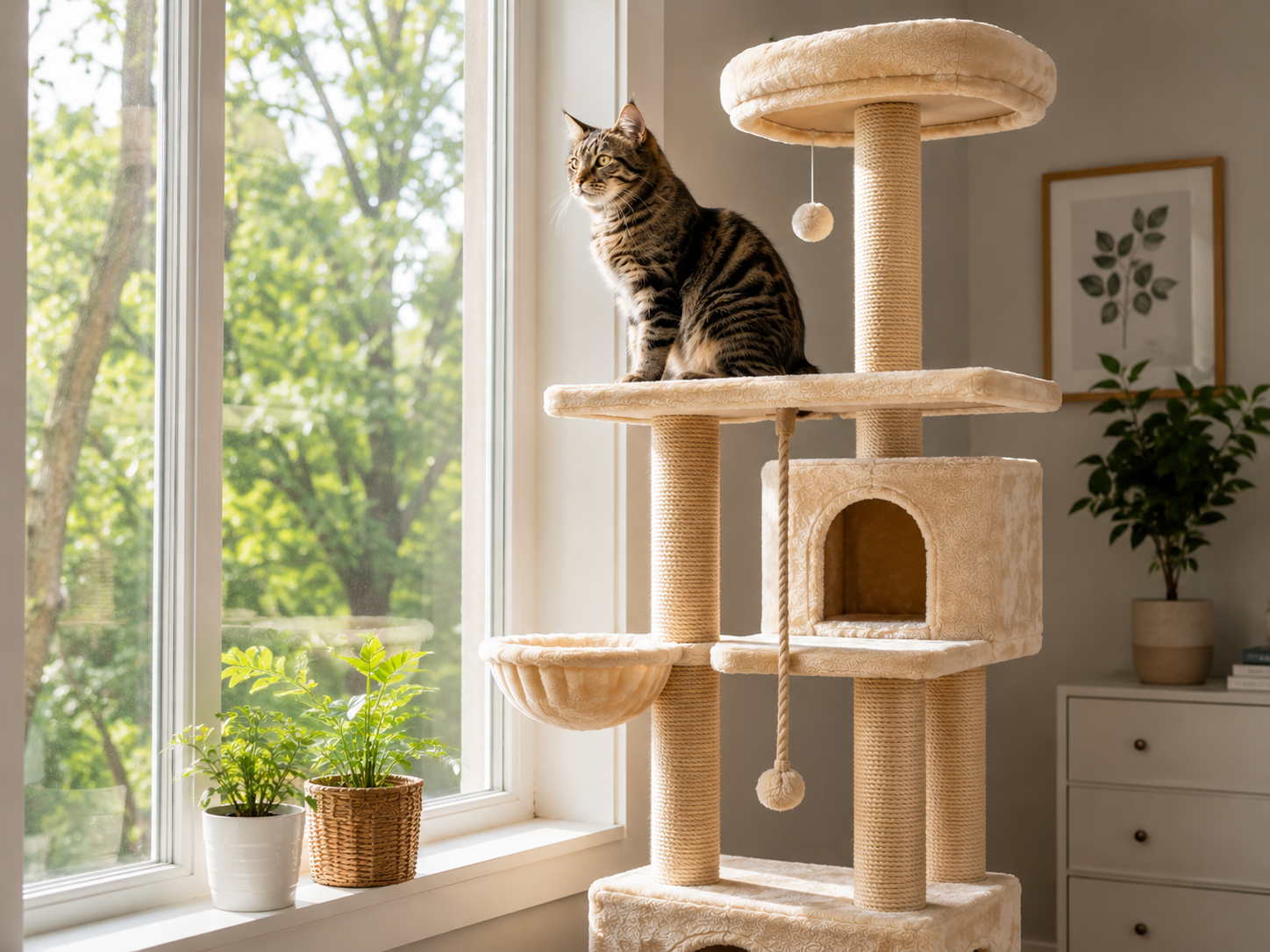
Where to Put a Cat Tree
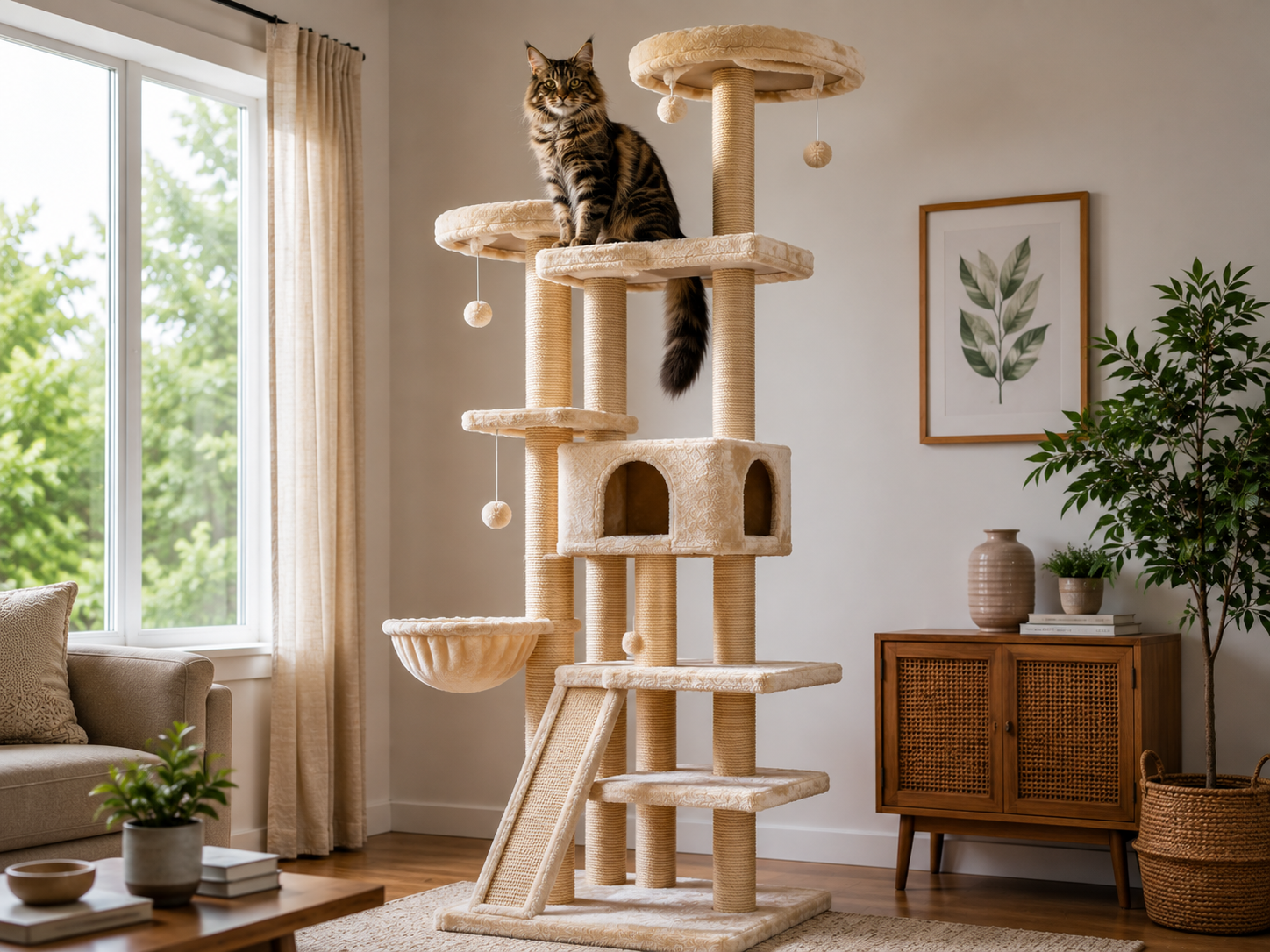
Why Cats Need Vertical Space
Final Thoughts
The best cat tree height depends on your cat’s age, size, activity level, and climbing ability, as well as the space available in your home. For most indoor cats, a 36–60 inch cat tree offers a great balance of climbing space, comfort, and everyday usability.
Kittens and senior cats may be more comfortable with shorter, easy-to-access designs, while large breeds, active climbers, and multi-cat households often benefit from taller trees with roomy platforms and sturdy construction.
Most importantly, don’t choose a cat tree based on height alone. A tree your cat can climb confidently, stretch on comfortably, and relax on safely will always be a better choice than simply buying the tallest model available.
The right cat tree should fit your cat, your home, and the way your cat naturally likes to climb, scratch, play, and rest.
That last bold sentence is what I’d use as the final line of the entire guide. It brings everything back to the actual search intent and gives the page a clean, authoritative ending.